
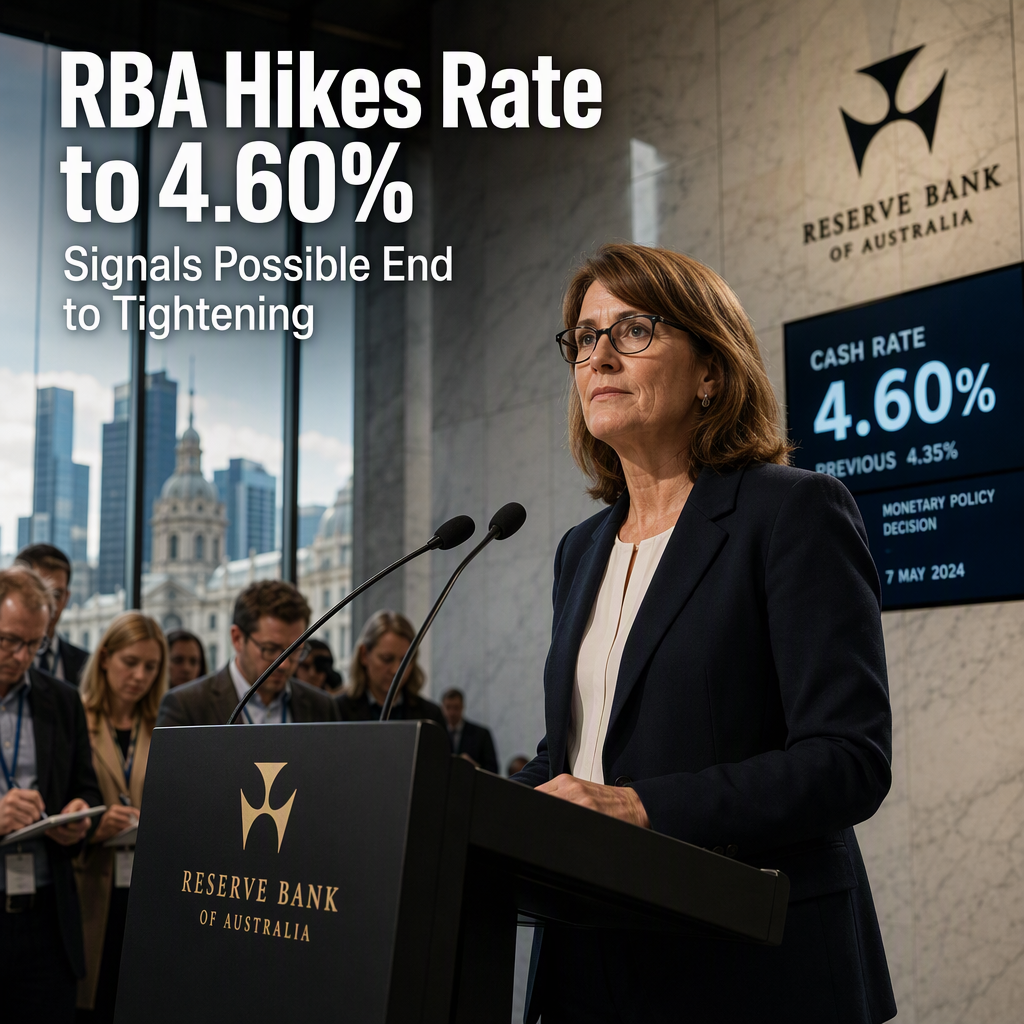
The Reserve Bank of Australia (RBA) increased its cash rate to 4.60% during the 29 September meeting, a move that was unanimously agreed upon by the board, according to Standard Chartered Global Research [1]. The decision was attributed to the emergence of upside risks to inflation, as stated in the RBA's official communication [1]. However, the central bank also acknowledged several moderating factors, including slowing economic growth, easing labour-market conditions, and declining housing prices, while maintaining that further rate hikes remain possible 'if needed' [1].
Governor Bullock adopted a notably dovish tone during the post-meeting press conference, highlighting that both a rate hike and a hold were considered during the meeting [1]. She refrained from emphasizing the likelihood of another rate hike in the fourth quarter and stressed the delayed effects of previous monetary tightening measures [1].
Standard Chartered interprets these signals as an indication that the RBA is likely finished with its rate hiking cycle, despite keeping the option open for further action if warranted by economic data [1]. No immediate market reaction or analyst forecasts regarding asset prices were mentioned in the source article [1].
CONCLUSION
The RBA's latest rate hike to 4.60% was accompanied by dovish forward guidance, suggesting the central bank may be at the end of its tightening cycle. While the door remains open for further hikes if necessary, the emphasis on economic headwinds and policy lags points to a likely pause in future rate increases.