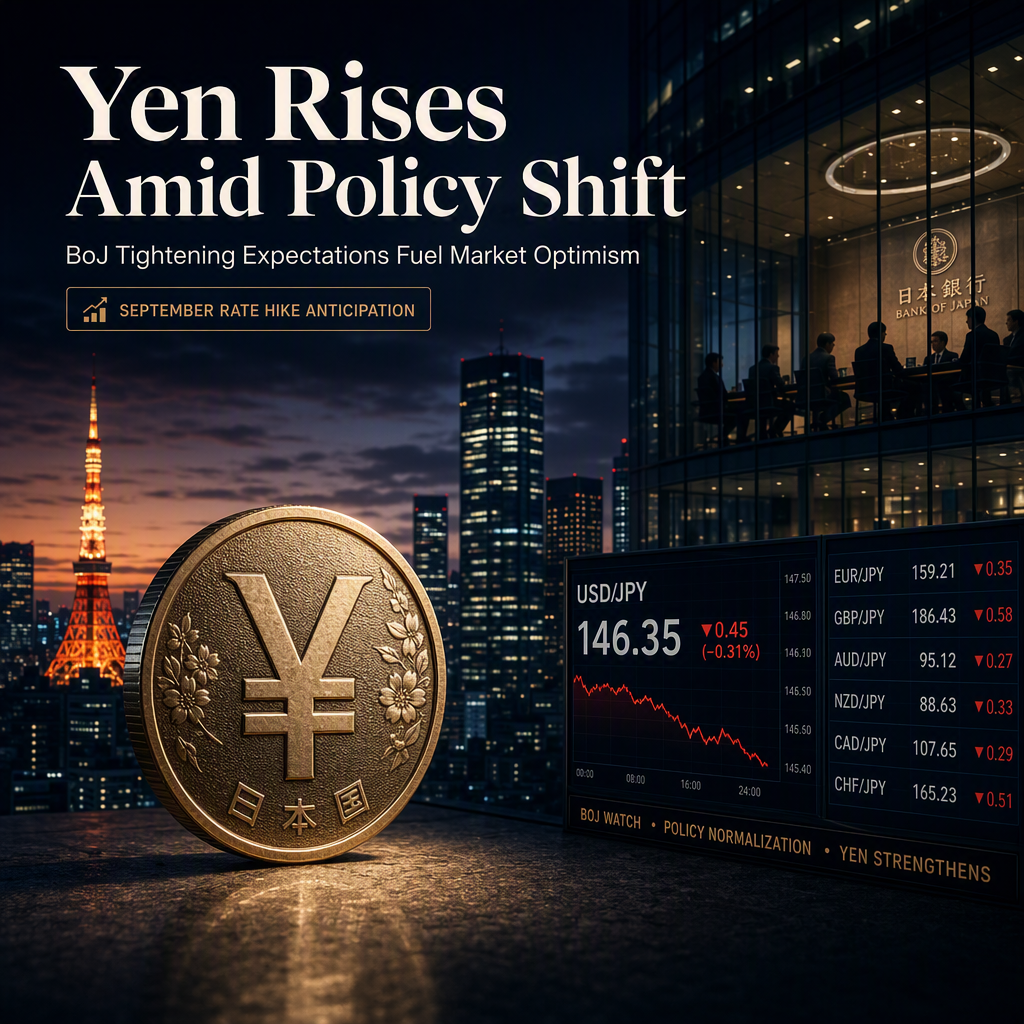
Philip Wee of DBS Group Research highlights a significant policy-regime shift that is currently favoring the Japanese Yen (JPY) against the US Dollar (USD) [1]. This shift follows a joint US-Japan currency intervention in July, which, combined with rising expectations for further Bank of Japan (BoJ) tightening, has led speculators to unwind their short JPY positions [1]. The article notes that political support for structural reform and the potential for BoJ policy normalization are underpinning expectations for a hawkish rate hike scenario, possibly as soon as September [1].
Wee draws a comparison between the Euro and the Yen, stating, 'If the EUR has a credibility advantage, the JPY has a policy-regime change advantage' [1]. The report also points out that political developments, such as Bessent's influence in shifting 'Takaichinomics' away from reflationary policies toward deregulation, investment, and shareholder-friendly reforms, have given the BoJ greater political room to normalize interest rates [1].
Additionally, even former skeptics of BoJ tightening, including Takuji Aida—an economic adviser to Prime Minister Sanae Takaichi and previously a vocal opponent of higher rates—are now acknowledging the case for rate hikes. This shift in sentiment is strengthening market expectations for a hawkish BoJ rate hike on September 18 [1].
No specific market reaction data, such as currency levels or equity market moves, are provided in the article. However, the overall tone suggests a positive outlook for the Yen based on policy and political developments [1].
CONCLUSION
The Japanese Yen is gaining support due to a combination of policy-regime changes, political backing for reform, and rising expectations of Bank of Japan tightening. Market participants are increasingly anticipating a hawkish rate hike in September, which could further bolster the Yen's position against the US Dollar.