
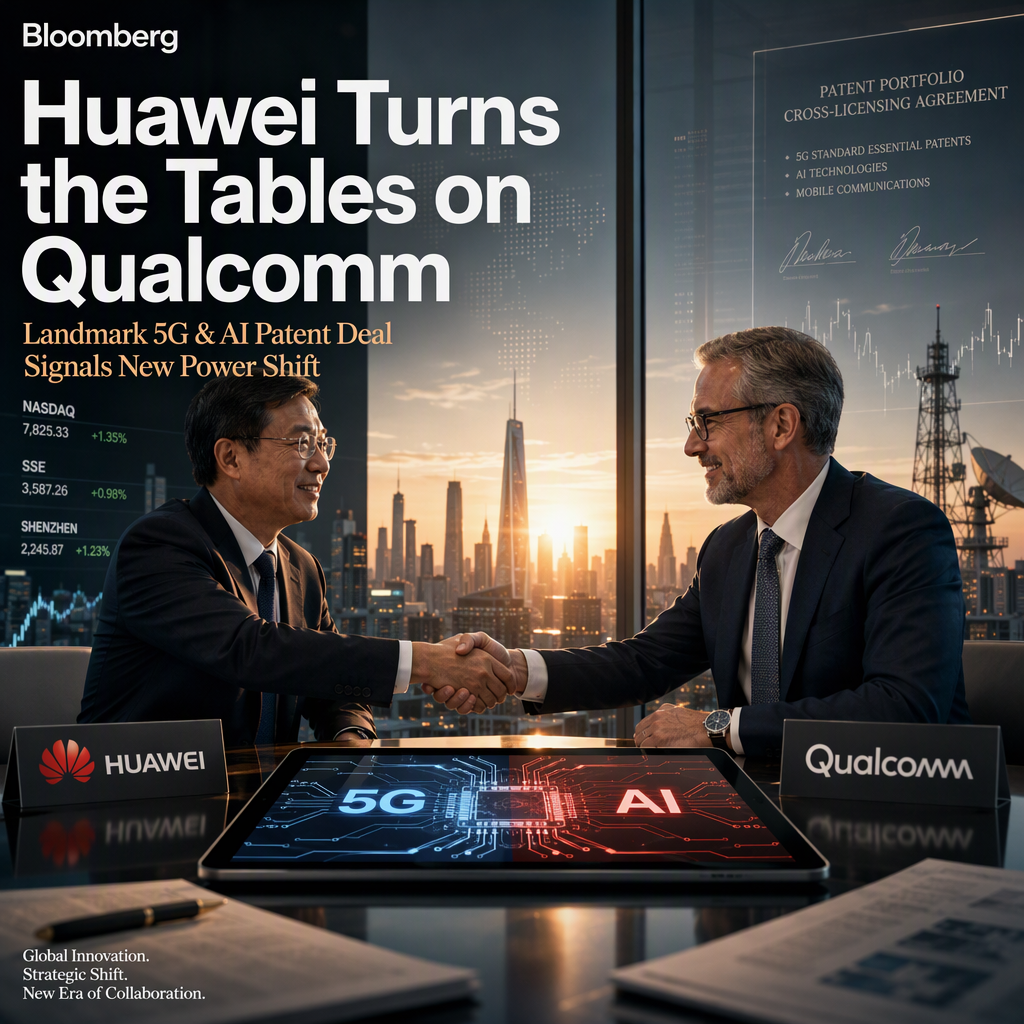
Huawei announced on October 5, 2026, that Qualcomm will pay to use its patents for the first time, marking a significant breakthrough in a new cross-licensing and patent acquisition agreement covering 5G and AI technologies [1]. This deal represents a major shift in the global mobile chip landscape, as Huawei strengthens its position in advanced technology markets. Previously, Huawei paid to license Qualcomm patents, but under the new arrangement, Qualcomm will become the net payer for the first time in its history of dealings with Huawei [1].
The agreement is expected to cover key patents related to 5G and artificial intelligence, sectors that are experiencing rapid growth and intense competition [1]. Financial terms were not disclosed, but industry observers believe the licensing fees could be substantial due to the strategic importance of these patents [1]. The deal is subject to regulatory review in the United States, which will assess compliance with local requirements amid ongoing tensions between Washington and Beijing over technology transfers and national security [1].
Industry analysts suggest that this landmark deal could open new revenue streams for Huawei, which has invested heavily in R&D to build an extensive patent portfolio, especially after facing U.S. sanctions [1]. The cross-licensing arrangement is expected to impact competitive dynamics between Qualcomm and Huawei, as both companies vie for leadership in next-generation mobile technologies [1]. Market observers anticipate that Huawei will gain stronger bargaining power in future licensing negotiations and potentially increase royalty revenue, while Qualcomm faces higher costs but may benefit from access to crucial Huawei patents that could enhance its own product offerings [1].
The announcement has sparked discussion among traders and investors regarding the potential implications for both companies' stock performance. While no specific price levels or trading advice were provided, market sentiment appears positive for Huawei's intellectual property strategy and cautiously optimistic for Qualcomm, pending regulatory approval [1].
CONCLUSION
The Qualcomm-Huawei cross-licensing deal marks a pivotal shift in the global chip industry, with Huawei poised to benefit from increased royalty revenue and enhanced bargaining power. Qualcomm faces higher costs but may gain valuable access to Huawei's patents. The final impact will depend on U.S. regulatory approval, but the market views the agreement as a positive development for Huawei and a cautiously optimistic one for Qualcomm.