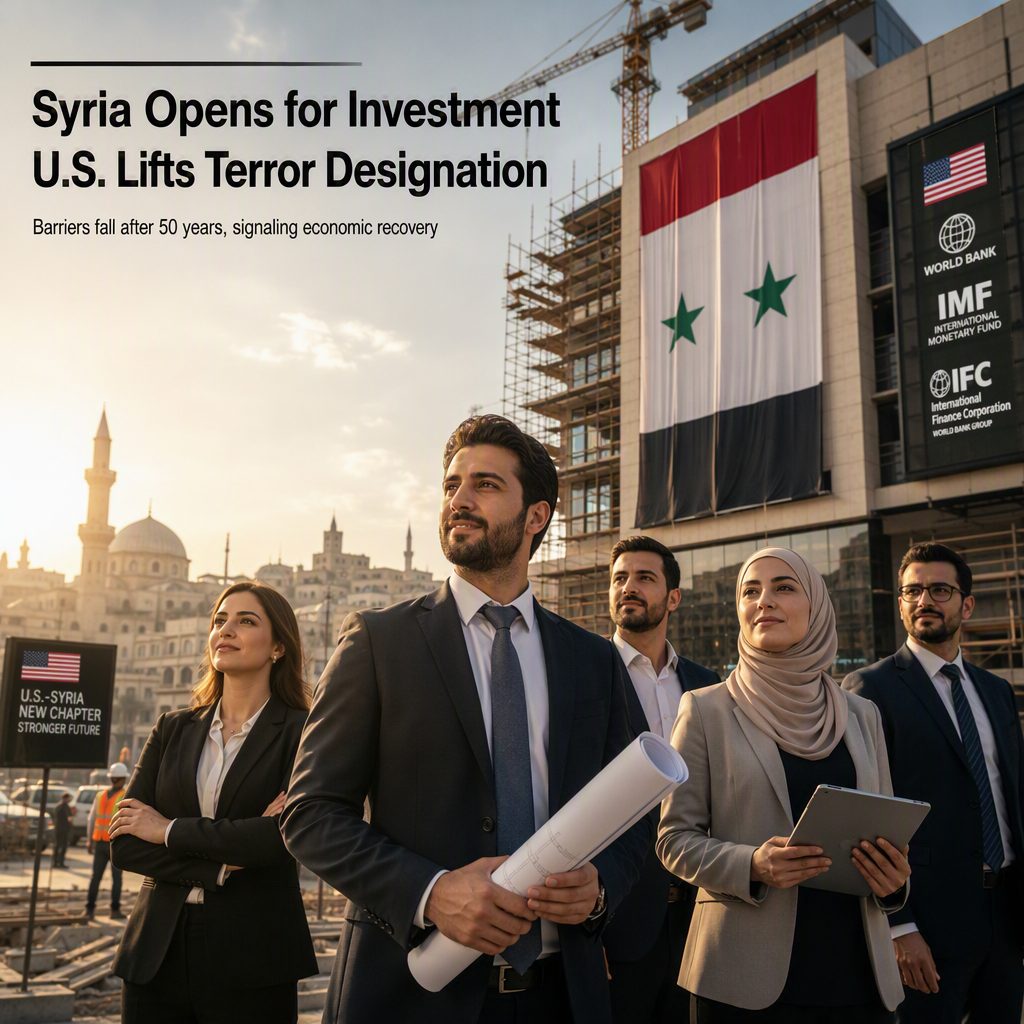
The United States has formally removed Syria from its list of state sponsors of terrorism after nearly 50 years, a move that Secretary of State Marco Rubio described as eliminating the final major barriers to investment and economic recovery in the country [1]. This decision followed the conclusion of a mandatory 45-day congressional notification period, which was initiated by President Donald Trump in July after he confirmed to Congress that Syria’s government had ceased supporting acts of international terrorism [1].
In addition to delisting Syria, Rubio also announced the removal of Hay’at Tahrir al-Sham’s (HTS) designation as a Specially Designated Global Terrorist (SDGT) [1]. These actions are part of a broader effort by the Trump administration to provide sanctions relief to the Syrian people, including a June 2025 executive order that terminated the Syria Sanctions Program and the national emergency with respect to Syria, while directing reviews of other Syria-related sanctions and terrorist designations [1].
Rubio stated that these measures were taken in recognition of positive actions and commitments by the Syrian government under President Ahmed al-Sharaa, who ousted Bashar al-Assad in December 2024 in an offensive led by HTS rebels [1]. Over the past year, the Syrian government has taken significant steps to counterterrorism, including formally joining the Global Coalition to Defeat ISIS in November and conducting operations against ISIS, al-Qa’ida, Hizballah, and Iran-aligned groups [1].
Syrian Foreign Minister Asaad al-Shibani emphasized that lifting the designation would help restore Syria’s links to the global financial system and encourage investment after nearly 14 years of war [1]. He stated, "There is no longer any obstacle to investment, doing business and rebuilding economic life in Syria" [1]. Rubio added that these actions will foster additional investment to promote political and economic stability in Syria [1].
CONCLUSION
The U.S. decision to remove Syria from its terrorism blacklist and lift related sanctions marks a significant shift, clearing the way for renewed investment and economic engagement with Syria. Market implications are high, as the move is expected to restore Syria’s access to the global financial system and encourage economic recovery after years of conflict and isolation.