
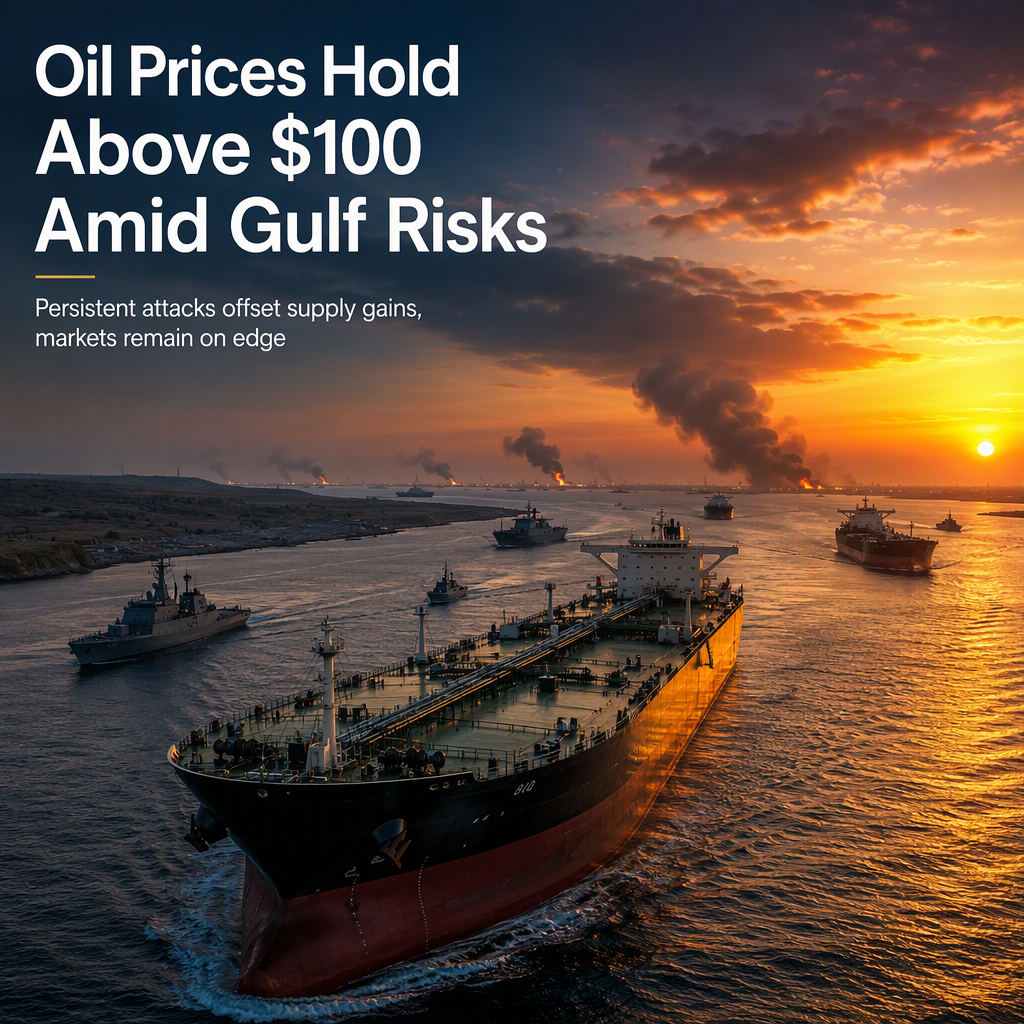
According to ING analysts Warren Patterson and Ewa Manthey, oil supplies from the Persian Gulf are showing signs of improvement, yet ICE Brent crude prices remain supported above $100 per barrel due to ongoing attacks on ships in the region, which keep supply risks elevated [1]. The analysts describe a 'tug-of-war' between the positive impact of better supply flows and the negative influence of persistent threats, noting that Brent traded down towards $97/bbl during the session but ultimately settled above $100/bbl as supply concerns lingered [1].
The report highlights that the only way for oil prices to trade sustainably lower would be for these regional risks to be resolved. Until then, the market is expected to remain nervous about potential supply disruptions [1]. In the middle distillates segment, particularly diesel, the ICE gasoil crack has weakened to around $73/bbl from over $90/bbl in September. This decline is attributed to the prospect of diesel releases from European strategic reserves and a reduced risk of a US diesel export ban, which have alleviated some market pressure [1].
However, the weakness is primarily observed at the front end of the curve, with longer-dated cracks remaining better supported. This suggests that the market views the current diesel releases as a temporary measure that does not address the underlying tightness in the middle distillate market [1]. The analysts emphasize that a normalization of Persian Gulf and Russian diesel flows is necessary to resolve these issues, but such an outcome appears unlikely in the near term [1].
CONCLUSION
Oil prices remain elevated above $100 per barrel as improved Persian Gulf supply is offset by ongoing regional risks. While temporary measures have eased pressure in the diesel market, underlying supply tightness persists, and a sustainable price decline is unlikely until geopolitical risks are resolved.