
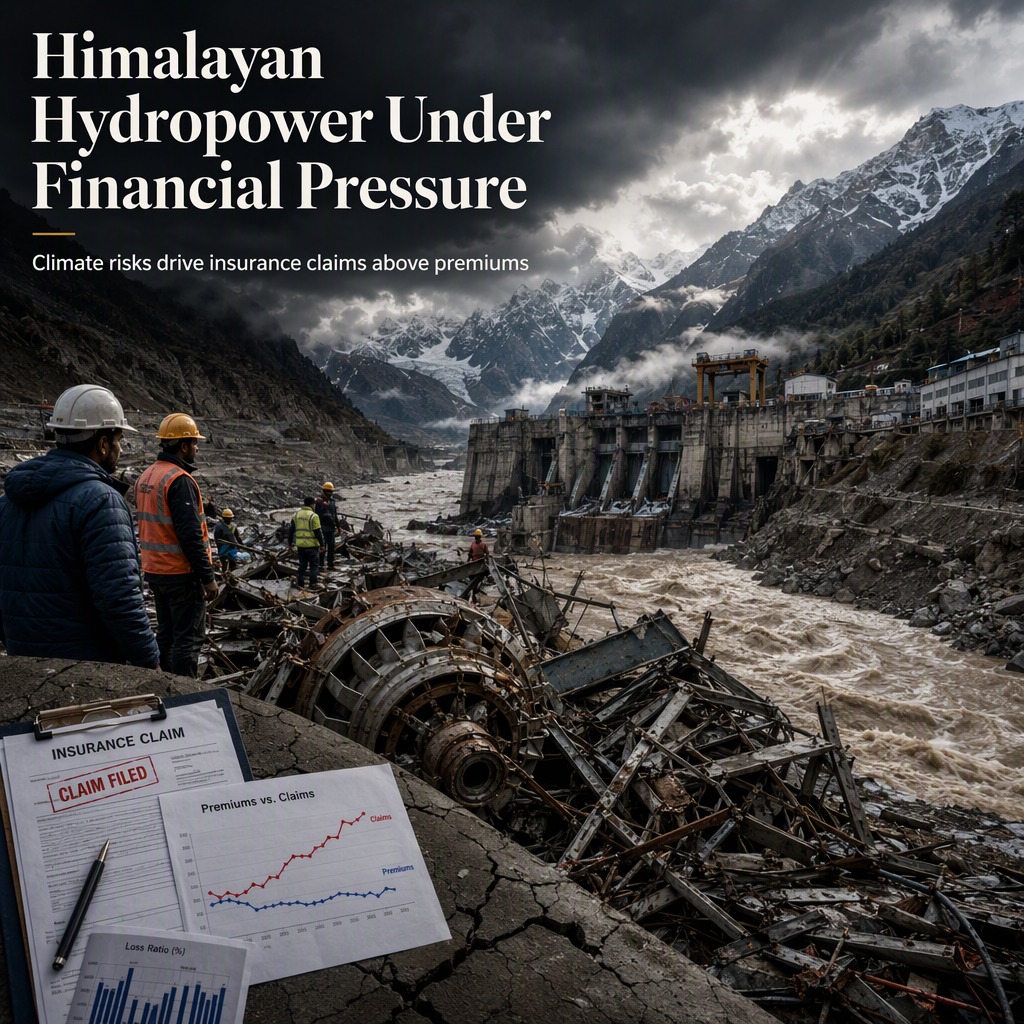
The hydropower industry in the Hindu Kush Himalaya region is experiencing persistently high damage-related losses, driven by increasingly unstable high-altitude icy zones due to human-induced climate change. This instability has led to a rise in floods and avalanches, significantly impacting hydropower assets and resulting in insurance claims that have consistently exceeded premiums in Nepal in recent years [1]. A notable example is the significant destruction in Nepal's Nuwakot district along the Trishuli River corridor following flash floods on August 26 [1].
Industry experts attribute the worsening risk profile for hydropower projects to unpredictable weather patterns and more frequent, intense natural disasters. This has created a challenging environment for insurers, who are now reassessing risk levels and adjusting pricing, making it increasingly difficult for hydropower operators to secure affordable coverage [1]. A senior executive at a regional insurance company stated, "The frequency and severity of floods and landslides in the Himalayas have dramatically increased, making it difficult for insurers to accurately price coverage" [1].
The financial strain on both insurers and project developers is likely to impact future hydropower development, as investors demand clearer risk mitigation strategies and potentially higher returns to compensate for increased exposure [1]. There is a growing call for innovative insurance products and improved risk management practices, such as more robust engineering standards and enhanced disaster preparedness measures [1]. Without these adaptations, the sector may struggle to attract the necessary capital for expansion, especially as global aid retreats and Nepal faces a $5 billion funding gap for flood recovery [1].
Market analysts warn that unless insurance mechanisms evolve to address new climate realities, the viability of Himalayan hydropower projects may be at risk, with potential negative effects on local economies and cross-border electricity exports [1].
CONCLUSION
The Himalayan hydropower sector is under significant financial pressure as climate change drives up insurance claims and challenges the sustainability of coverage. Without innovation in risk management and insurance products, future project development and regional economic stability may be jeopardized.