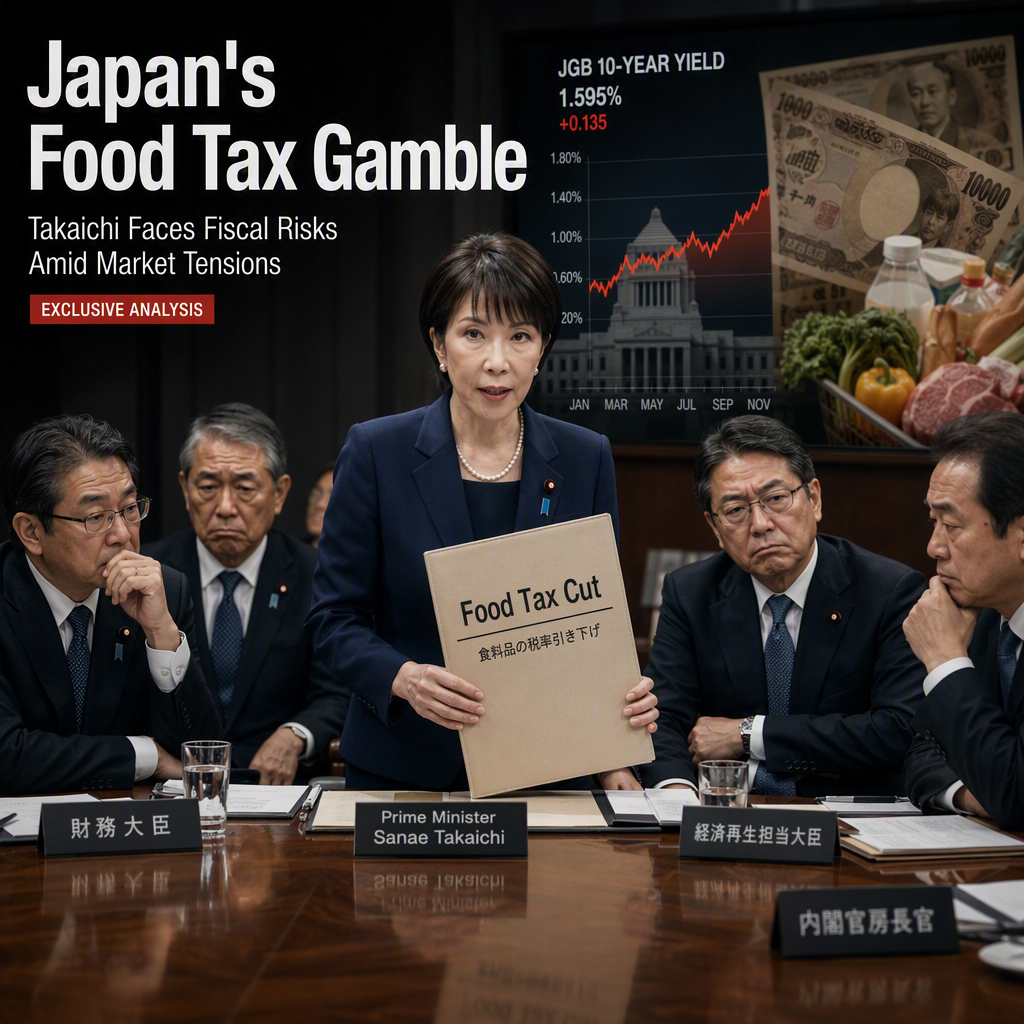
Prime Minister Sanae Takaichi of Japan is pushing forward with a plan to reduce the consumption tax on food from 8% to 1% for two years starting April 2027, a move that would mark the first cut to the tax since its introduction in 1989 if enacted [1]. The ruling Liberal Democratic Party advanced the bill through key committees, with Takaichi seeking cabinet approval within the month and aiming to table the bill in parliament in the autumn [1]. The proposed tax cut is expected to reduce annual government revenue by an estimated 4.4 trillion yen [1].
This initiative is part of Takaichi's broader economic agenda, which includes a 370 trillion yen public-private investment plan through the 2040 fiscal year, intended to boost productivity, growth, and tax revenue before rising interest costs impact the budget [1]. However, the plan has faced criticism from within her own party. Former ministers Taro Kono and Takeshi Iwaya have voiced concerns, with Kono warning that the plan could undermine confidence in Japan's fiscal position, push interest rates higher, and weaken the yen [1]. Iwaya described the risk as "very high," cautioning that a negative market reaction could further weaken the yen and raise import prices [1]. Former Prime Minister Shigeru Ishiba also expressed dissent by walking out of a key meeting [1].
The International Monetary Fund has advised against reducing the consumption tax, calling it an "untargeted measure that would erode fiscal space and add to fiscal risks" in its 2026 country report [1]. Despite these warnings, Takaichi has pledged not to use deficit-financing bonds to fund her initiatives, instead promising to review spending, tax breaks, subsidies, and public funds, though specific details remain scarce [1]. The government has also committed to making the tax cut temporary, with the rate set to revert to 8% after two years [1].
Japan is currently facing rising government borrowing costs and one of the highest public debt levels in the world, with higher Japanese Government Bond (JGB) yields potentially attracting domestic investors and preventing a disorderly bond sell-off, but also steadily reducing fiscal flexibility [1].
CONCLUSION
Prime Minister Takaichi's food-tax cut proposal represents a significant fiscal gamble, aiming to stimulate growth but drawing criticism over its potential to increase fiscal risks and weaken the yen. The plan's market impact is high, with both domestic and international observers warning of possible negative consequences for Japan's fiscal position and currency stability. The outcome will depend on the government's ability to offset lost revenue and manage rising debt costs.