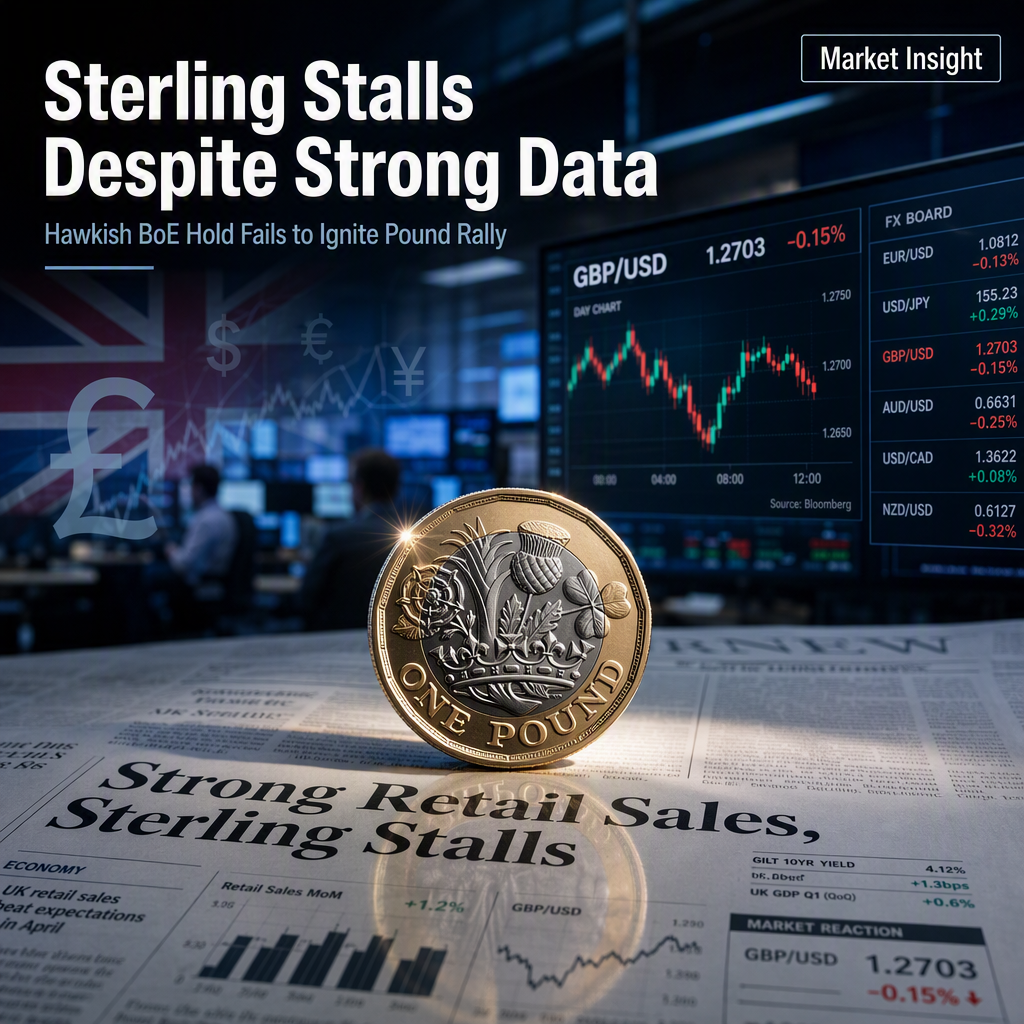
The British Pound (GBP) showed only marginal gains against the US Dollar (USD) following the release of stronger-than-expected August retail sales data, which surpassed expectations of a modest contraction in consumer spending [1]. Despite this positive economic indicator, the currency struggled to build significant momentum, with Scotiabank strategists attributing the limited upside to Thursday’s hawkish hold by the Bank of England (BoE) [1]. The BoE's decision to maintain its current policy stance, while interpreted as hawkish, appears to have capped the potential for material near-term strength in the GBP [1].
From a technical perspective, the broader uptrend in GBP/USD that began in June remains intact, but analysts caution that the pair must stay above the mid/lower-1.33s to preserve ascending support [1]. The Relative Strength Index (RSI) is described as bearish, having reached the oversold threshold at 30, suggesting a neutral to bearish short-term outlook despite the medium-term bullish trend [1]. Near-term support is identified around 1.3320, with limited resistance seen ahead of 1.3480 [1].
On the political front, market participants and media continue to express confidence in the UK government's commitment to fiscal responsibility, which is seen as a supportive factor for the Pound [1]. However, this constructive narrative has not translated into significant currency appreciation in the immediate aftermath of the recent data and central bank decision [1].
CONCLUSION
Despite stronger-than-expected retail sales and a hawkish BoE hold, the British Pound has seen only marginal gains, with technical and sentiment indicators suggesting limited near-term upside. Market confidence in UK fiscal policy remains supportive, but significant appreciation may require further catalysts.