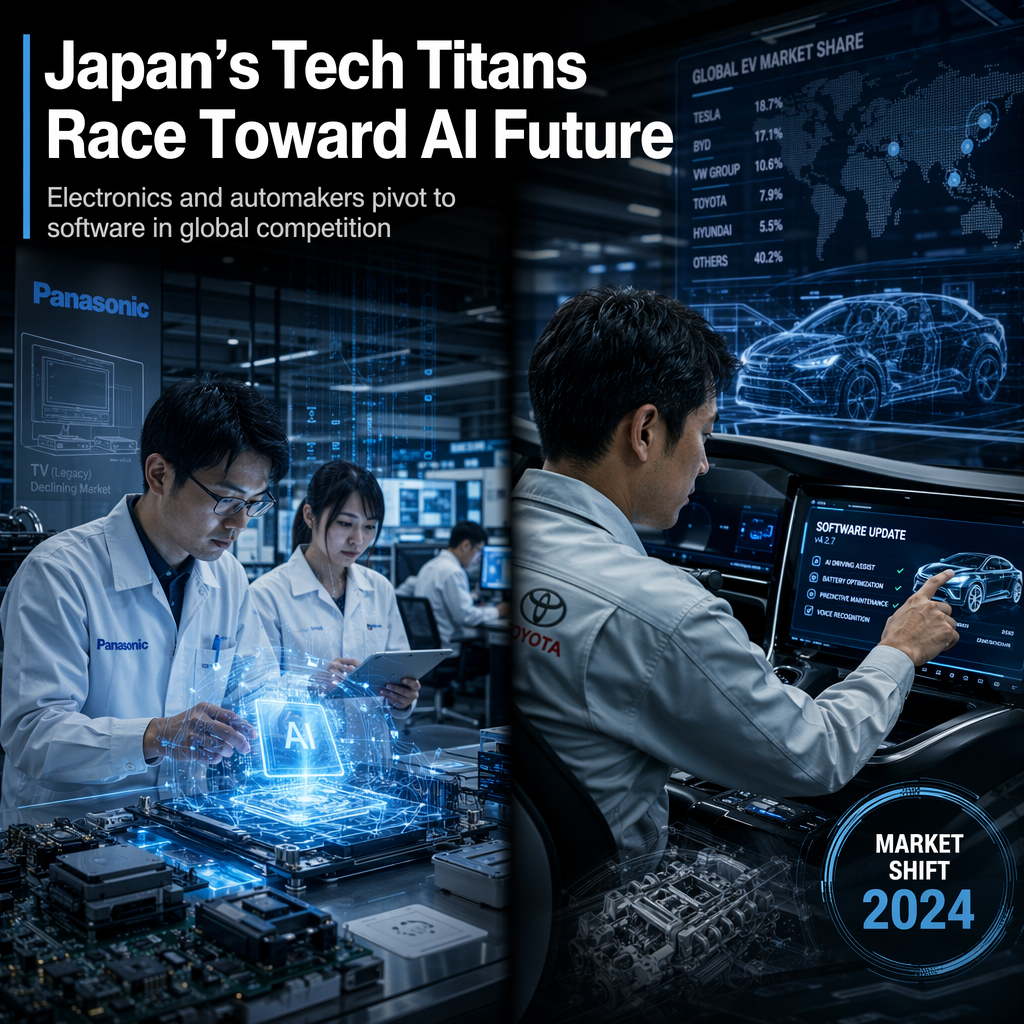
Japanese electronics giants, such as Panasonic, are undergoing a significant transformation, shifting their focus from traditional consumer electronics like televisions to advanced technology sectors including artificial intelligence and data centers. This strategic pivot is driven by intense competition from Chinese and South Korean manufacturers, who now dominate the global appliance market, forcing Japan's former consumer electronics leaders to seek new growth opportunities in the digital era [1].
In the automotive sector, Japanese automakers led by Toyota have relied on hybrid technology to maintain their competitive edge as the industry transitions away from internal combustion engines. This strategy allowed them to delay full electrification until battery supply chains and charging infrastructure improved. However, the global auto industry is now entering a new phase where software development is becoming the primary battleground. Chinese brands such as BYD, Nio, and Xpeng are rapidly advancing in intelligent vehicle technologies, including driver-assistance systems and over-the-air updates, outpacing legacy automakers in some European markets despite tariffs on electric vehicles [2]. Japanese automakers must now invest heavily in software, artificial intelligence, and human-machine interfaces to remain competitive. Toyota is actively working to harmonize vehicle specifications with AI to accelerate production and enhance user experience [2].
Meanwhile, Chinese electric vehicle makers like BAIC, Seres, and GAC are facing profitability challenges due to rising materials costs and intense price competition. Earnings guidance filings reveal losses for these automakers, contrasting with robust profit expansions reported by upstream suppliers, particularly those involved in battery and raw material production. This divergence highlights the ongoing struggle for automakers caught between aggressive pricing strategies and escalating input costs, forcing some to reconsider their production and pricing models to sustain competitiveness [3].
The articles collectively underscore a period of rapid change and adaptation for both Japanese and Chinese industries. Japanese companies are pivoting toward digital and software-driven solutions, while Chinese automakers grapple with cost pressures and market competition, even as their suppliers benefit from sustained demand.
CONCLUSION
Japanese electronics and automotive companies are accelerating their shift toward AI and software to address competitive pressures from Chinese and South Korean rivals. While Japanese firms seek new growth in advanced technology, Chinese automakers face profitability challenges amid rising material costs and intense price competition. The market remains dynamic, with adaptation and innovation crucial for sustained competitiveness.