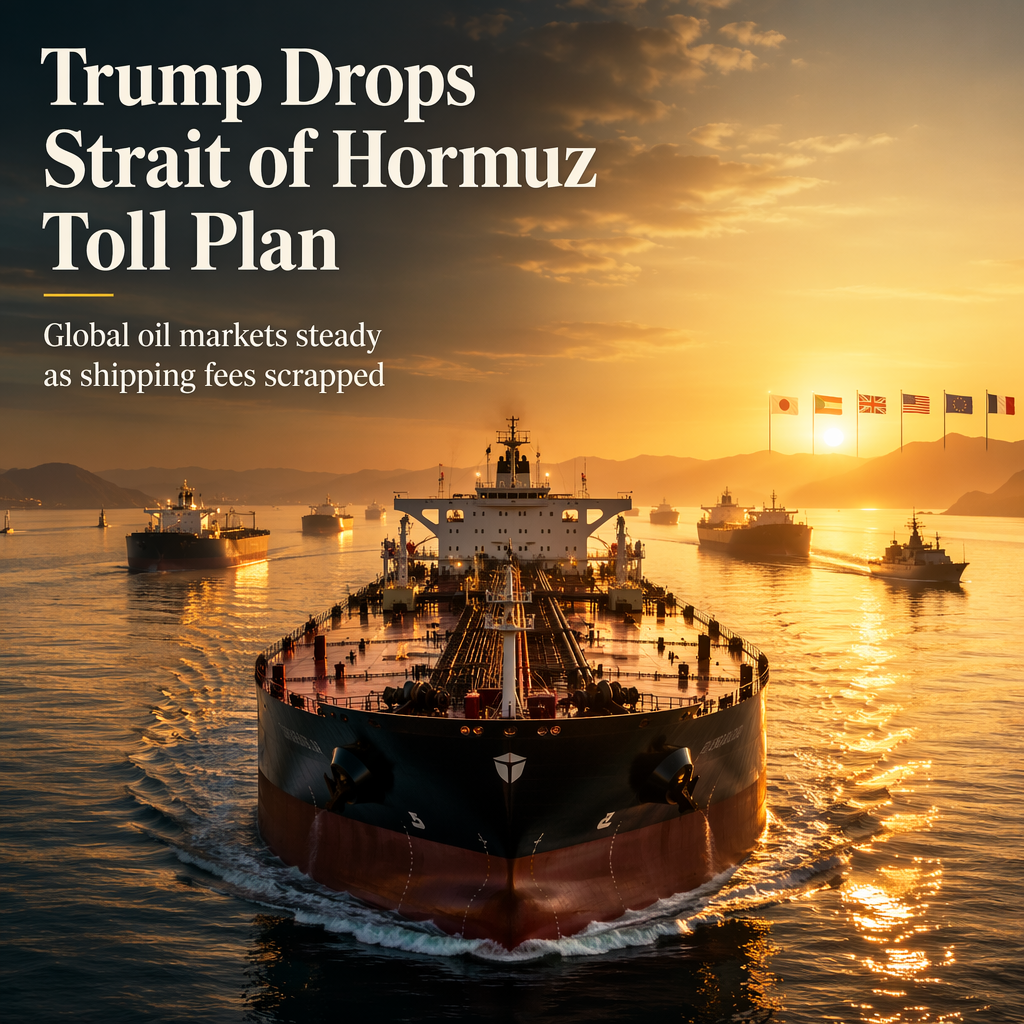
President Trump announced that he will not proceed with his previously proposed plan to impose tolls on non-Iranian commercial vessels passing through the Strait of Hormuz, a critical global oil shipping route [1]. The decision was made public during a meeting with the prime minister of Iraq, where Trump stated, "After careful review and consultations with our allies and the shipping industry, I have decided not to move forward with the toll plan for ships in the Strait of Hormuz. We will continue to ensure the security of international shipping lanes without adding additional financial burdens" [1].
The initial proposal had raised significant concerns among global shipping companies and oil markets, as the Strait of Hormuz handles a substantial portion of the world's petroleum transit [1]. Market analysts had warned that the tolls could increase shipping costs and potentially drive up global oil prices, depending on the rates imposed and the response from shipping firms [1]. In the days leading up to the announcement, oil futures experienced upward pressure amid speculation about the toll plan [1].
Following Trump's reversal, industry groups and energy market participants welcomed the decision, anticipating a stabilization in energy markets as fears of increased transportation costs subsided [1]. Analysts noted that the avoidance of new shipping fees could help maintain the recent downward momentum in energy-related prices, especially as inflation eased to 3.5% in June according to recent economic data [1]. Technical analysts are monitoring crude oil prices, with $80 per barrel identified as a key support level and resistance near $85, while traders continue to watch for further geopolitical developments in the region [1].
No new trading restrictions or fees are expected to be imposed on commercial shipping in the Strait of Hormuz as a result of this announcement [1].
CONCLUSION
President Trump's decision to abandon the proposed shipping tolls in the Strait of Hormuz has been positively received by market participants, reducing concerns about increased oil prices and shipping costs. The move is expected to support stability in energy markets and aligns with recent trends of easing inflation.