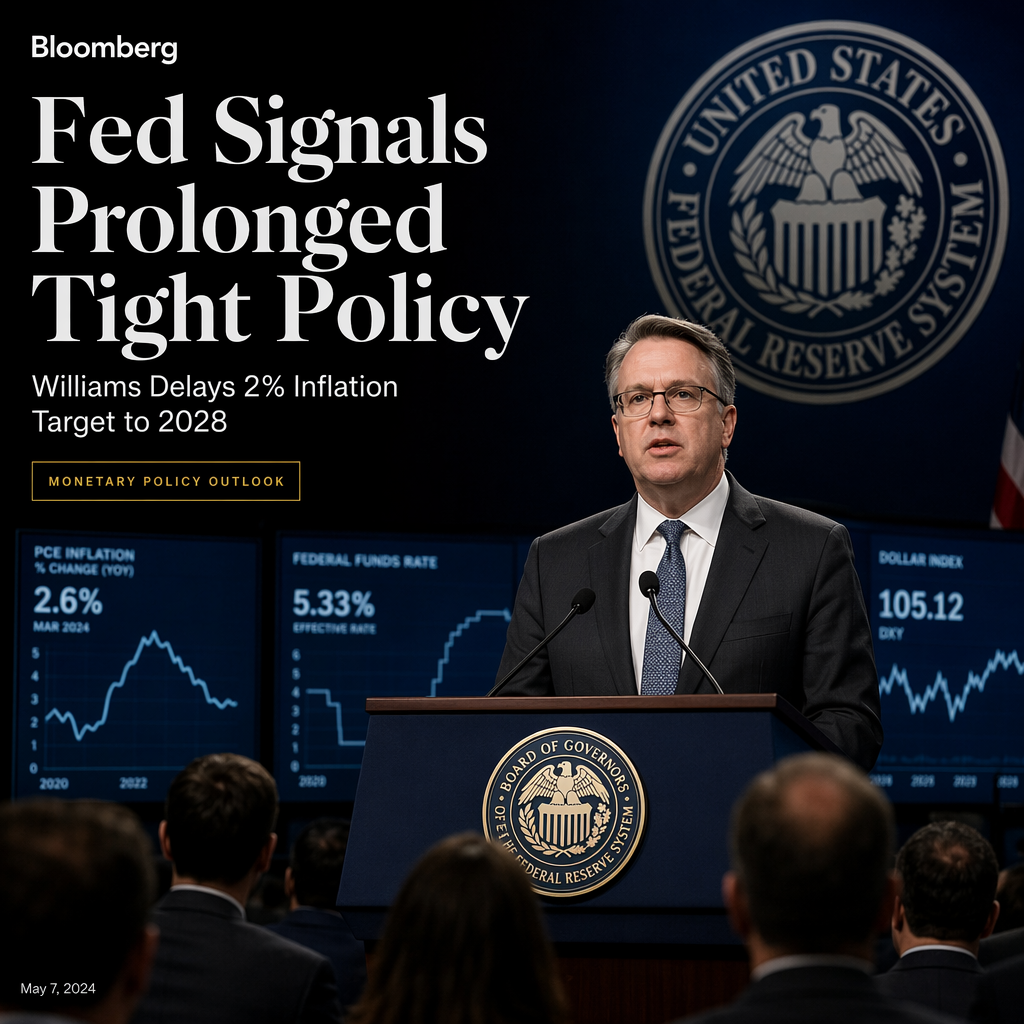
Federal Reserve Bank of New York President John Williams stated in a speech that the return of inflation to the Fed’s 2% target is now expected by 2028, a year later than previously forecasted. Williams emphasized that it remains 'imperative' for the Federal Reserve to achieve this goal, but acknowledged that inflation may take longer to moderate than earlier anticipated. He projected inflation to ease to around 3.5% in 2024, with price pressures gradually subsiding over time [1].
Williams described current monetary policy as 'well-positioned' for the prevailing economic environment and reinforced a moderately hawkish stance. He highlighted the resilience of the US economy, forecasting growth at approximately 2.25% and unemployment declining to 4% by 2028. The labor market was characterized as resilient, supporting the view that the economy remains robust despite ongoing uncertainty [1].
Addressing external risks, Williams noted that if disruptions related to the Middle East war are resolved soon, some inflationary pressures could be alleviated. He also underscored the importance of standing repo operations and reserve-management purchases as tools to manage interest rate pressures, indicating the Fed’s ongoing vigilance against upside inflation risks [1].
Market sentiment, as measured by the FXS Fed Sentiment Index, remained unchanged at an elevated level of 121.05, confirming the Fed’s continued hawkish tone. The FXS Speech Tracker score for Williams’ remarks was 6/10, slightly above the baseline, reflecting a stance that supports maintaining elevated US Dollar yields and a policy bias toward keeping rates restrictive for longer [1].
CONCLUSION
John Williams’ speech signals a longer timeline for achieving the Fed’s 2% inflation target, reinforcing expectations for a prolonged period of tight monetary policy. The Fed’s hawkish stance and focus on inflation control are likely to support elevated US Dollar yields and maintain pressure on interest rates. Market participants should anticipate continued vigilance from the Fed as it navigates persistent inflation and external risks.