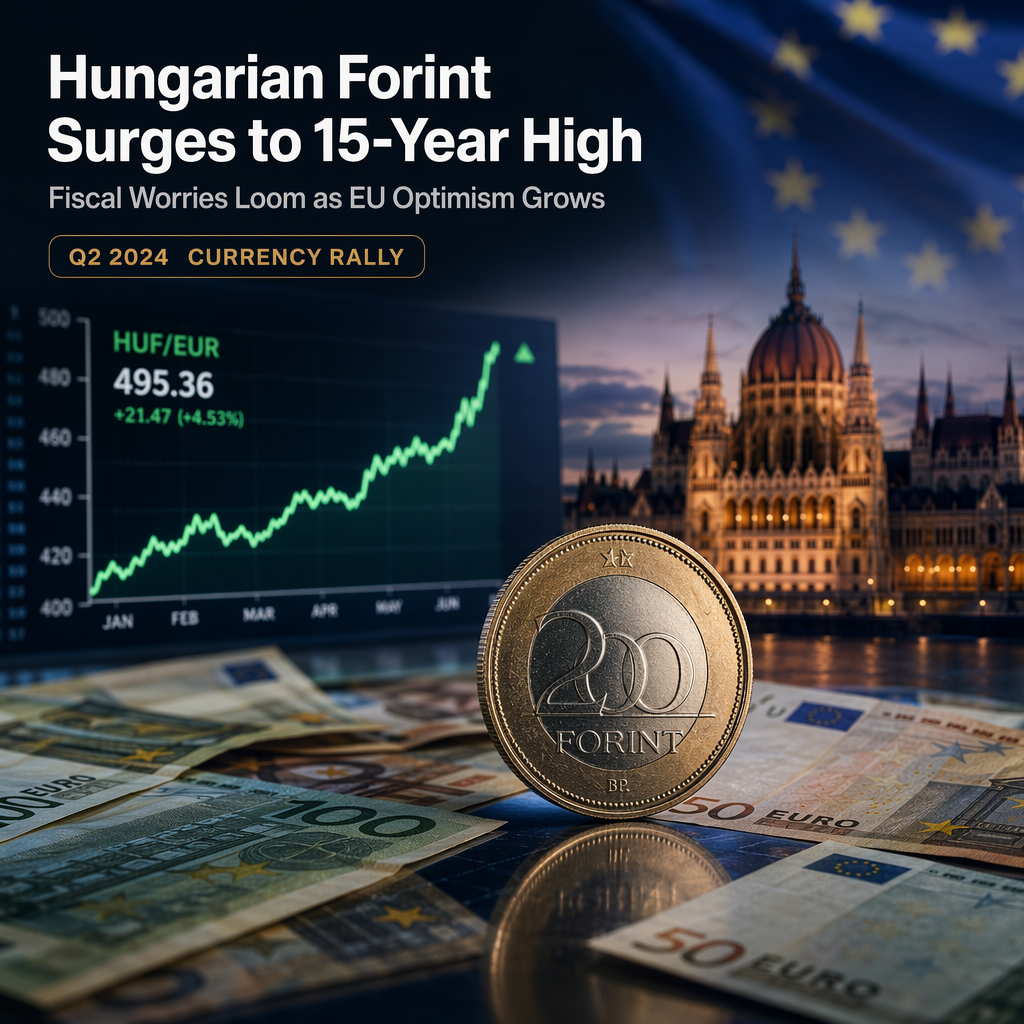
The Hungarian Forint (HUF) has recorded its strongest quarterly performance since 2009, appreciating by 7.8% against the euro on a spot basis, according to Societe Generale strategists. This rally was primarily driven by a pronounced pro-EU shift following Prime Minister Magyar's decisive election victory in April and expectations of renewed access to EU funds [1].
Despite the robust performance, Societe Generale notes emerging signs of bullish exhaustion, as the EUR/HUF exchange rate has struggled to maintain levels below the key 350 threshold. Fiscal concerns have come to the forefront after PM Magyar revealed that the fiscal deficit could exceed 8% of GDP this year, significantly higher than the previous government estimate of 5%. This development highlights the substantial fiscal consolidation required, especially in light of Hungary's stated ambition to adopt the euro by 2030 [1].
On the monetary policy front, the central bank of Hungary (Magyar Nemzeti Bank, MNB) has initiated a modest easing cycle, cutting rates by 25 basis points to 6.0%. This move slightly reduces the foreign exchange carry support for the HUF. In the rates market, the 10-year Hungarian government bond (HUGB) now trades at a 25 basis point premium compared to a pre-election discount of approximately 150 basis points, indicating a sharp repricing but also suggesting limited room for further compression in the near term [1].
CONCLUSION
The Hungarian Forint's recent rally has been underpinned by political and EU-related optimism, but mounting fiscal concerns and modest monetary easing are tempering further gains. Market participants are now focused on Hungary's fiscal trajectory and its implications for euro adoption and bond spreads.