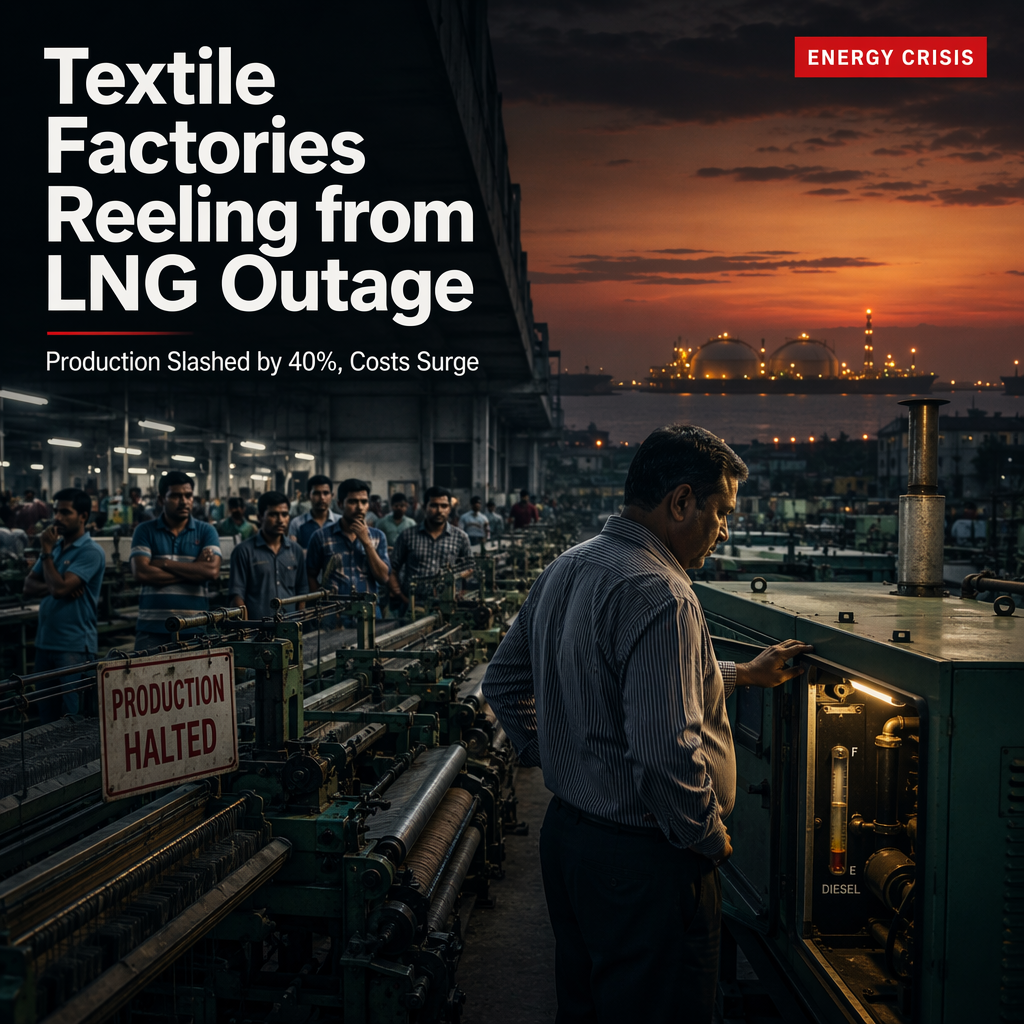
A major outage at Excelerate Energy's Moheshkhali Floating LNG terminal has deprived Bangladesh's national grid of approximately 17 million cubic meters of gas per day, following a spark in a control panel at the terminal, according to Petrobangla [1]. This disruption has significantly impacted factory operations nationwide, with the textile sector—responsible for over 80% of Bangladesh's export earnings—being particularly affected [1]. Industry groups report that gas-dependent textile mills have reduced output by as much as 40% since the outage began [1]. Factory owners have expressed concerns that prolonged disruptions could lead to missed delivery schedules for international buyers, resulting in potential order cancellations and financial losses [1].
To cope with the gas shortage, many manufacturers have resorted to using costly diesel generators, leading to a reported increase in fuel costs by up to 30% in affected regions, according to the Bangladesh Textile Mills Association [1]. This has further squeezed already tight profit margins for textile producers [1]. The incident has underscored the limited resilience of Bangladesh's energy infrastructure and the vulnerability of its key export sectors to disruptions in fuel supply [1].
Industry analysts have highlighted that while gas demand in Bangladesh has been rising, investments in alternative energy sources and infrastructure upgrades have not kept pace, leaving the country exposed to technical failures and international market volatility [1]. An energy sector analyst described the outage as a "wake-up call for energy diversification" [1].
The government has pledged to restore full operations at the terminal as soon as possible, but Petrobangla officials caution that repairs could take several more days [1]. In the interim, factories are preparing for continued operational disruptions and financial strain [1].
CONCLUSION
The outage at the Moheshkhali LNG terminal has exposed significant vulnerabilities in Bangladesh's energy infrastructure and its heavy reliance on imported gas. With textile production slashed and costs rising, the incident is prompting urgent calls for energy diversification and infrastructure investment to safeguard the country's key export sectors.