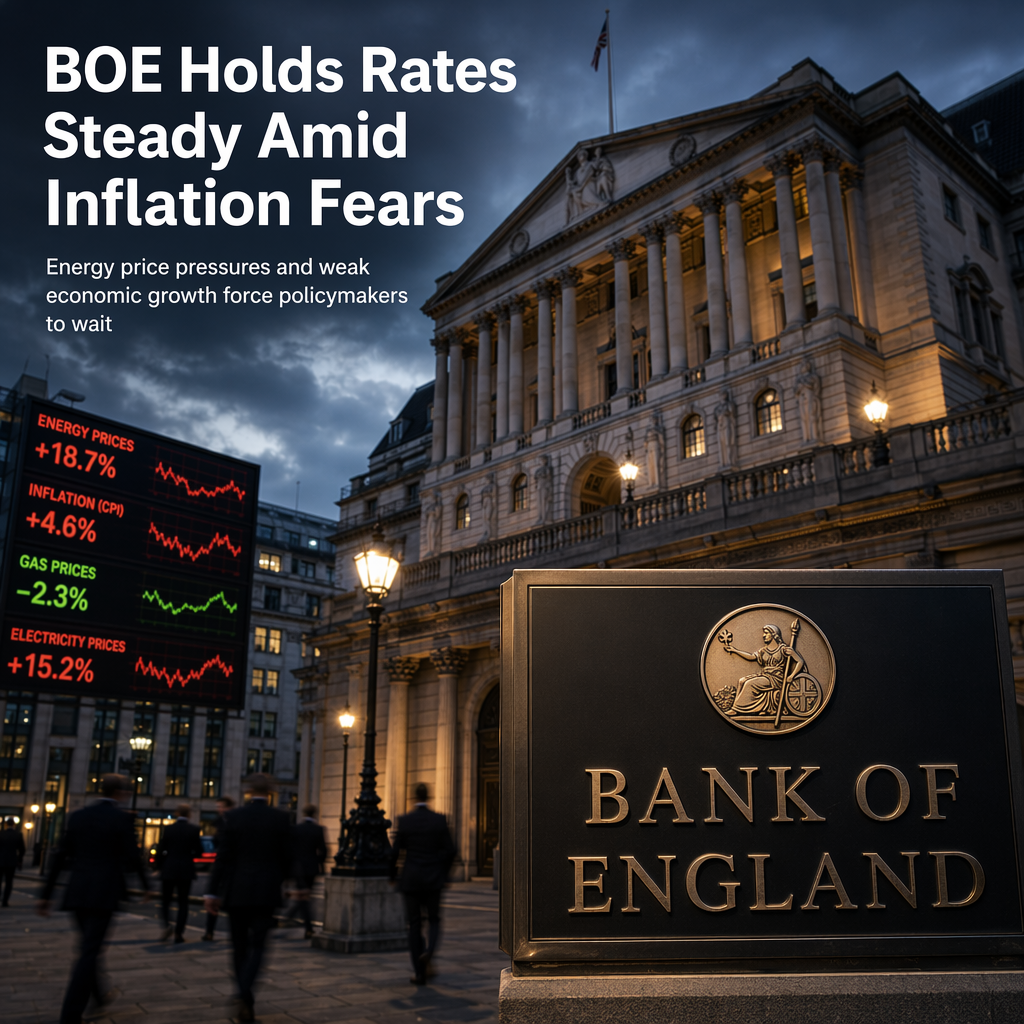
The Bank of England (BOE) decided to keep U.K. interest rates steady at 3.75% on Thursday, as policymakers grappled with persistent inflation pressures following the Iran war and recent peace prospects between Washington and Tehran [1]. This decision was supported by seven out of nine members of the Monetary Policy Committee during the BOE's May meeting, aligning with the expectations of economists polled by Reuters [1].
The U.K.'s inflation rate remained at 2.8% in May, which was cooler than anticipated, largely due to a temporary change in the regulated energy price cap [1]. However, this relief is expected to be short-lived, as the price cap is set to rise by 13% later in the summer, pushing energy costs to a two-year high [1]. The U.K. economy showed signs of weakness, shrinking by 0.1% in April, highlighting the challenge for policymakers balancing inflation control with economic growth [1].
Despite a breakthrough in peace negotiations between Washington and Tehran, higher energy costs stemming from the Iran war continue to drive inflation globally, with the U.K. particularly vulnerable as a net energy importer [1]. Market participants, referencing LSEG figures, are still betting that the BOE will raise rates by the end of the year [1]. Ahead of the meeting, traders priced in a 96% chance that the central bank would keep its key rate unchanged [1].
Other central banks have also responded to the energy crisis: the Federal Reserve kept U.S. interest rates on hold at 3.5%-3.75%, while the European Central Bank raised its key rate last week, and the Bank of Japan increased its policy rate to a 31-year high of 1% [1]. Investors remain cautious, closely monitoring central bank actions and energy price developments, which continue to shape inflation expectations and market sentiment [1].
CONCLUSION
The Bank of England's decision to hold rates at 3.75% reflects ongoing concerns about inflation and energy price volatility, despite recent peace developments in the Middle East. With inflation expected to rise again and economic growth remaining weak, markets are preparing for potential further rate hikes later in the year.