
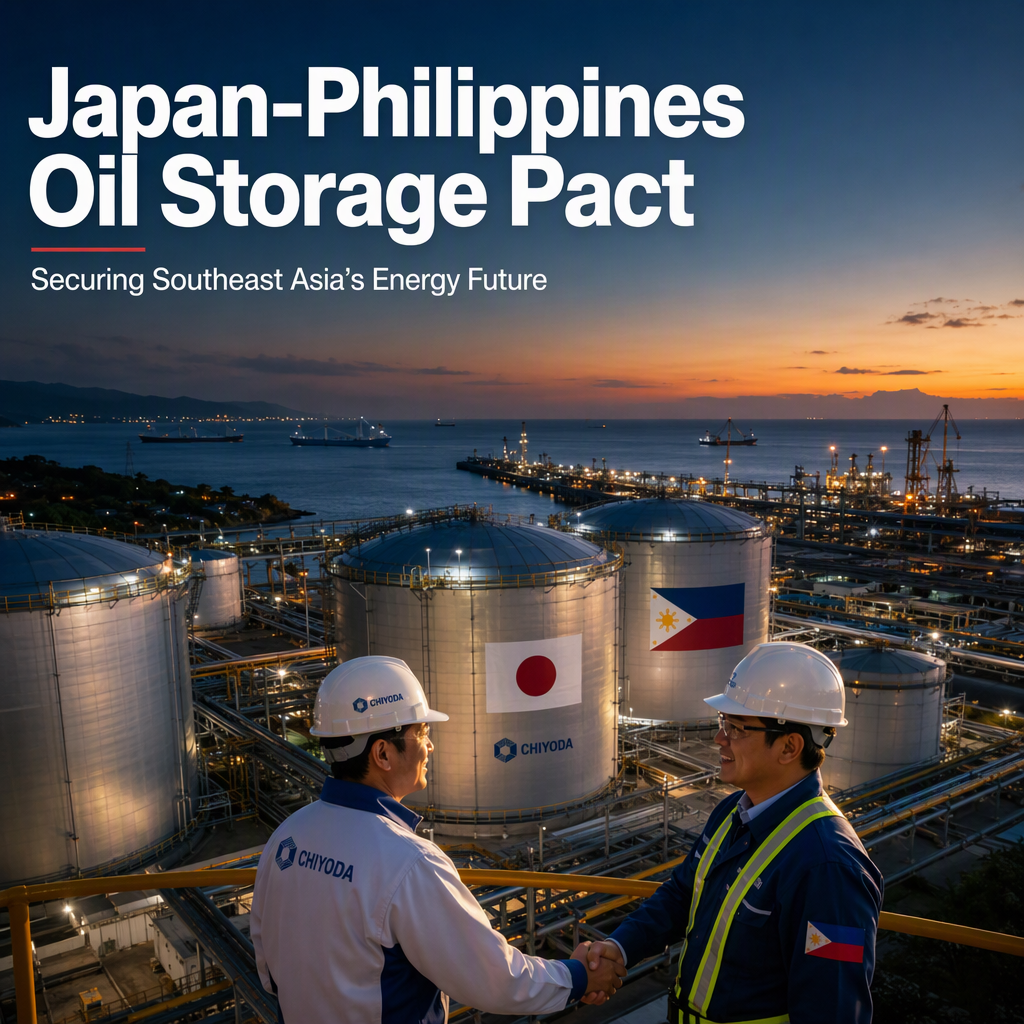
Japan's Chiyoda is set to assist the Philippines in constructing oil storage facilities, a move prompted by the country's recent declaration of a national energy emergency due to low oil reserves [1]. This initiative is part of a broader effort by Japanese companies to support Southeast Asian economies that have been affected by energy supply disruptions stemming from the Iran war [1]. The partnership between Chiyoda and the Philippines aims to strengthen the nation's strategic oil storage capacity, thereby reducing vulnerability to future supply shocks and price volatility [1].
The project is expected to enhance the Philippines' energy resilience and provide a critical buffer against market instability, reflecting Japan's commitment to stabilizing energy supplies in the region [1]. While no specific financial figures or project timelines have been disclosed, industry observers highlight that this investment aligns with a wider trend of Japanese corporate involvement in Southeast Asian infrastructure development, particularly in response to ongoing geopolitical tensions impacting oil flows in Asia [1].
Officials from both Japan and the Philippines have underscored the strategic importance of this collaboration, emphasizing its role in helping the Philippines diversify its energy sources and improve its capacity to respond to external shocks in the oil market [1].
CONCLUSION
Chiyoda's planned support for oil storage development in the Philippines marks a significant step toward enhancing the country's energy security amid ongoing global supply disruptions. While concrete financial details and timelines remain undisclosed, the partnership underscores Japan's strategic role in stabilizing Southeast Asian energy markets.