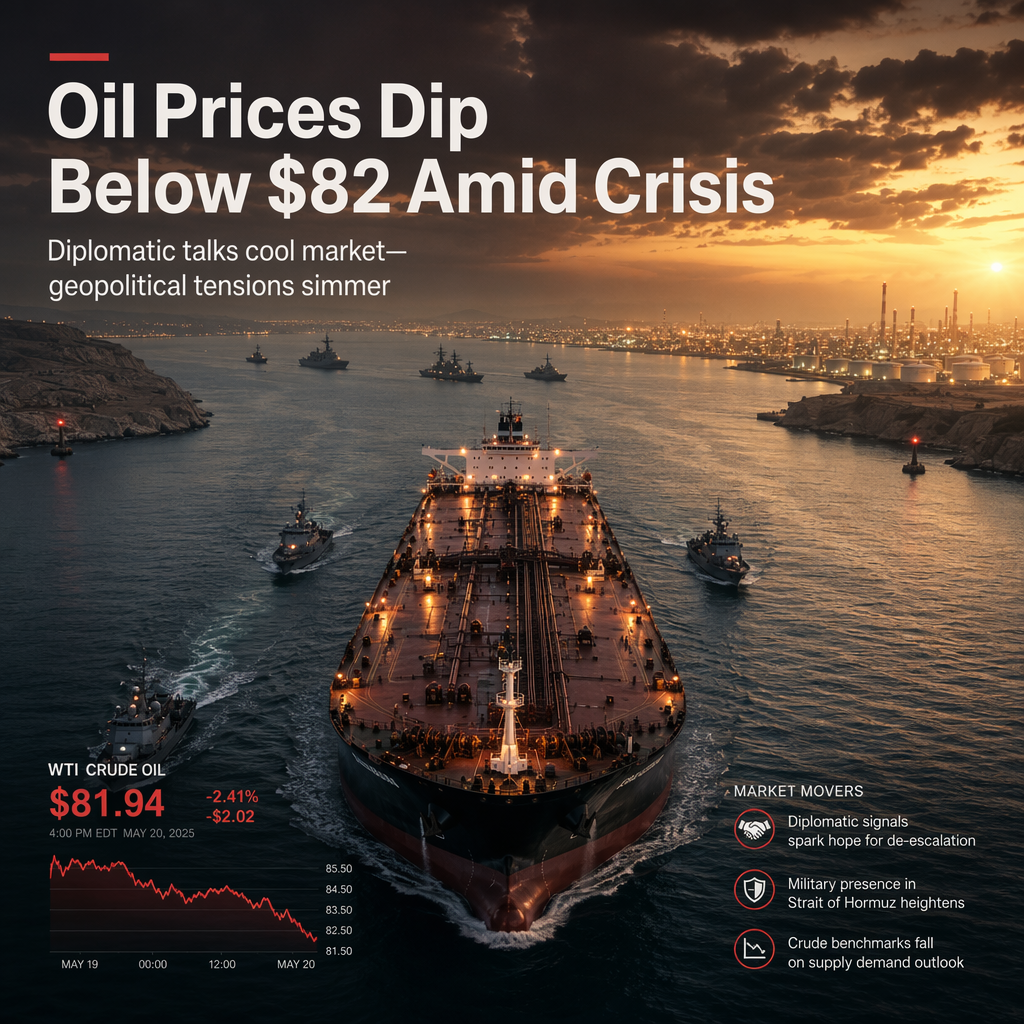
West Texas Intermediate (WTI) crude oil prices extended losses for the second consecutive day, trading around $81.90 per barrel during Asian hours on Tuesday [1]. The decline was attributed to emerging temporary diplomatic signals, as Iranian officials indicated that mediators have presented proposals to de-escalate tensions with the United States. Reports also hinted at a potential 10-day ceasefire, which contributed to the downward pressure on oil prices [1].
Despite the current dip, supply concerns remain elevated due to ongoing geopolitical instability. The market is closely watching the tenth consecutive day of U.S. military strikes on Iran, which has been met with retaliatory actions from Tehran against neighboring countries, further escalating regional tensions [1]. President Donald Trump warned that Iran would be held directly accountable for the deaths of three U.S. service members, intensifying market anxiety [1].
Additionally, Iran-backed Houthi militants announced a maritime embargo against Saudi Arabia, threatening critical energy shipments through the Red Sea. The potential for supply disruption is particularly acute around the Strait of Hormuz, where vessel traffic has dropped sharply following recent Iranian attacks on commercial ships. This reduction in transit has severely tightened global supply expectations, providing sustained upward pressure on crude benchmarks despite the temporary diplomatic signals [1].
While the immediate market reaction has been a decline in WTI prices, the underlying supply risks and geopolitical friction suggest that crude oil prices may rebound if instability persists or escalates further [1].
CONCLUSION
WTI crude oil prices have fallen below $82 per barrel amid temporary diplomatic signals and ongoing geopolitical tensions. Although the market is currently reacting to potential de-escalation, persistent supply concerns and regional instability could drive prices higher in the near future.