
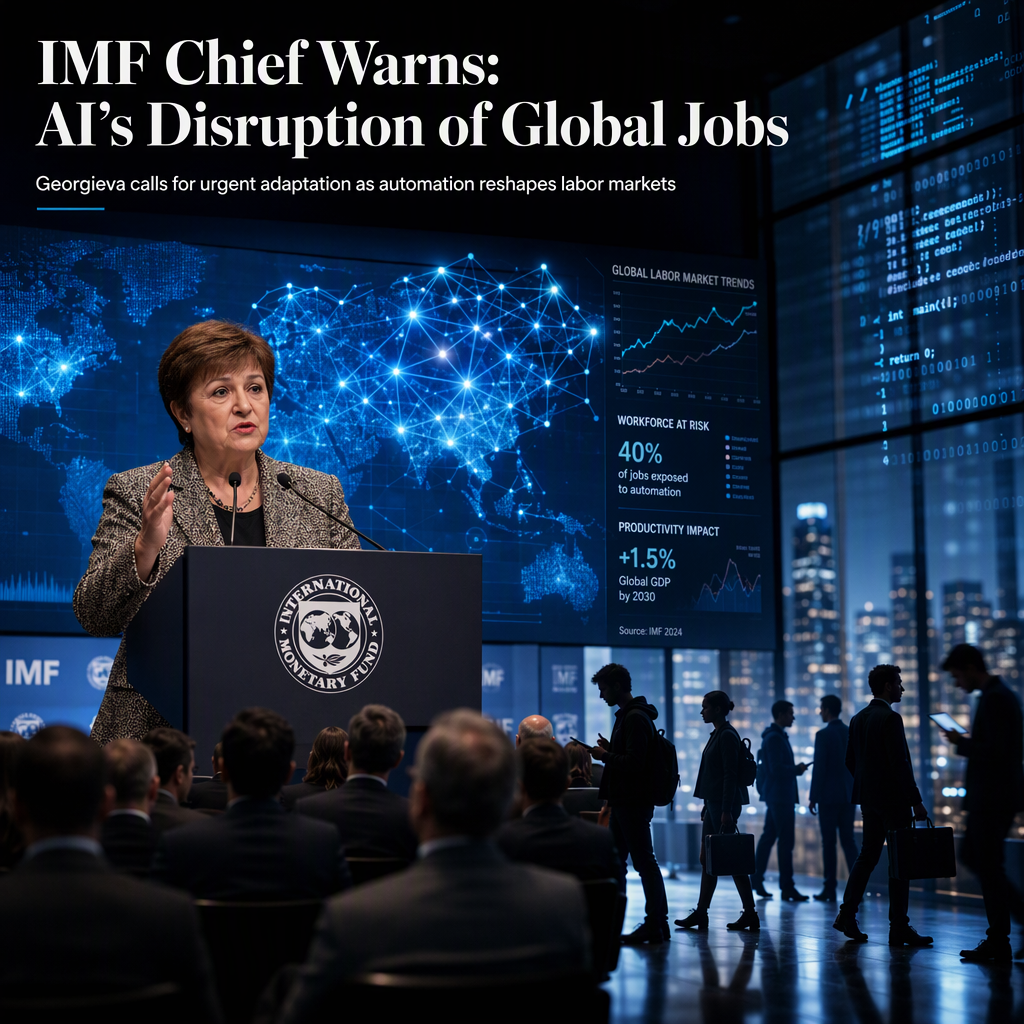
The International Monetary Fund (IMF) Managing Director Kristalina Georgieva stated that the world is already experiencing the first wave of impact from Artificial Intelligence (AI), describing it as both a demand and investment shock [1]. Georgieva identified the United States, China, and India as the most important AI producers, noting that ongoing investments in these countries are helping to maintain global growth at around 3% [1].
Georgieva highlighted that AI could boost growth in Asia by 0.5 to 1 percentage point, with emerging Asia potentially seeing gains between 0.2 to 0.8 percentage point [1]. However, she cautioned that over time, AI could lead to 40% of jobs being augmented, downgraded, or eliminated, with the most significant concern being the impact on young people entering the job market in routine, repetitive roles [1].
She also warned that the growth of AI could fundamentally change the structure of labor markets and raise questions about how governments generate tax revenue [1]. While some impact is already visible in advanced economies, the broader implications for employment and fiscal policy remain a key area of concern [1].
Although the article provides background on risk sentiment and asset classes that typically respond to shifts in investor risk appetite, it does not specify any immediate market reaction to Georgieva's comments or mention specific ticker symbols [1].
CONCLUSION
IMF Managing Director Georgieva's remarks underscore both the growth potential and disruptive risks of AI for global economies and labor markets. While AI investment is supporting global growth, significant challenges remain regarding job displacement and fiscal policy adaptation. The market impact is medium, with investors likely to monitor further developments closely.