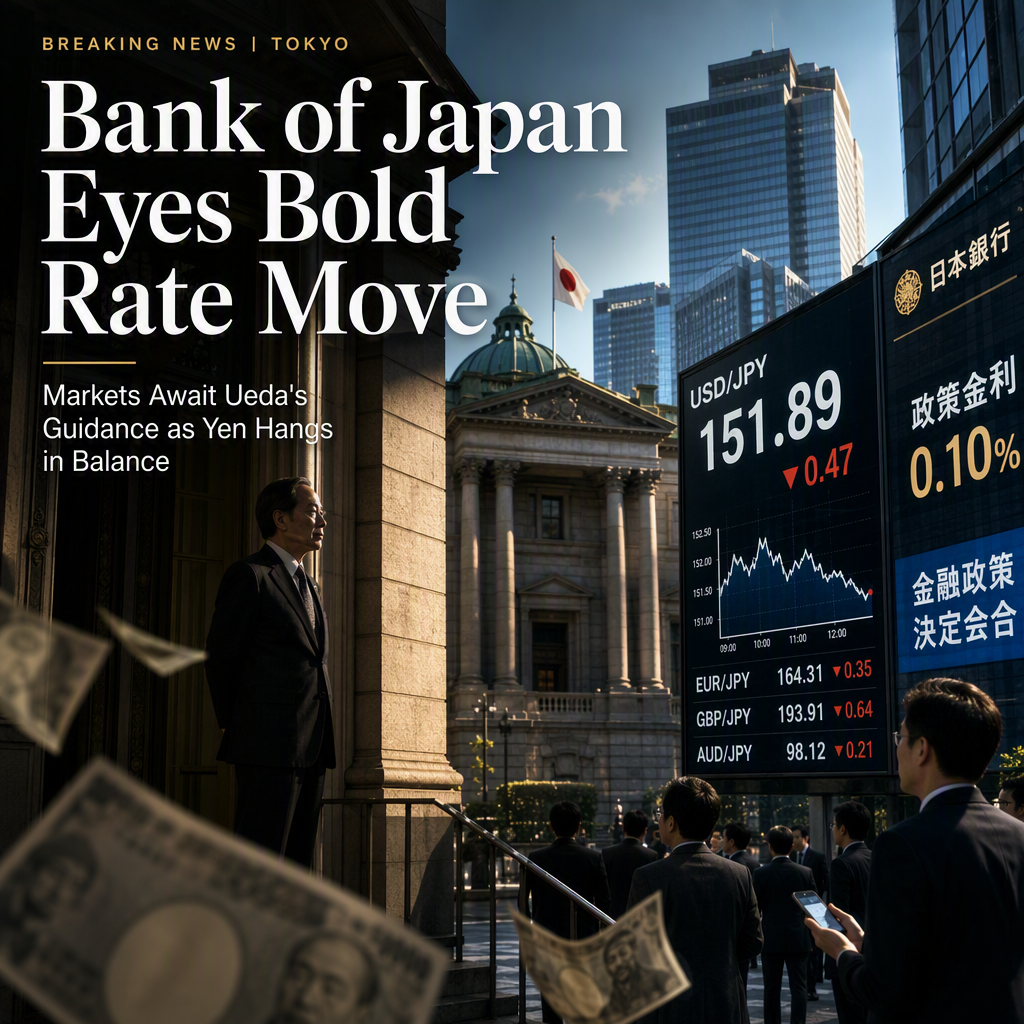
The Bank of Japan (BoJ) is widely expected to implement a 25 basis point rate hike, bringing its policy rate to 1.25%. Financial markets have priced in a near 100% probability of this move, which would be the second rate increase in just three months—marking the most rapid tightening cycle in Japan in years amid accelerating core inflation [1]. Money markets are currently pricing in approximately 90 basis points of cumulative hikes over the next 12 months, reflecting expectations for a more aggressive policy stance [1].
Derek Halpenny of MUFG cautions that Governor Kazuo Ueda may adopt a more cautious tone than markets anticipate, especially given elevated global energy prices and uncertainty in equity markets. Halpenny warns that if Ueda's comments do not match the hawkish expectations embedded in market pricing, the USD/JPY could rise sharply due to a 'sell the fact' reaction in the Japanese Yen [1].
The Danske Research Team argues that recent CPI data supports a shift away from the BoJ's traditionally slow approach, advocating for a more nimble and flexible tightening path to defend the Yen's strength. They emphasize that a clear commitment to a faster pace is necessary to prevent renewed selling pressure on the Yen, as core price pressures have shown signs of picking up, according to recent Tokyo data [1].
Jane Foley at Rabobank notes that two rate hikes within three months highlight a significant change in Japan's inflation environment. While there is a risk of short-term profit-taking on long JPY positions if Ueda does not signal an accelerated tightening pace, Foley expects underlying economic reforms and firm price trends to anchor USD/JPY around 154.00 over the next quarter [1].
CONCLUSION
The Bank of Japan's anticipated 25 basis point rate hike to 1.25% is seen as a pivotal move, but market reaction will hinge on Governor Ueda's guidance regarding future policy. While a cautious stance could trigger Yen weakness, analysts highlight the need for a more flexible tightening approach to support the currency. The market's focus remains on whether the BoJ will meet or fall short of aggressive rate hike expectations.