
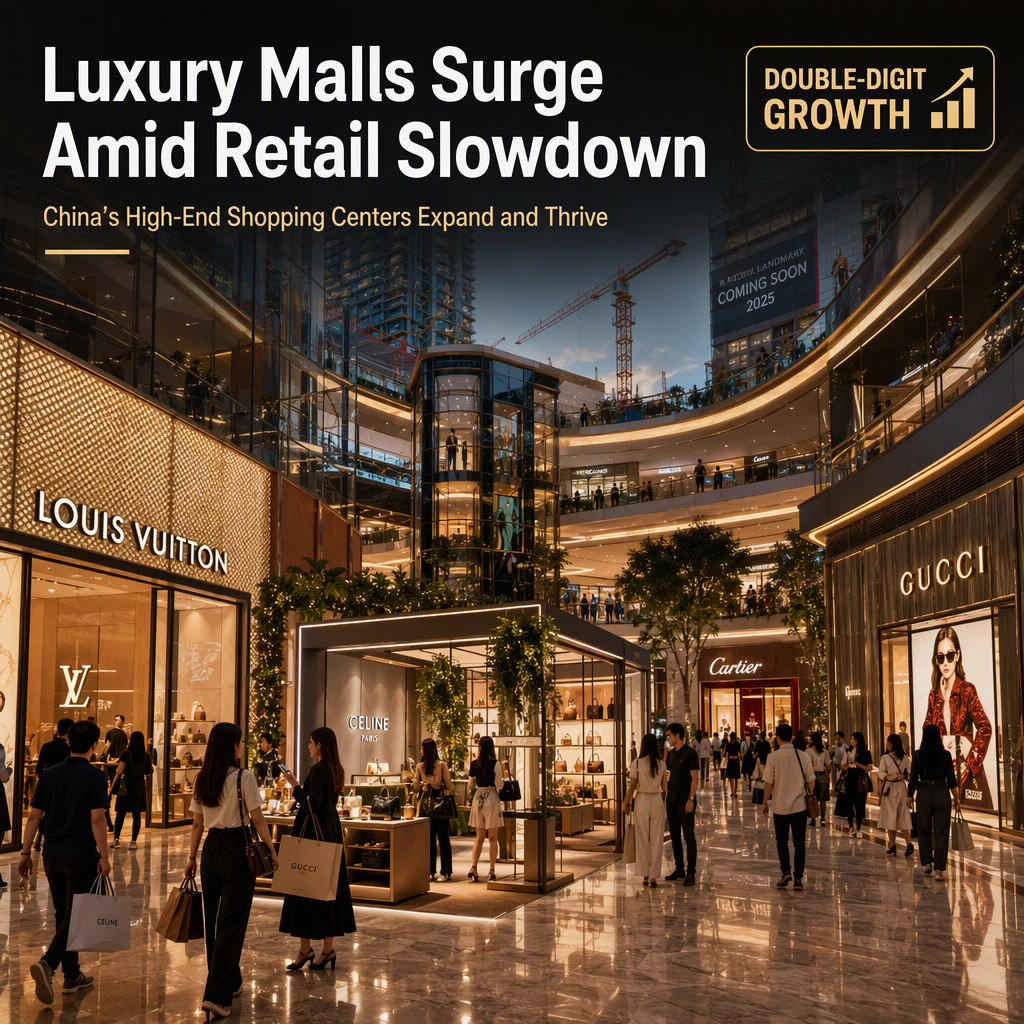
High-end shopping mall operators in China are expanding their presence, bucking the trend of a broader retail slowdown in the country. These operators are adapting to shifting consumer preferences by introducing new tenants and innovative store formats, such as pop-up stores in locations like Hang Lung's shopping mall in Wuxi, to attract more shoppers and boost sales [1].
Despite the nationwide retail slump, luxury malls are reporting robust performance, with financial data indicating double-digit growth in premium categories. The increase in sales is largely driven by luxury goods and experiences, as operators leverage upscale environments and exclusive brands to differentiate themselves from other retail segments facing weak consumer demand [1].
Market analysis attributes this resilience to China's wealthy consumers, who are seeking unique and exclusive products and prefer in-person shopping experiences. Expansion strategies include opening new locations in major cities and upgrading existing facilities to provide more immersive experiences for shoppers [1].
Industry observers believe this positive trend will likely continue, positioning luxury malls as a bright spot in an otherwise challenging retail environment. The ongoing success has encouraged operators to continue investing, targeting affluent customers and forming partnerships with global luxury brands. According to a retail analyst, 'Offline retail is not dead. It is evolving, especially at the high end, where experience and exclusivity matter more than ever' [1].
CONCLUSION
China's luxury mall operators are outperforming the broader retail market, supported by strong sales and double-digit growth in premium categories. Their expansion and innovation strategies are expected to sustain momentum, making luxury malls a resilient segment amid retail headwinds.