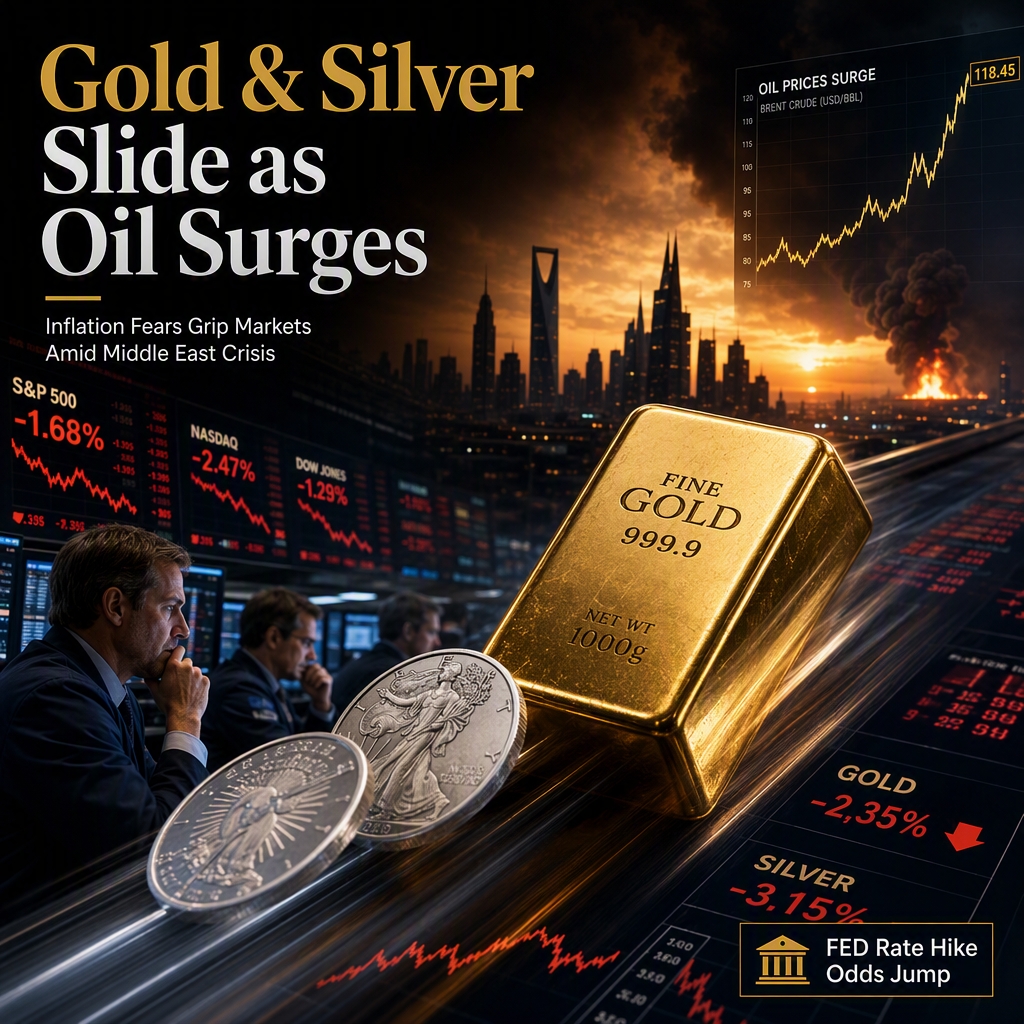
Gold (XAU/USD) posted marginal gains for the third consecutive day on Tuesday amid risk-off sentiment, but ultimately dipped below $4,400 during European trading hours, extending its decline from last week’s highs in the $4,500 area. The move was driven by escalating tensions in the Middle East, with Tehran threatening attacks on Gulf energy infrastructure, including US oil and gas sites, in response to potential new attacks on its assets. This geopolitical uncertainty has led to a rally in oil prices, with Brent Crude trading above $97.00 per barrel and approaching the $100 psychological level, thereby boosting inflationary pressures and prompting central banks to consider more restrictive policies [1][4]. Technical analysis indicates key support for gold at $4,300, with momentum indicators showing incipient bearish traction and resistance clustered between $4,510 and $4,536 [1].
Silver (XAG/USD) also fell on Tuesday, trading at $65.88 per troy ounce, down 0.55% from Monday’s price of $66.24. Silver prices have decreased by 7.33% since the beginning of the year. The Gold/Silver ratio rose to 66.72, up from 66.61 on Monday, indicating relative outperformance of gold versus silver. Silver’s decline is attributed to similar risk-off sentiment and its tendency to follow gold’s moves, as both metals are considered safe-haven assets during periods of geopolitical instability and inflation fears [2].
US stock futures reacted sharply to these developments. Dow Jones futures fell by 0.92% to near 52,950, S&P 500 futures declined by 0.41% to below 7,700, and Nasdaq 100 futures lost 0.24% to below 29,500. Elevated oil prices have kept inflation risks and interest rate concerns at the forefront of market sentiment. The recent exchange of strikes between the US and Iran has further fueled fears of additional price increases. Additionally, trade tensions intensified as Canada’s retaliatory tariffs, ranging from 15% to 50% on up to $27.6 billion worth of American goods, took effect on Tuesday [4].
Traders are now pricing in a greater than 60% probability of a Federal Reserve rate hike in September, a view reinforced by a stronger-than-expected August US labor report showing nonfarm payrolls expanding by 162,000 and a steady unemployment rate. Strategists at BNY argue that the latest labor market data have materially reinforced the case for further tightening, stating that even Governor Christopher Waller’s equivocal comments do not change their conviction that a rate hike is imminent [4]. TD Securities expects August CPI data to show underlying inflation remains contained, with core prices rising 0.19% month-on-month (2.3% year-on-year), but headline CPI is forecast to rise 0.37% month-on-month (3.4% year-on-year) due to higher energy prices and a slight pickup in food inflation. Risks to these forecasts are skewed to the upside, especially if August inflation data comes in hot, which could prompt a September rate hike [3][4].
CONCLUSION
Gold and silver prices declined as escalating Middle East tensions and surging oil prices heightened inflation fears, prompting risk-off sentiment across global markets. US stock futures fell sharply, and traders increased bets on a Federal Reserve rate hike in September, with upcoming inflation data seen as pivotal for policy decisions. The market remains highly sensitive to geopolitical developments and inflation indicators, with further volatility expected as central banks weigh their next moves.