On Tuesday, the Euro experienced a notable decline despite several factors that would typically support its value, including hawkish-leaning remarks from a traditionally dovish European Central Bank (ECB) Governing Council member and a softening American payrolls proxy. The Euro peaked just shy of 1.1450 before closing at 1.1406, marking its weakest finish since the previous Wednesday [1]. Market participants appeared to disregard the positive signals for the Euro, instead focusing on unfolding geopolitical events.
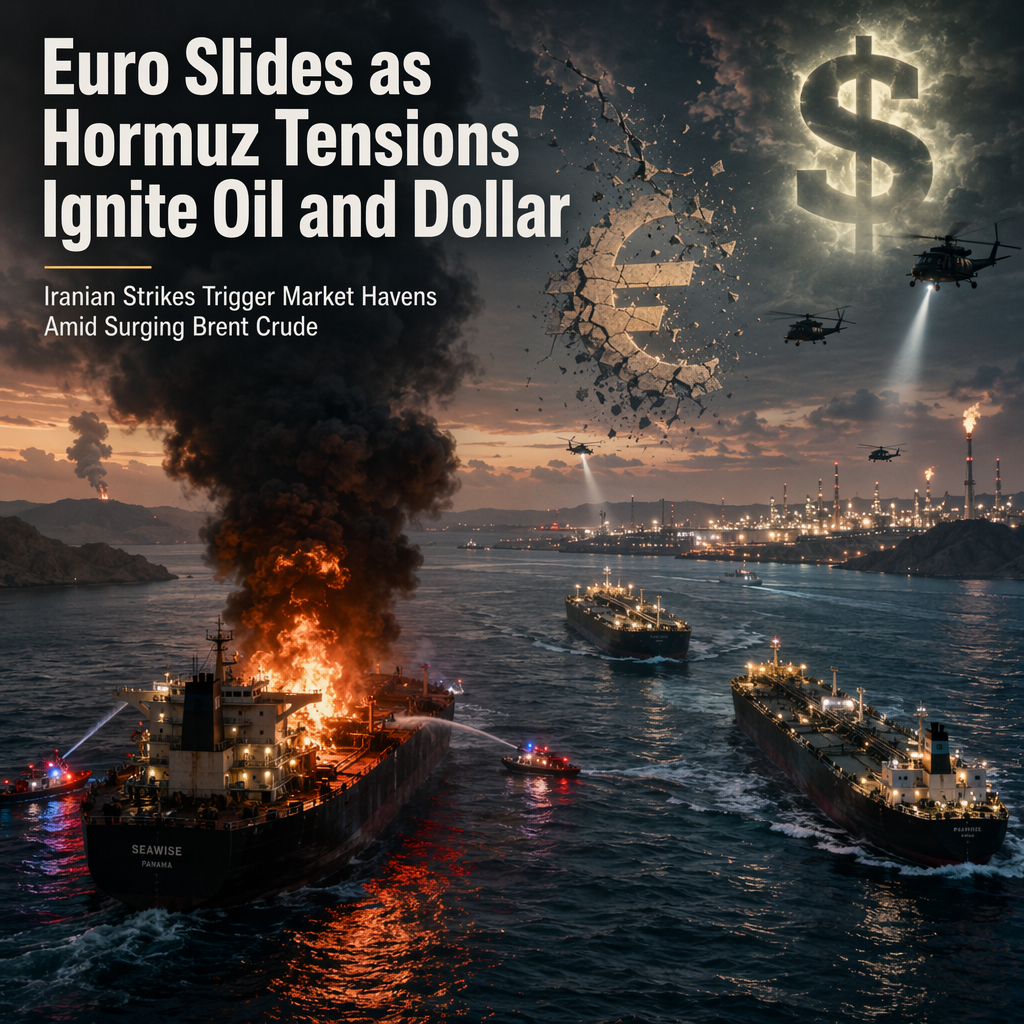
The core market-moving event was a series of Iranian strikes on three commercial vessels transiting the Strait of Hormuz from Monday into Tuesday, including a Qatari liquefied natural gas carrier and a Saudi tanker. One vessel was left burning off the Omani coast, though no crew casualties were reported [1]. In response, the United States Central Command announced retaliatory strikes targeting Iranian missile, drone, and radar sites, labeling the attacks a clear violation of the ceasefire signed at Versailles. Additionally, the U.S. Treasury revoked its sanctions relief on Iranian crude oil exports, requiring buyers to wind down existing transactions by July 17 [1].
These developments led to a sharp market reaction: Brent Crude Oil surged roughly three percent toward $76 per barrel, and the Dollar benefited from a haven bid as investors sought safety amid Middle East tensions. The Euro was directly impacted, unable to sustain earlier gains and closing near its session lows [1].
Forward-looking statements from ECB officials suggest that the inflation fight is not finished, with market pricing indicating a likely further quarter-point ECB hike this year, though almost no expectation is assigned to the July 23 meeting itself [1]. The softening U.S. labor data, as reflected in the four-week average of ADP's employment change series slipping to 21,000 from 24,250, would typically support the Euro, but geopolitical risks took precedence in market sentiment [1].
CONCLUSION
Geopolitical tensions in the Strait of Hormuz overshadowed positive Eurozone and U.S. economic signals, driving a sharp decline in the Euro and a surge in Brent Crude Oil prices. The Dollar benefited from a haven bid, reflecting heightened risk aversion. Market focus has shifted to the unfolding Middle East situation and its potential impact on global financial stability.