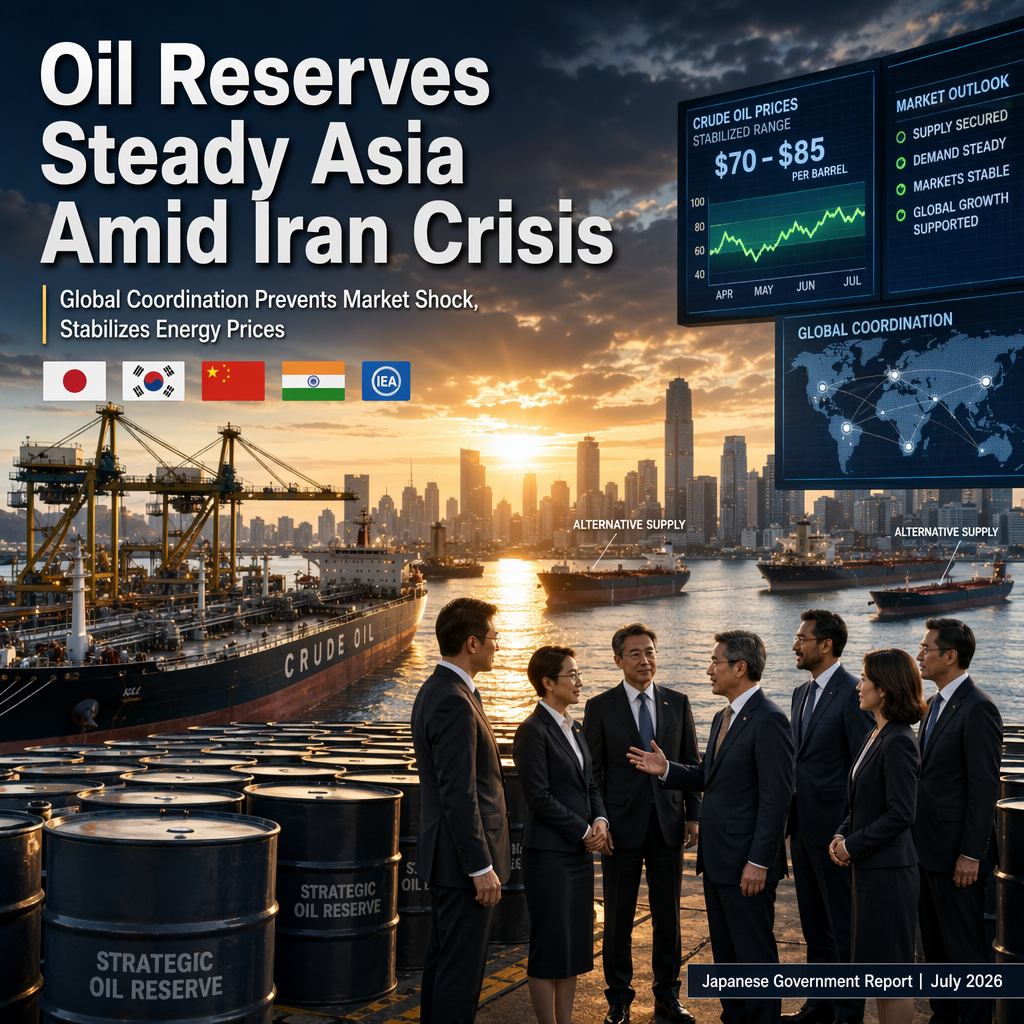
According to a Japanese government report released on July 18, 2026, Asian economies successfully avoided a sharp slowdown that could have resulted from the Iran war, primarily due to the coordinated release of oil reserves by the International Energy Agency's 32 member countries. These nations collectively agreed to inject 400 million barrels of oil into the market, a move that was instrumental in easing supply shocks triggered by the conflict and stabilizing crude prices across the region [1].
The report details that Asian economies managed to secure crude oil imports from sources outside the Middle East, with companies such as Idemitsu Tanker facilitating alternative shipments. This diversification of supply routes helped mitigate the direct impact of Middle Eastern disruptions and ensured steady imports during the crisis period [1].
Financial data from the report indicate that oil prices, which had surged above $90 per barrel during the initial phase of the war, retreated and stabilized near pre-conflict levels following the reserve release. Brent crude prices found support at $70 per barrel, with resistance observed at $85 before the intervention. This stabilization was crucial in preserving support levels for Asian currencies and equity markets, effectively preventing a broader market selloff [1].
Market analysts cited in the report described the coordinated reserve release as 'a decisive step that restored confidence in the energy markets.' The Japanese government further concluded that the action helped avert a sharp increase in inflation rates across Asia. The report advises investors to remain vigilant for further geopolitical developments but notes that risk premiums in oil futures have diminished as a result of the strategic intervention. Key statements include: 'The international response averted a crisis of confidence in Asian markets,' and 'Future conflicts may require similar coordinated actions to protect economic stability' [1].
CONCLUSION
The Japanese government report underscores that the coordinated global release of oil reserves was pivotal in stabilizing Asian economies and energy markets following the Iran war. By swiftly addressing supply shocks and supporting market confidence, the intervention prevented a severe economic downturn and contained inflation risks. Future geopolitical crises may necessitate similar collective actions to safeguard economic stability.