
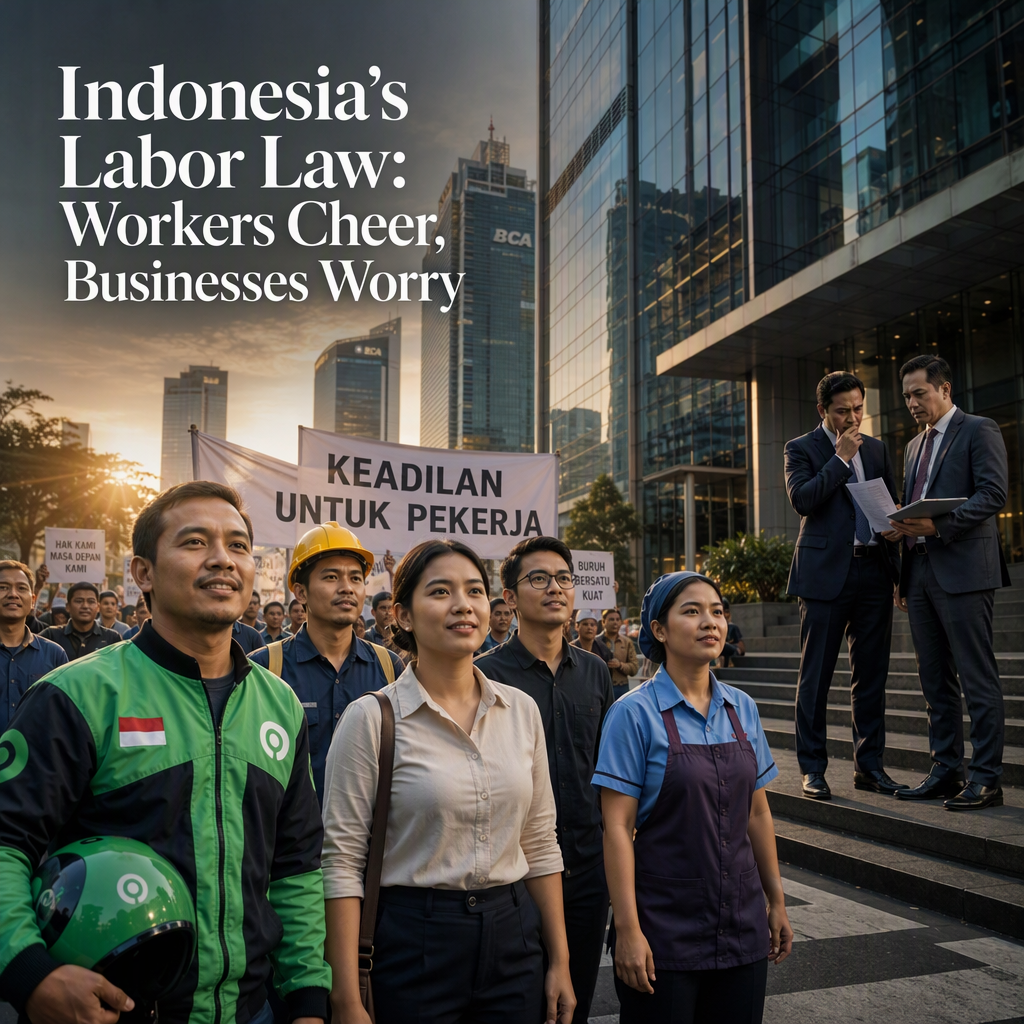
Indonesia's legislature passed a new labor law on October 6, 2026, which has been met with strong approval from workers' groups but has generated anxiety among businesses regarding increased hiring costs and regulatory uncertainty [1]. Labor unions have described the law as a 'victory' for workers' rights, highlighting provisions such as tighter rules on worker contracts, enhanced severance pay, and stricter regulations on outsourcing, all of which are expected to provide greater job security and improved benefits for employees [1].
The law's passage follows significant worker mobilization, including a rally by ride-hailing company drivers in Jakarta in 2025, demonstrating widespread support for stronger legal protections [1]. Union leaders argue that these reforms will help raise living standards and stimulate economic growth by boosting consumer spending [1].
On the other hand, business groups have expressed concerns that the revised regulations will increase severance pay obligations, restrict outsourcing and contract labor, and raise fixed employment costs, all of which could negatively impact company cash flows and profitability [1]. Additionally, the lack of clear implementation guidelines has contributed to market confusion and heightened risk assessments among investors [1]. Some analysts caution that Indonesia's attractiveness as an emerging market could be undermined by these sweeping labor reforms, given the country's reliance on regulatory clarity and cost competitiveness to attract foreign investment [1].
The new labor law is part of a broader debate over Indonesia's economic direction, as policymakers attempt to balance growth, investor confidence, and social protection. The market is expected to closely monitor forthcoming regulatory clarifications and the law's effects on employment, wages, and corporate earnings in the coming quarters [1].
CONCLUSION
Indonesia's new labor law marks a significant shift in worker protections, drawing praise from unions but raising concerns among businesses about higher costs and regulatory uncertainty. The market impact is expected to be medium, with investors and companies awaiting further guidance on implementation and potential effects on the investment climate.