
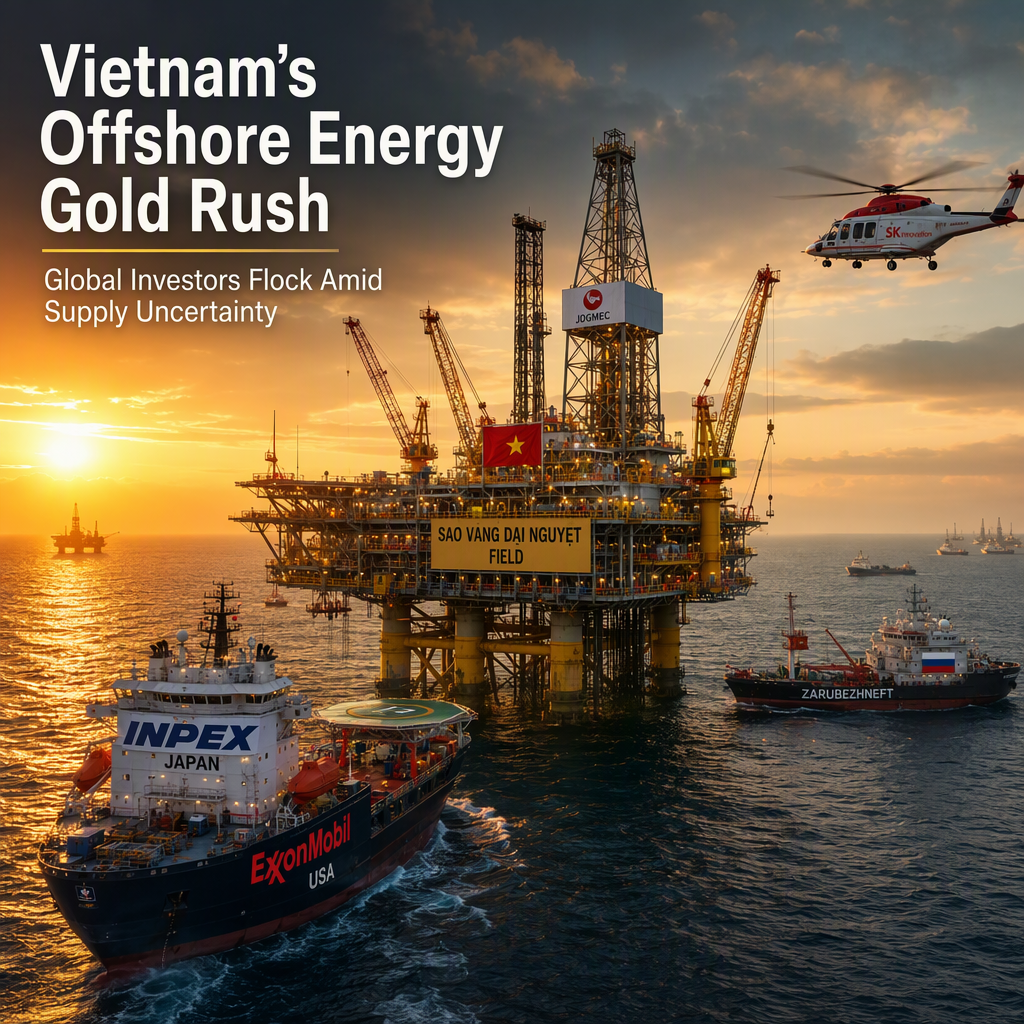
New oil and gas projects are emerging off the coast of Vietnam, which is home to some of Southeast Asia's richest reserves, as Japanese and U.S. companies compete with Russian firms to meet the country's growing energy demand. This surge in activity is being driven by heightened concerns over energy supply security, with ongoing tensions in the Middle East causing disruptions and pushing global energy prices higher [1].
The Sao Vang Dai Nguyet gas field, situated approximately 350 kilometers off Vietnam's coast in the South China Sea, exemplifies the country's strategic importance in the current energy landscape. Japanese and U.S. energy companies are expanding their presence in Vietnam's offshore sector, attracted by the vast reserves and the opportunity to invest in a market less affected by Middle East instability. Russian companies, already established in the region, are also increasing their activities, intensifying competition among international players [1].
Market participants believe that the ongoing energy crisis, coupled with Vietnam's rising energy demand, will likely accelerate further exploration and development in the area. The increased offshore activity is expected to enhance Vietnam's energy security and create new opportunities for foreign investors seeking to diversify away from traditional supply regions [1].
CONCLUSION
Vietnam's offshore oil and gas sector is experiencing a surge in international investment, with Japanese, U.S., and Russian companies intensifying their activities amid global supply concerns. This trend is expected to strengthen Vietnam's energy security and offer new avenues for foreign investors as the global energy market seeks alternatives to the Middle East.