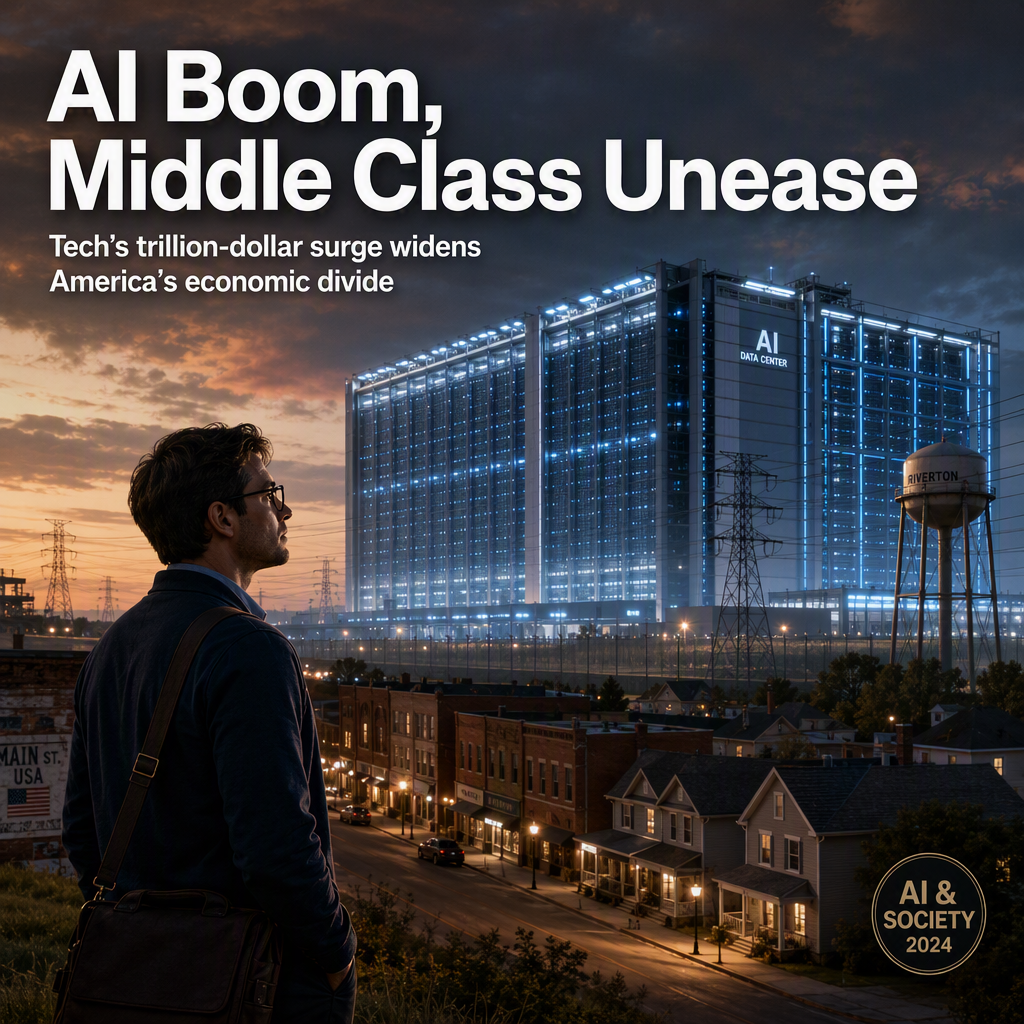
The United States is witnessing a rapid escalation in artificial intelligence (AI) investments, with multibillion-dollar AI data centers being announced every few weeks, leading to increased grid demands, water consumption, and land use [1]. While technology companies celebrate these milestones and achieve multi-trillion-dollar valuations, concerns are rising in smaller communities about the local costs and long-term implications of these developments [1].
The article highlights that AI is fundamentally different from previous technological disruptions, as the companies driving this revolution require far fewer employees than past industrial giants, despite their massive valuations [1]. The jobs most at risk from AI are in the middle-class professional tier, including software developers, designers, accountants, corporate marketers, and legal analysts—roles traditionally considered safe from automation due to specialized college degrees [1].
This shift is generating significant political and social anxiety, as workers fear that the benefits of AI-driven progress are not being equitably shared, and that they may be left behind while a small number of regions and companies reap the rewards [1]. Boardroom discussions about AI strategy are primarily focused on speed, productivity, and market share, with little attention paid to the broader societal impact or the sustainability of public support for such rapid change [1].
The article argues that neither increased taxation and redistribution nor promises of future scientific breakthroughs adequately address the psychological reality facing American workers, who are concerned about being excluded from the benefits of technological progress [1]. Historical parallels are drawn to extractive industries, which eventually had to address the needs of the communities they affected [1].
CONCLUSION
The rapid expansion of AI is creating economic and social anxiety among American middle-class professionals, as the benefits appear concentrated among a few tech giants and regions. The article suggests that without a new social contract or broader inclusion, public support for AI-driven progress may erode, posing risks to both the industry and society at large.