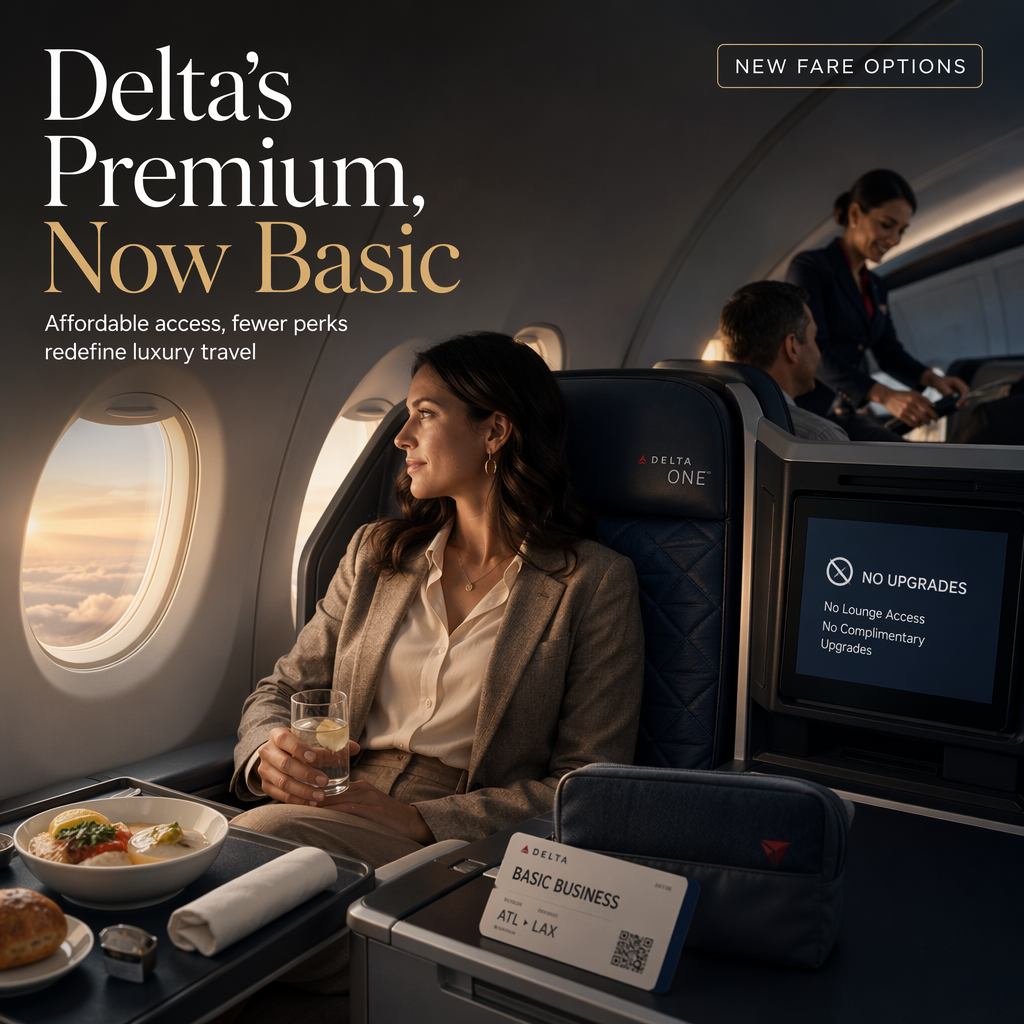
Delta Air Lines has introduced three new lower-cost fare options for its premium cabins, expanding its no-frills pricing model beyond the main cabin. The new fares—Delta First Basic, Delta Premium Select Basic, and Basic Business (for Delta One)—are now available for purchase, with travel on select routes beginning in September for some options. These fares offer the same onboard experience as higher-tier premium fares, such as lie-flat seats, premium meals, and amenity kits for Basic Business, but come with significant restrictions. Customers booking these basic fares will have seats assigned after check-in, earn fewer miles, have a reduced checked bag allowance, and are not eligible for upgrades. Additionally, same-day travel changes are not permitted, and changes or cancellations will incur a fee. Access to Delta Sky Clubs and Delta One Lounges is not included unless travelers have alternative qualifying access, with Basic Business customers retaining Delta One Lounge access only until January 18, 2027.
Joe Esposito, Delta's executive vice president and chief commercial officer, stated that this expansion provides customers with more ways to choose the Delta experience that best fits their needs. The move follows previous signals from Delta leadership about bringing more fare options to premium cabins, with former president Glen Hauenstein noting that main cabin segmentation served as a blueprint for premium seats. Delta First Basic is currently available on certain domestic and Latin America routes, while Delta Premium Select Basic and Basic Business are available for purchase now for travel beginning in September on select domestic and long-haul international routes.
The introduction of these basic premium fares is expected to provide more flexibility and price points for travelers, though at the cost of reduced perks and benefits. The market implications suggest Delta is seeking to capture a broader range of premium customers by offering more segmented fare options, potentially increasing revenue from travelers willing to forgo some traditional premium benefits in exchange for lower prices.
CONCLUSION
Delta's rollout of basic fares in its premium cabins marks a strategic shift to attract more price-sensitive travelers while maintaining premium onboard experiences. While the move reduces some traditional perks, it broadens access to higher-tier seating and may boost Delta's competitive positioning in the premium travel market.