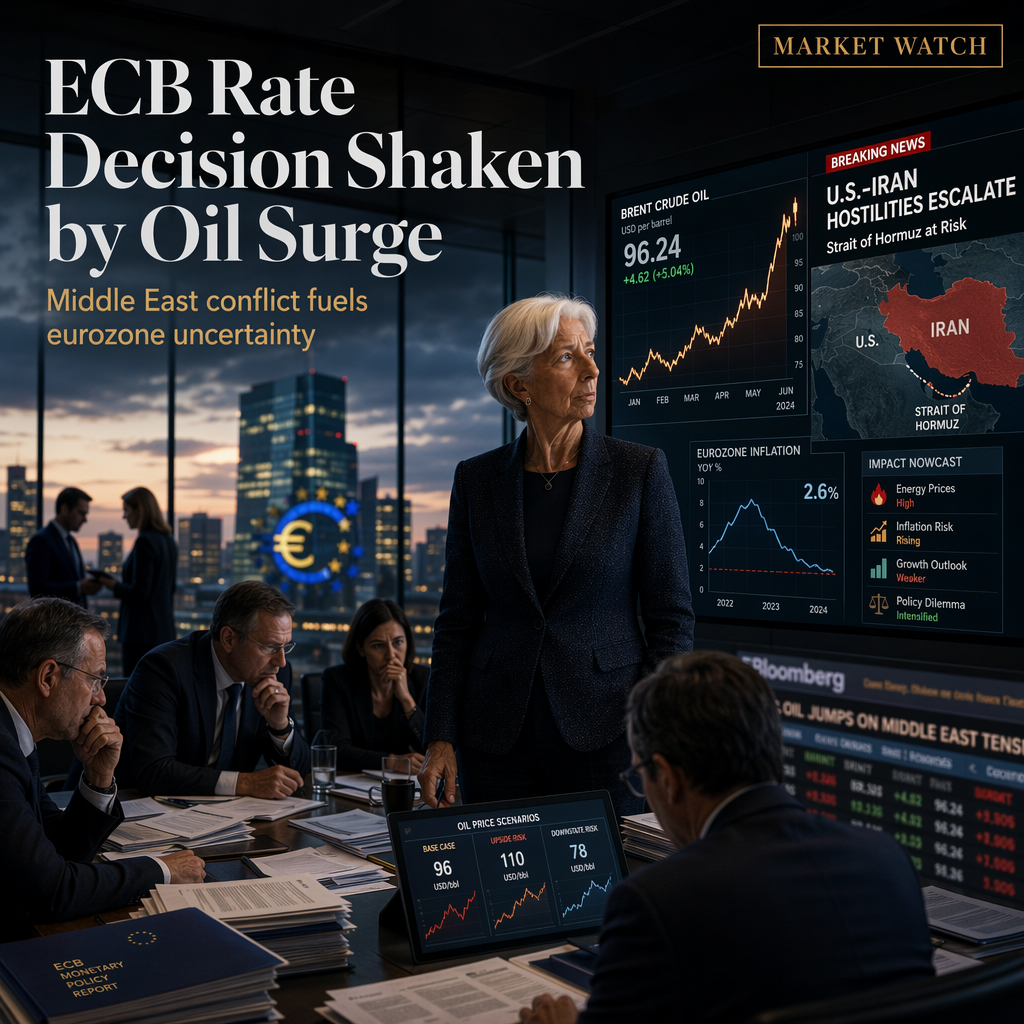
The European Central Bank (ECB) is reconsidering its upcoming interest rate decision as escalating military conflict between the U.S. and Iran has caused oil prices to surge, creating significant uncertainty in the market [1]. The ECB had previously raised its key deposit rate by 25 basis points in June, bringing it to 2.25%, after a period of four rate cuts earlier in 2025 that reduced the rate from 3% to 2% by mid-June [1]. This reversal was prompted by a spike in energy prices, and investors had largely expected the ECB to hold rates steady at the next meeting. However, the recent surge in oil prices has led investors to reprice expectations for the July 22 monetary policy meeting, with the possibility of another rate hike now back on the table [1].
The renewed hostilities in the Middle East, particularly the exchange of strikes between the U.S. and Iran over the Strait of Hormuz, have pushed Brent crude futures above $85 per barrel, up from around $70 just a week prior to the conflict [1]. This sharp increase in oil prices is particularly impactful for the eurozone, which imported 57% of its energy needs in 2024 [1]. Headline inflation in the eurozone, which had been close to the ECB's 2% target before the Iran war, accelerated to 3.2% in May. Although initial estimates indicate that inflation eased to 2.8% last month, energy costs rose 8.7% year-on-year, while core inflation remained at 2.4%, suggesting limited broader inflationary effects so far [1].
Bundesbank President and ECB rate setter Joachim Nagel emphasized the high level of uncertainty, stating, "The renewed outbreak of military conflict in the Middle East and the fresh rise in oil prices underscore that the situation remains extremely volatile and the uncertainty is similarly high. It remains advisable to react with caution, but to act decisively if necessary. Monetary policy will maintain its vigilant stance" [1]. Policymakers are also aware that the latest GDP and inflation data will not be available until after the July 22 meeting, adding to the challenge of making an informed decision [1].
There are concerns that maintaining a restrictive monetary policy could push the eurozone economy into recession, as the region's GDP contracted by 0.2% year-on-year in the first quarter of 2026 [1]. Eurozone bond yields have also risen sharply over the past year, reflecting increased market volatility and uncertainty [1].
CONCLUSION
The ECB faces a complex decision as renewed Middle East hostilities drive oil prices higher and inflation remains above target. With key economic data unavailable before the next meeting and the risk of recession looming, policymakers are likely to proceed with caution while remaining prepared to act decisively if necessary. Market volatility and uncertainty are expected to persist in the near term.