
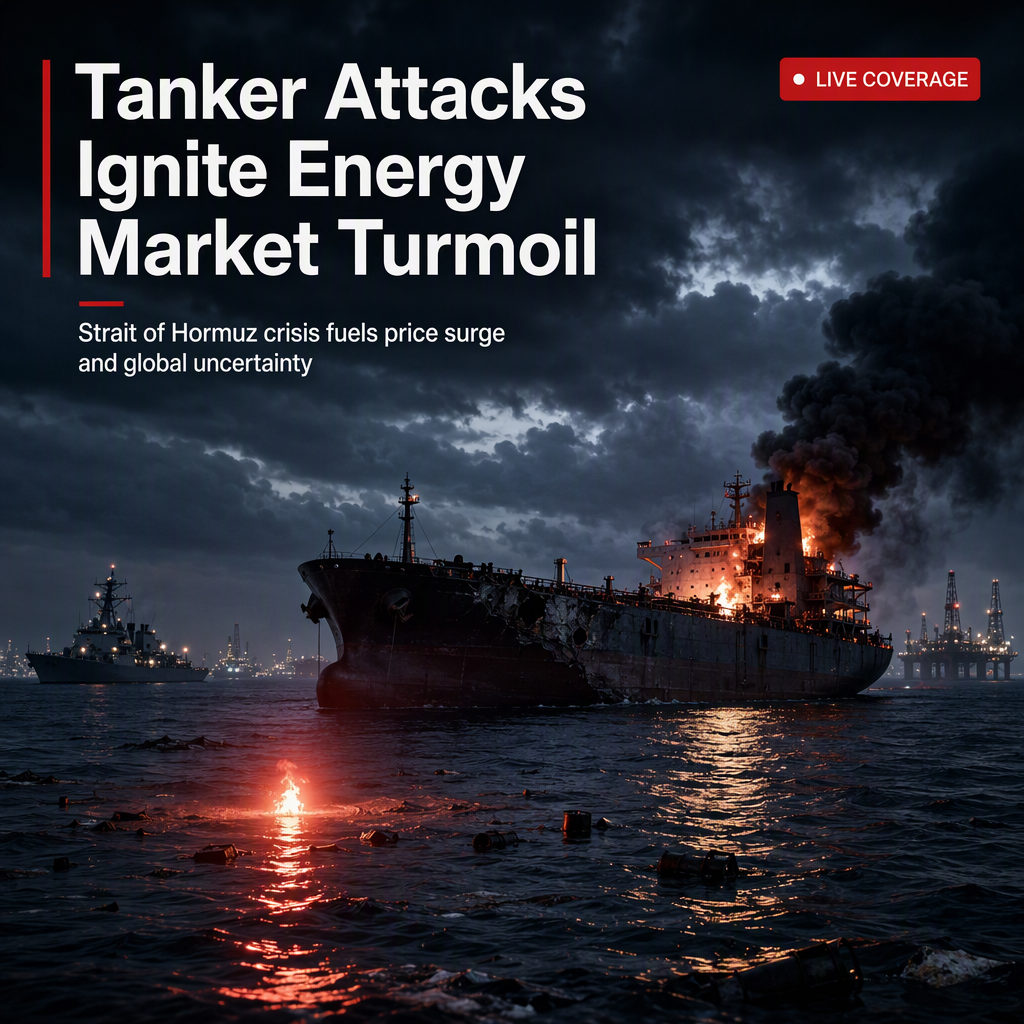
At least two vessels were struck over the weekend in waters near Oman and Iran, according to the United Kingdom Maritime Trade Operations Centre (UKMTO). On Saturday, a crude oil tanker was hit by an unknown projectile four nautical miles east of Oman, and another tanker was similarly struck on Sunday in the Strait of Hormuz, resulting in damage to its engine room [1]. These incidents are part of a series of regular attacks on shipping in the strait, a critical passage through which about a fifth of the world's oil supplies moved prior to the start of the U.S. and Israel-led war on February 28 [1].
Iran has reiterated that the Strait of Hormuz will remain closed unless its seven conditions, based on the Islamabad Memorandum, are met. These conditions include a halt to U.S. 'acts of aggression,' an end to the U.S. naval blockade of Iranian ports and economic warfare, and the release of Iranian assets. The U.S., in turn, has demanded that Iran dismantle its nuclear weapons program. The Islamabad Memorandum, an interim deal signed in June by President Donald Trump and Iranian President Masoud Pezeshkian, previously resulted in a brief pause in hostilities [1].
In a related development, Saudi Arabia's energy infrastructure reportedly came under renewed attack. Yemen's Iran-aligned Houthis claimed responsibility for targeting a facility owned by Saudi oil giant Aramco in Riyadh with ballistic missiles and drones, allegedly in retaliation for Saudi attacks on Yemen. A large plume of smoke and fire was observed above the facility, though Saudi authorities and Aramco have not commented on the incident [1].
The ongoing attacks and the potential for further escalation have driven energy prices higher in recent weeks, raising global inflation expectations and putting upward pressure on government finances. Some investors anticipate that full-scale fighting in the Middle East may resume, with Bader Al-Saif, founding president of Al-Saif Consulting, stating, 'The situation is fluid and volatile. To me, as we are developing and looking at the situation, it's not a question of if, but when the conflict resumes full force' [1].
CONCLUSION
The recent attacks on tankers and energy infrastructure in the Middle East, coupled with Iran's firm stance on the Strait of Hormuz, have heightened market volatility and driven energy prices higher. Investors are bracing for the possibility of renewed large-scale conflict, which could further impact global energy markets and inflation.