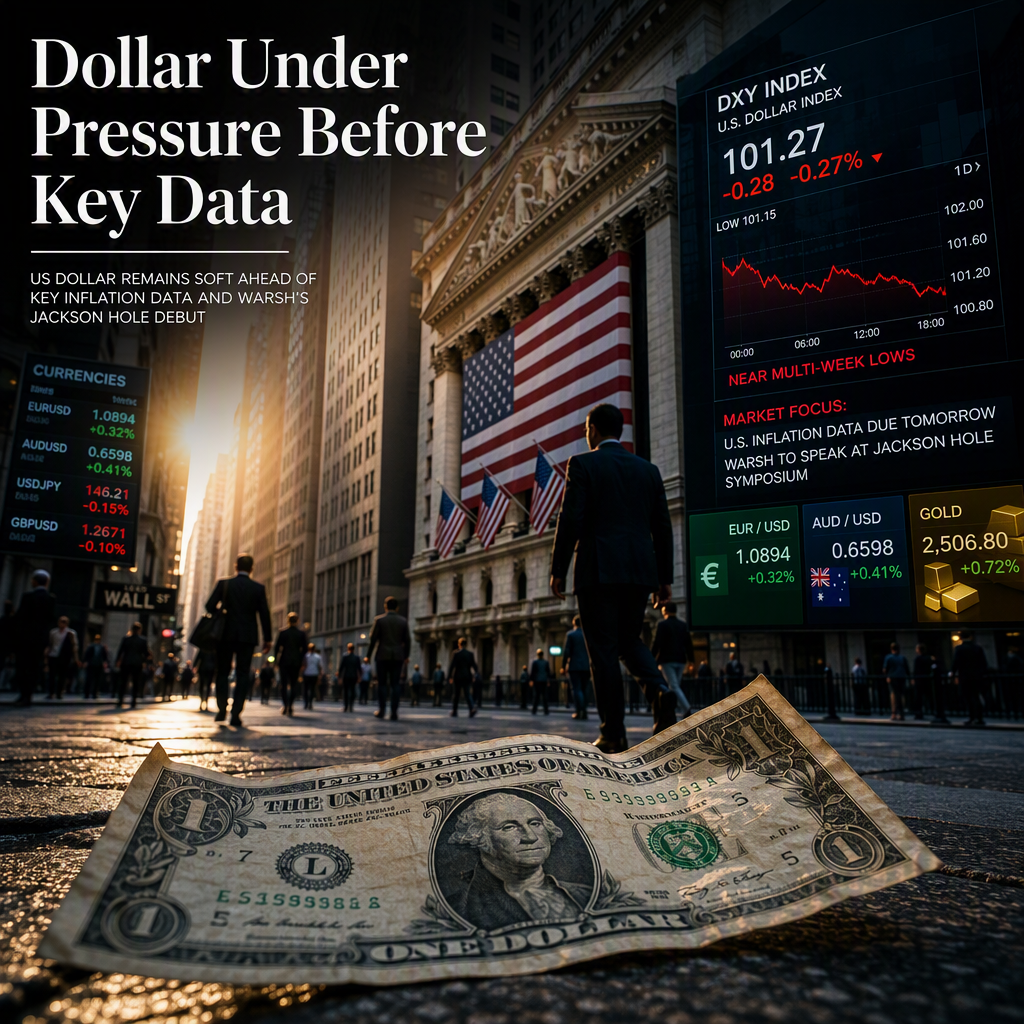
The US Dollar Index (DXY) ended the week near 98.80, trading close to its lowest level since May. The DXY dipped to the 98.50s before recovering, reflecting ongoing softness in the US Dollar. This weakness is attributed less to economic data and more to the US Treasury's decision to at least double its buybacks of longer-dated debt, which pulled yields lower and reduced the appeal of the Greenback, despite Friday's flash Purchasing Managers Index (PMI) surveys indicating continued acceleration in US economic activity [1].
On Friday, gold surged to a three-month peak above $4,600, the Australian Dollar reached a multi-month high, and crude oil prices held near a four-week high amid persistent Middle East tensions [1]. According to the latest percentage changes, the US Dollar was strongest against the Swiss Franc, while it lost ground against most other major currencies, including a 0.83% decline versus the Australian Dollar and a 0.62% drop against the New Zealand Dollar [1].
Looking ahead, the upcoming week is expected to be eventful for the US Dollar. Key releases include the July Personal Consumption Expenditures (PCE) Price Index on Wednesday, which is the Federal Reserve's preferred inflation gauge, and a double-header on Friday: new Fed Chair Kevin Warsh's first keynote at the Jackson Hole symposium and the US Bureau of Labor Statistics' preliminary annual benchmark revision to Nonfarm Payrolls. The symposium, hosted by the Federal Reserve Bank of Kansas City under the theme 'Financial Innovation: Implications for Payments and Policy,' is anticipated to be a focal point for markets. With the Dollar already near its lows, any dovish signals from Warsh or a significant downward revision to jobs data could further weaken the currency [1].
CONCLUSION
The US Dollar remains under pressure, driven by Treasury buybacks and anticipation of key inflation and labor market data. Market participants are closely watching the upcoming PCE report and Fed Chair Warsh's Jackson Hole debut for signals that could influence the Dollar's direction. Any dovish policy hints or weak jobs data could exacerbate the Greenback's recent softness.