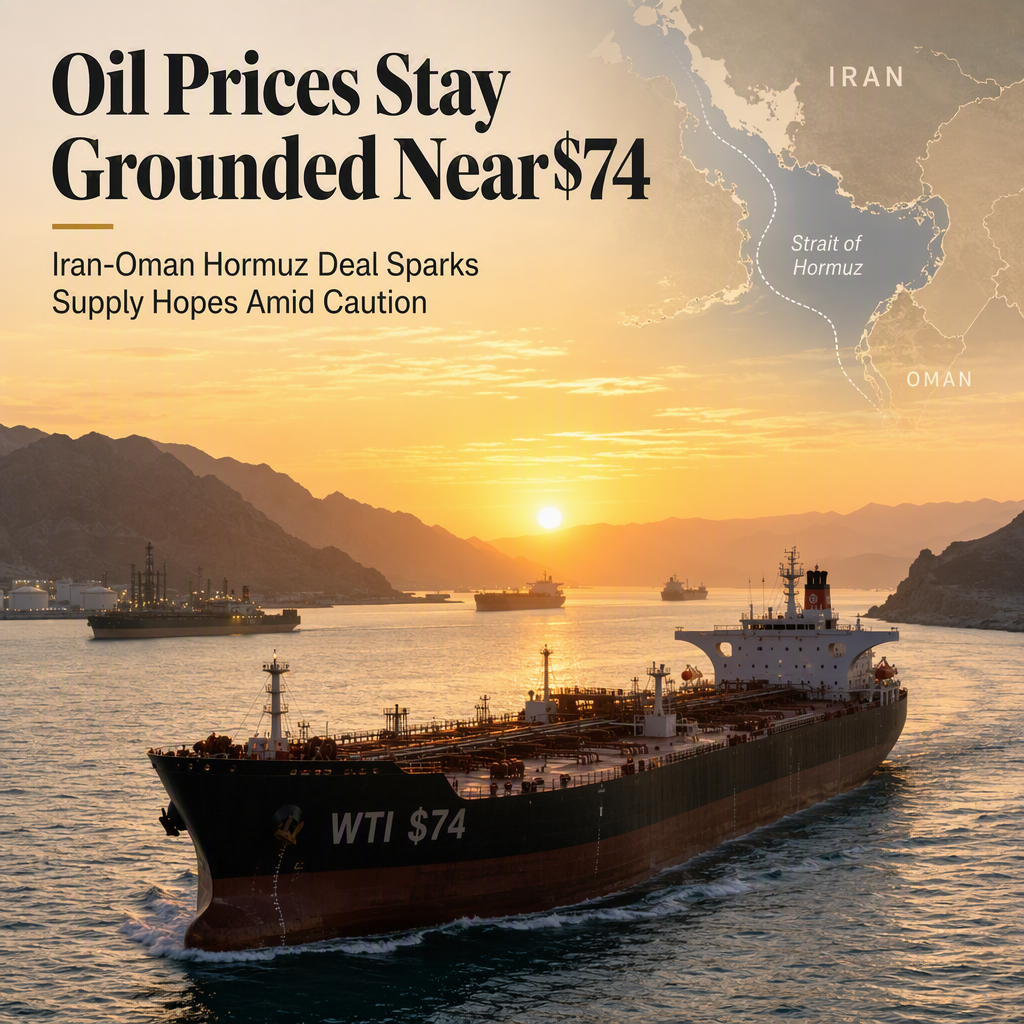
West Texas Intermediate (WTI) crude oil prices remained subdued for the fourth consecutive day, trading around $74.20 per barrel during Asian hours on Thursday, following news of an agreement between Iran and Oman on a shipping route through the Strait of Hormuz [1]. This development has fueled expectations of increased energy flows from the Middle East, as the Iran-Oman joint statement is in the final drafting stage and the proposed route is expected to remain operational for two to four months. However, Tehran emphasized that this agreement does not constitute a full reopening of the strategic waterway [1].
US officials have expressed confidence that a broader deal with Iran is nearing, but investors remain cautious regarding the durability of any lasting peace in the region [1]. Phil Flynn, a senior analyst with Price Futures Group, was quoted as saying, "This agreement seems as tenuous as past agreements, and as we know, none of those have held up for very long" [1]. Meanwhile, regional risks persist, as Iran-backed Houthi militants in Yemen claimed to have targeted a Saudi oil tanker in the Gulf of Aden and threatened other vessels in the Red Sea, highlighting ongoing threats to international shipping [1].
TD Securities strategists noted that the recent weakness in crude prices is being shaped as much by market psychology as by fundamentals. They cautioned that memories of the last downturn remain fresh, referencing the June MoU when actual supply hit the market and triggered a price decline. This episode is anchoring current fears that any progress toward a US–Iran understanding could again unleash additional barrels, even though timespreads and physical flows still indicate an underlying tight market [1].
CONCLUSION
WTI oil prices are under pressure amid optimism for increased Middle East energy flows following the Iran-Oman Hormuz agreement, but market sentiment remains cautious due to persistent regional risks and skepticism about the durability of such deals. Analysts warn that memories of previous supply shocks continue to influence market psychology, even as fundamentals suggest ongoing tightness in physical oil markets.