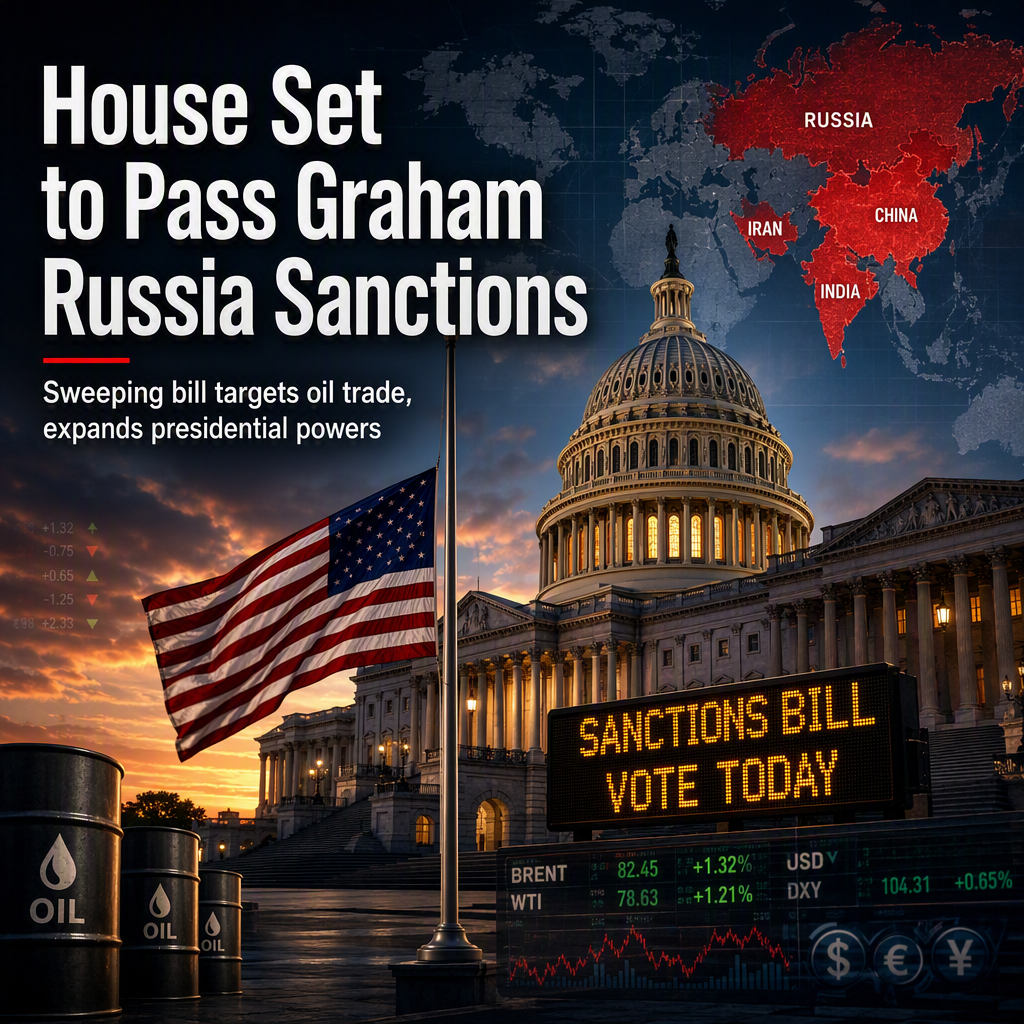
The U.S. House is expected to pass the Lindsey O. Graham Sanctioning Russia and Iran Act of 2026, a sweeping Russia sanctions bill introduced by the late Sen. Lindsey Graham, R-S.C., over a year ago, on Wednesday afternoon. The bill, which aims to penalize Russia for its continued full-scale invasion of Ukraine, previously passed the Senate in August with overwhelming bipartisan support by a vote of 86-11 [1].
The legislation would allow President Donald Trump to impose tariffs of up to 100% on countries, including China and India, that are among the top five purchasers of Russian crude oil or gas. The bill also includes sanctions on Russian leaders, officials, and financial institutions, and expands sanctions on Iran. The intent is to squeeze Russia's economy by targeting revenue from oil sales, which are critical to funding its war effort [1].
Despite broad support, some lawmakers have expressed concerns. Reps. Gregory Meeks, D-N.Y., Don Beyer, D-Va., and Richard Neal, D-Ma., stated that while House Democrats support Ukraine, the bill could "do more harm than good" by dramatically expanding presidential tariff authorities without mandating sanctions on Russia. They argue these flaws could raise prices for Americans and undermine long-term support for Ukraine [1].
A White House official confirmed that, presuming the measure clears the House, President Trump intends to sign the bill into law [1].
CONCLUSION
The anticipated passage of the Lindsey O. Graham Sanctioning Russia and Iran Act of 2026 signals a significant escalation in U.S. economic pressure on Russia and its oil trade partners. While the bill enjoys strong bipartisan support, concerns remain about its potential impact on American consumers and the scope of presidential authority. Market participants should prepare for possible disruptions in global energy markets and trade relations.