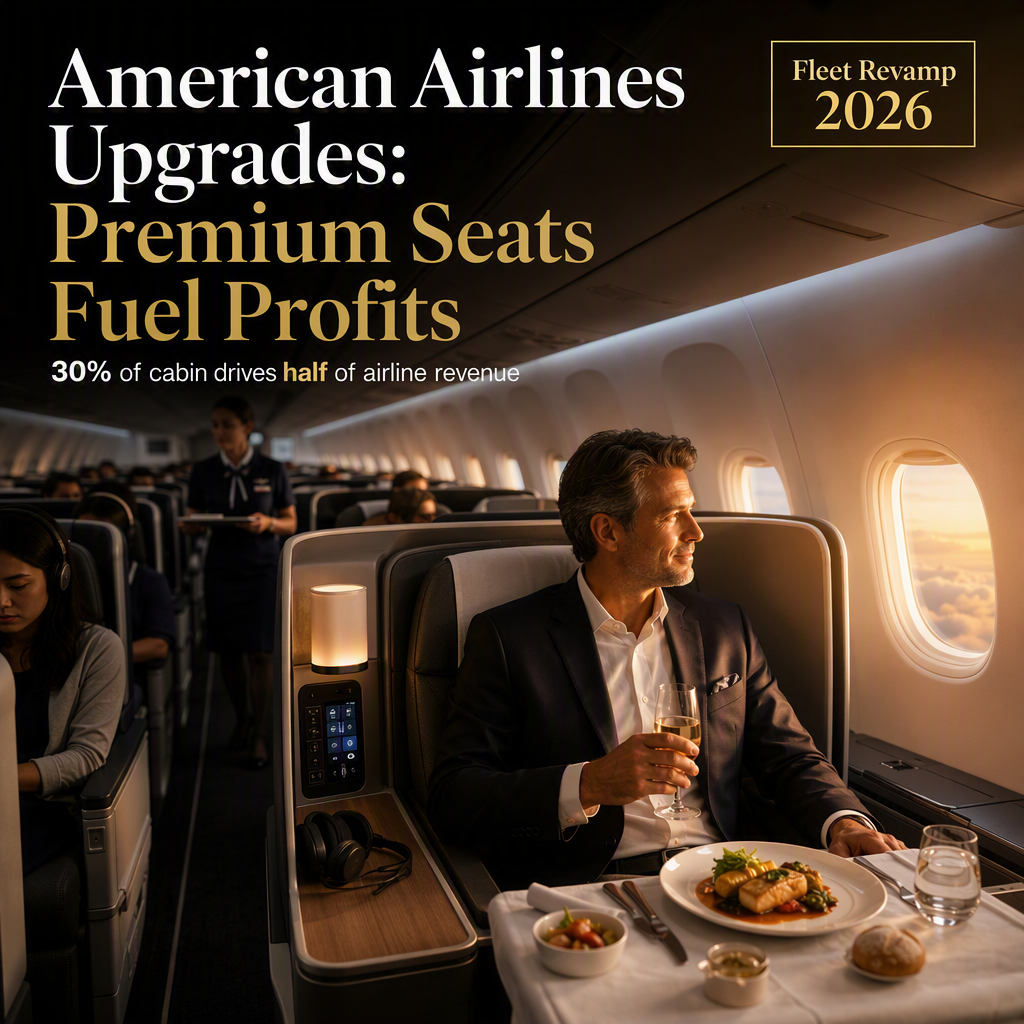
American Airlines is generating half of its revenue from just 30% of its seats, according to CEO Robert Isom, who spoke at a Morgan Stanley industry conference on September 16, 2026 [1]. This revenue concentration has prompted American Airlines and its competitors, including budget carriers like Allegiant Air and JetBlue Airways, to reconfigure their aircraft layouts to add more premium seating options such as first class and business class [1]. Earlier this month, American Airlines unveiled a 70-suite business class cabin on its largest aircraft, the Boeing 777-300ER, with additional planes awaiting similar upgrades [1].
Isom emphasized that the proportion of premium seats in American's fleet is expected to grow as new aircraft deliveries and reconfigurations are implemented, specifically mentioning upcoming revamps for Boeing 787-8 Dreamliners and new interiors for 777-200s, as well as plans to order new wide-body aircraft this year [1]. The focus on premium seating is seen as a strategic move to capitalize on higher-spending customers, which Isom described as a resilient and bright spot in air travel, especially as airlines face a surge in fuel costs—their second-largest expense after labor [1].
Industry-wide, airlines are responding to persistent demand and cost pressures by maintaining high flight prices and enhancing premium offerings. American Airlines will stop upgrading elite flyers to business from coach on long domestic flights, reflecting a shift in upsell strategies [1]. Other carriers, such as United Airlines, are also adopting new approaches to maximize revenue from premium seats, including keeping other travelers out of the middle seat [1]. Southwest Airlines has taken unusual steps to address supply worries, such as transporting Texas jet fuel to Los Angeles by boat for the first time [1].
Record heat and crowds have contributed to an offseason boom in international travel, further supporting the trend toward premium seating and services as airlines seek to bolster revenue amid rising costs and evolving traveler preferences [1].
CONCLUSION
American Airlines' strategic shift toward premium seating is driving significant revenue growth, with only 30% of seats accounting for half of its income. The airline's ongoing fleet upgrades and industry-wide focus on higher-yielding options signal a high market impact, as carriers adapt to persistent demand and rising costs. This trend is likely to continue, reinforcing the importance of premium offerings in the airline sector.