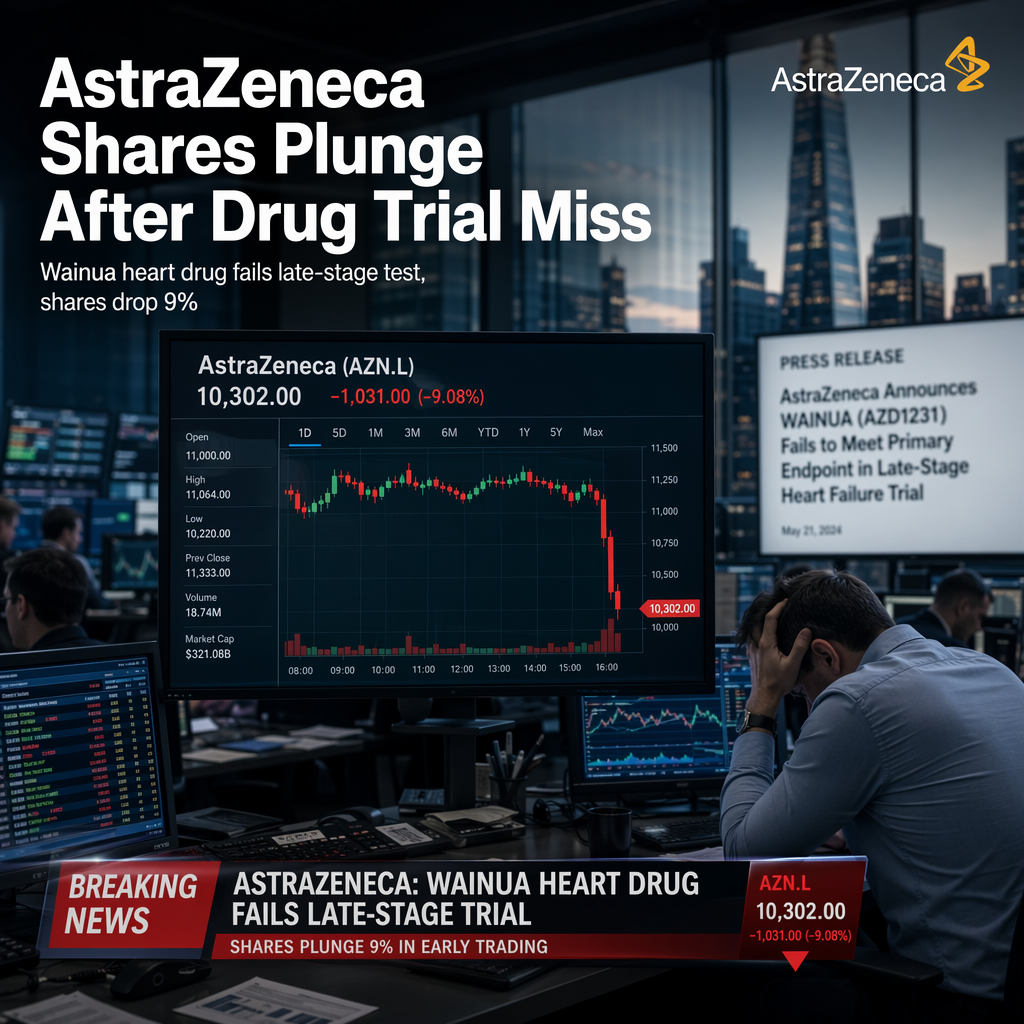
AstraZeneca's shares experienced a significant decline, falling as much as 9% after the company announced that its heart drug, Wainua, failed to meet the primary endpoint in a late-stage clinical trial. The trial aimed to demonstrate a reduction in deaths and recurrent heart-related emergencies over 140 weeks in patients with transthyretin-mediated amyloid cardiomyopathy (ATTR-CM), a rare and life-threatening heart condition. However, the drug did not achieve this goal compared to a placebo, according to a press release issued by AstraZeneca early Thursday [1].
The stock was last reported down 8.9% in London, marking its worst single-day performance since March 2020, at the onset of the Covid-19 pandemic [1]. The trial focused on a subset of ATTR-CM, where misfolded proteins accumulate in the heart muscle, a condition estimated to affect around half a million people [1].
A Jefferies analyst commented that while the trial's outcome was disappointing, it does not threaten AstraZeneca's $80 billion sales target for 2030. The analyst also noted that the company had previously expressed strong confidence in achieving the primary endpoint, particularly in combination use [1].
No additional market reactions or forward-looking statements from other analysts were mentioned in the article.
CONCLUSION
AstraZeneca's failure to meet the primary endpoint in its Wainua heart drug trial led to a sharp decline in its share price, reflecting investor disappointment. Despite the setback, analysts believe the company's long-term sales targets remain intact. The market reaction underscores the high expectations placed on AstraZeneca's late-stage pipeline.