
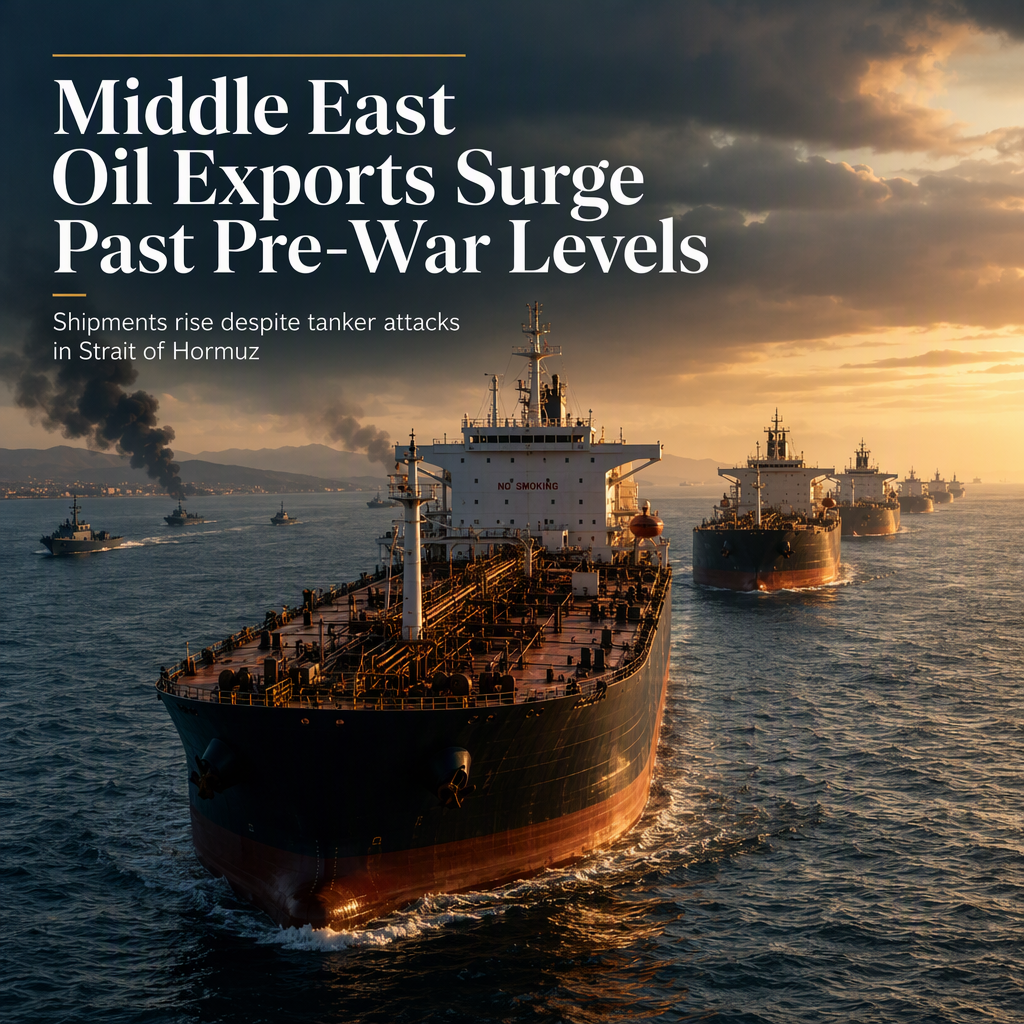
Crude oil exports from the Middle East have risen above pre-war levels in four out of the seven days during the final week of September, according to provisional data from ship-tracking firm Kpler. Specifically, crude exports from the region on September 24 and from September 27 to 29 ranged between 19.5 million barrels per day (bpd) and 22.5 million bpd. This marks a significant increase compared to the average of 18 million bpd recorded between March 2025 and February of this year, prior to the onset of the US-Iran war [1].
Despite this surge in exports, the region has experienced an uptick in attacks on vessels passing through the Strait of Hormuz, a critical chokepoint for global oil shipments [1]. The increase in security incidents has not yet curtailed export volumes, but it highlights ongoing risks to supply chains in the area.
Market reaction to these developments has been negative, with West Texas Intermediate (WTI) crude oil prices down 1.23% on the day, trading at $89.25 at the time of reporting [1]. The decline in WTI suggests that the market may be responding more to the increased export volumes, which could alleviate supply concerns, rather than to the heightened geopolitical risks posed by the tanker attacks [1].
No forward-looking statements or analyst opinions were provided in the source article.
CONCLUSION
Middle East crude oil exports have exceeded pre-war levels despite a rise in tanker attacks in the Strait of Hormuz. The market has reacted with a decline in WTI prices, indicating that increased supply is currently outweighing concerns over regional security risks. No analyst forecasts or forward-looking guidance were included in the source.