
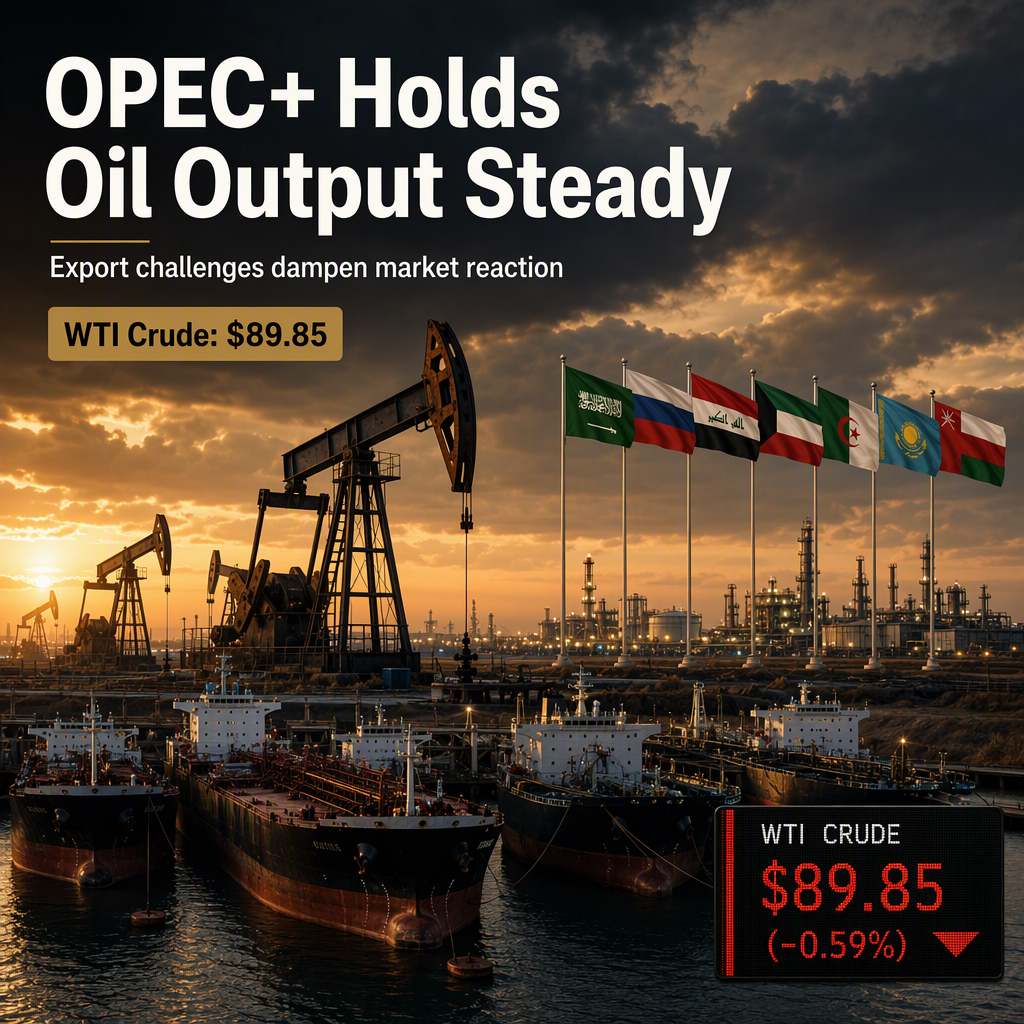
The Organization of Petroleum Exporting Countries and its allies (OPEC+) announced on Sunday that they will keep oil production targets unchanged for November, aligning with market expectations that no further output policy adjustments are likely until next year [1]. The coalition includes key members such as Saudi Arabia, Russia, Iraq, Kuwait, Algeria, Kazakhstan, and Oman [1].
Despite the steady targets, most OPEC+ producers are currently pumping well below their quota goals, with exports averaging only 60% to 80% of usual levels. This shortfall is attributed to ongoing export challenges related to the US-Israeli conflict with Iran [1].
In immediate market reaction, the price of West Texas Intermediate (WTI) crude oil declined by 0.59% on the day, trading at $89.85 at the time of reporting [1]. No forward-looking statements or analyst opinions were provided in the article [1].
CONCLUSION
OPEC+'s decision to maintain current oil output targets for November was widely anticipated and reflects ongoing export constraints among member nations. The market responded with a modest decline in WTI crude prices, indicating a neutral to slightly negative sentiment. No further policy changes are expected until next year, according to the information available.