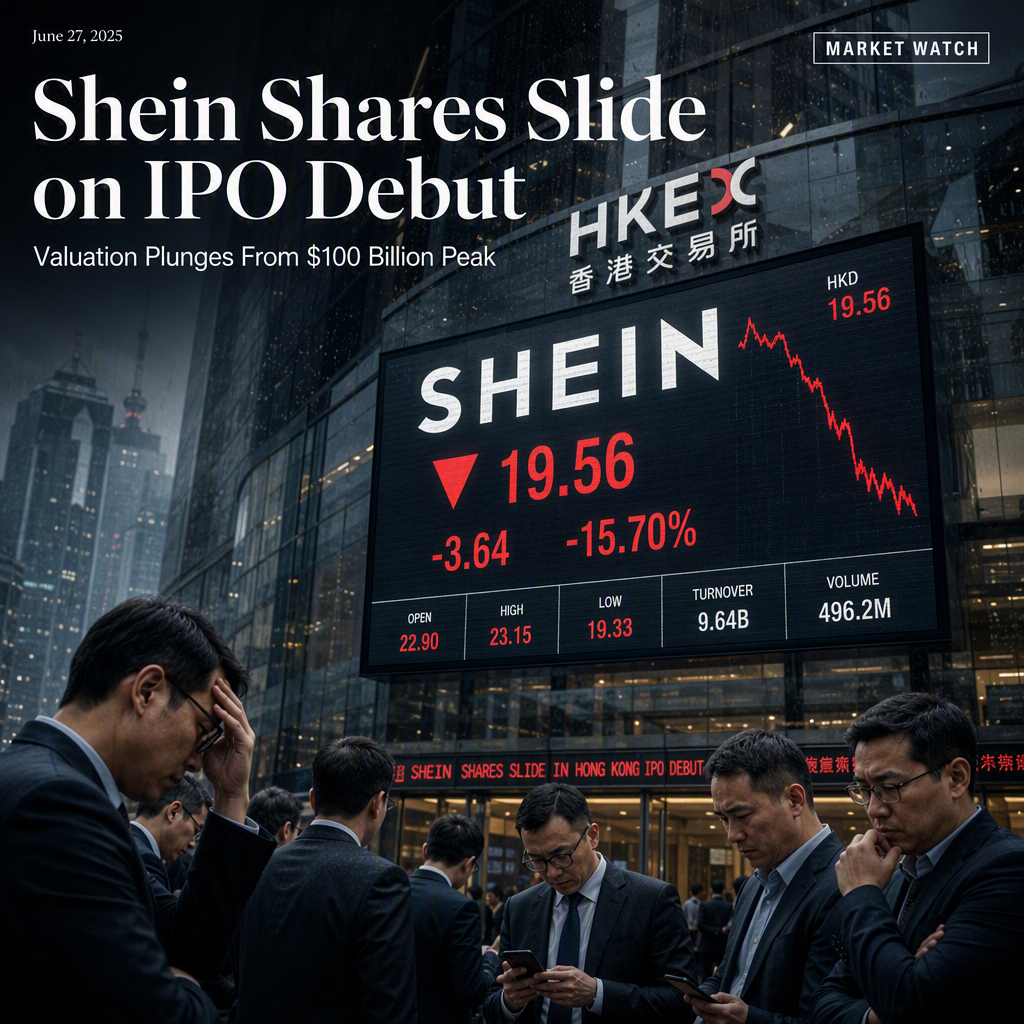
Shein, the fast-fashion retailer originally founded in China and now headquartered in Singapore, made its trading debut on the Hong Kong Exchange on September 1, 2026. The company's shares opened flat and quickly declined, with Nikkei Asia reporting an 8% drop in early trading, while CNBC World cited a 7% fall as shares began trading [1][2]. The IPO valued Shein at approximately $26.5 billion, a significant decrease from its previous private market valuation of up to $100 billion in 2022 [1][2]. Shein sold about 280 million shares, raising around 13.60 billion Hong Kong dollars ($1.74 billion) at a final offer price of HK$48.56 per share, which was below the maximum offer price of HK$49.5 [2].
The subdued investor response was attributed to concerns about Shein's business model, margins, and growth prospects, as well as broader challenges facing Chinese consumer brands amid rising trade barriers and regulatory scrutiny [1]. Technical analysis of the opening session indicated resistance at the IPO price and a lack of immediate support as shares broke lower [1]. Market observers noted that Shein's discounted valuation and lackluster debut could serve as a bellwether for future IPOs of Chinese consumer brands [1].
Shein's Hong Kong listing followed unsuccessful attempts to go public in New York and London. The company first filed confidentially for a U.S. IPO in 2023, then turned to London, but Beijing withheld approval over risk disclosures related to its China supply chain, effectively blocking the listing [2].
According to its prospectus, Shein plans to allocate 40% of the IPO proceeds to enhance technology capabilities and another 40% to boost brand awareness and strengthen its global presence, with the remainder earmarked for corporate responsibility initiatives and general corporate purposes [2]. Financially, Shein reported net revenue of $41.8 billion in 2025, up from $38.7 billion in 2024. However, in the first quarter of 2026, the company posted revenue of $9.05 billion but swung to a net loss of $99 million, mainly due to fair-value losses on its convertible redeemable preferred shares [2].
Shein is also investing in a $500 million China distribution hub to address overseas headwinds, as stated by company executives [1]. The company's performance in Hong Kong is being closely watched as an indicator of investor sentiment toward Chinese consumer brands facing international challenges [1].
CONCLUSION
Shein's Hong Kong IPO debut was marked by a sharp drop in share price and a steep reduction in valuation compared to previous private rounds. The tepid investor response and significant valuation cut highlight ongoing concerns about the company's growth prospects and the broader challenges facing Chinese consumer brands in global markets. The outcome of Shein's listing is likely to influence future IPOs in the sector.