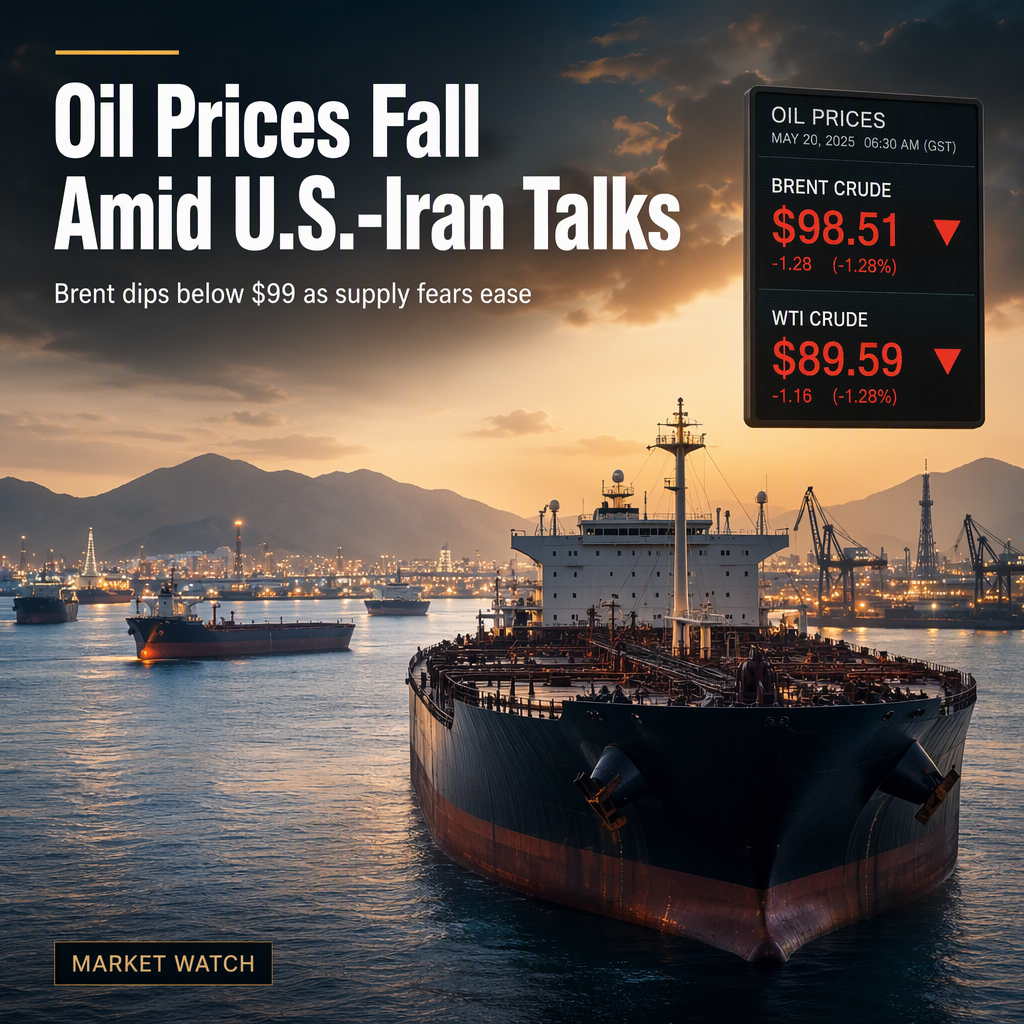
Oil prices declined on Wednesday following a three-hour meeting between U.S. officials and Iran's delegation at the United Nations, which President Donald Trump described as a 'very good meeting' [1]. The talks have raised optimism that supply disruptions in the Middle East could be alleviated, reducing fears of a broader conflict impacting crude oil flows [1]. As a result, Brent crude futures for November delivery fell 0.75% to $98.51 per barrel, while U.S. West Texas Intermediate (WTI) futures for November dropped 1.03% to $89.59 per barrel [1].
The market's reaction reflects hopes for a diplomatic solution, with additional mediation efforts by Pakistan cited as a factor that could further decrease the risk of escalation in the region, according to Paolo Broccardo, CEO of BankPro [1]. Broccardo also noted that oil prices are unlikely to experience a significant surge in the near term, pointing out that prices have declined by almost 12% over the past five sessions, moving away from the 'intervention zone' above $100 per barrel where peace-building efforts have previously intensified [1].
Numerous merchant ships from Iran and other countries remain anchored in the Strait of Hormuz as of September 8, 2026, highlighting ongoing tensions in the region despite the recent diplomatic engagement [1]. President Trump stated he faces a 'big decision' regarding whether to pursue a deal with Tehran or take more aggressive action, underscoring the uncertainty that still surrounds the situation [1].
CONCLUSION
The recent U.S.-Iran talks have eased market concerns about oil supply disruptions, leading to a notable decline in crude prices. While diplomatic efforts and mediation are seen as positive steps, uncertainty remains as President Trump weighs his next move regarding Iran.