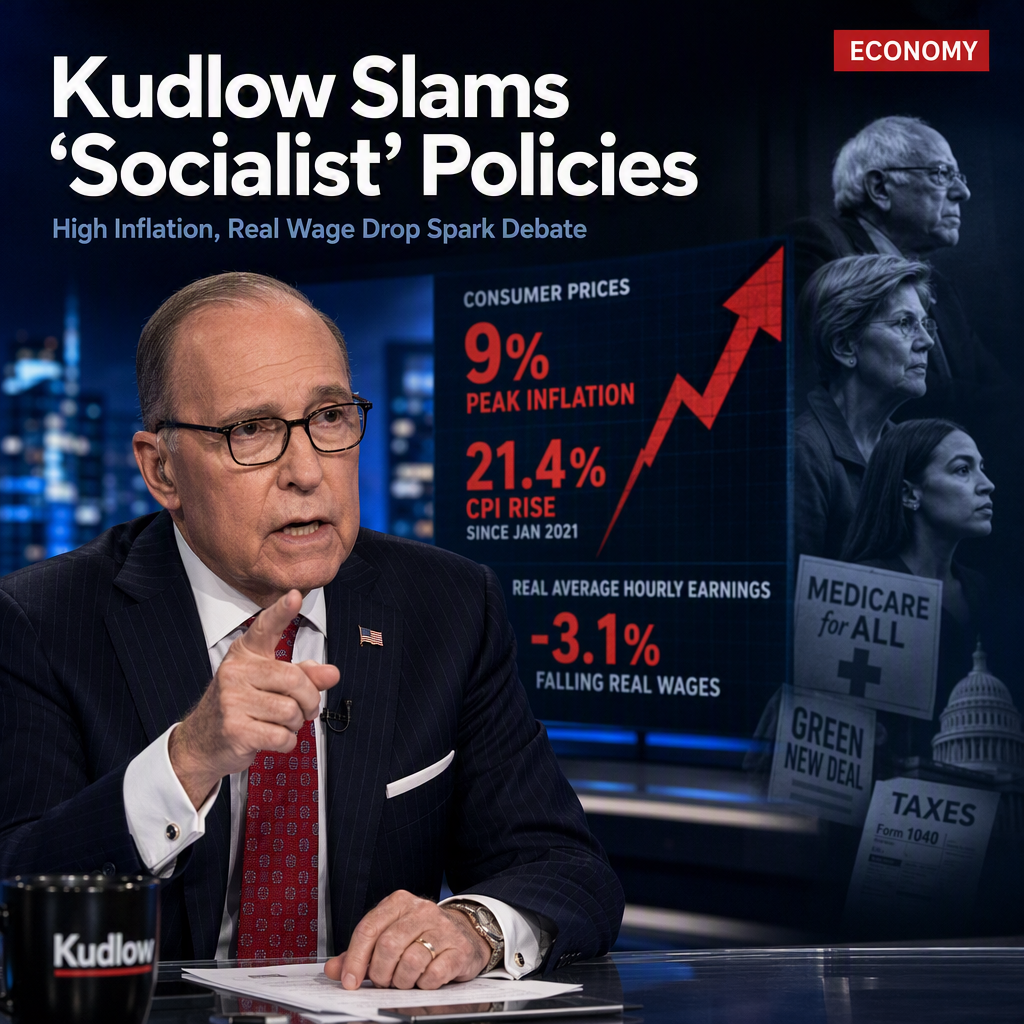
On 'Kudlow,' FOX Business host Larry Kudlow delivered a critique of what he describes as 'socialist' policies within the Democratic Party, arguing that these policies are unaffordable and detrimental to the U.S. economy [1]. Kudlow specifically referenced figures such as Abdul El-Sayed, Zohran Mamdani, Bernie Sanders, Elizabeth Warren, and Alexandria Ocasio-Cortez as proponents of these policies, which he claims include heavy taxation on wealth and income, government takeover of the healthcare system through Medicare for All, and other measures such as defunding the police and ICE, open borders, and significant regulatory expansion [1].
Kudlow pointed to legislative actions during the Biden administration, including the Green New Deal, the Inflation Reduction Act, and extended Covid-related spending, as examples of these policies in action. He stated that these measures led to a peak inflation rate of 9 percent, the highest in four years, and a cumulative rise in the consumer price index of 21.4 percent [1]. According to Kudlow, real wages fell during this period, undermining claims of increased affordability for working Americans [1].
Kudlow argued that the Democratic Party's focus on affordability is a 'coverup' for a state-run economy and soaring inflation, which he claims has led to a shift in voter sentiment, with working-class and minority voters favoring Donald Trump in 2024 [1]. He contrasted these policies with free enterprise capitalism, which he asserts rewards success and allows individuals to keep more of their earnings, resulting in true affordability [1].
No specific market reactions or analyst opinions were provided in the article, but Kudlow's commentary suggests a negative outlook on the market implications of continued or expanded implementation of these policies [1].
CONCLUSION
Larry Kudlow's analysis highlights his view that Democratic Party economic policies have led to high inflation and declining real wages, challenging their claims of increased affordability. He suggests these outcomes have political and economic consequences, with potential shifts in voter behavior and concerns about future market stability if such policies persist.