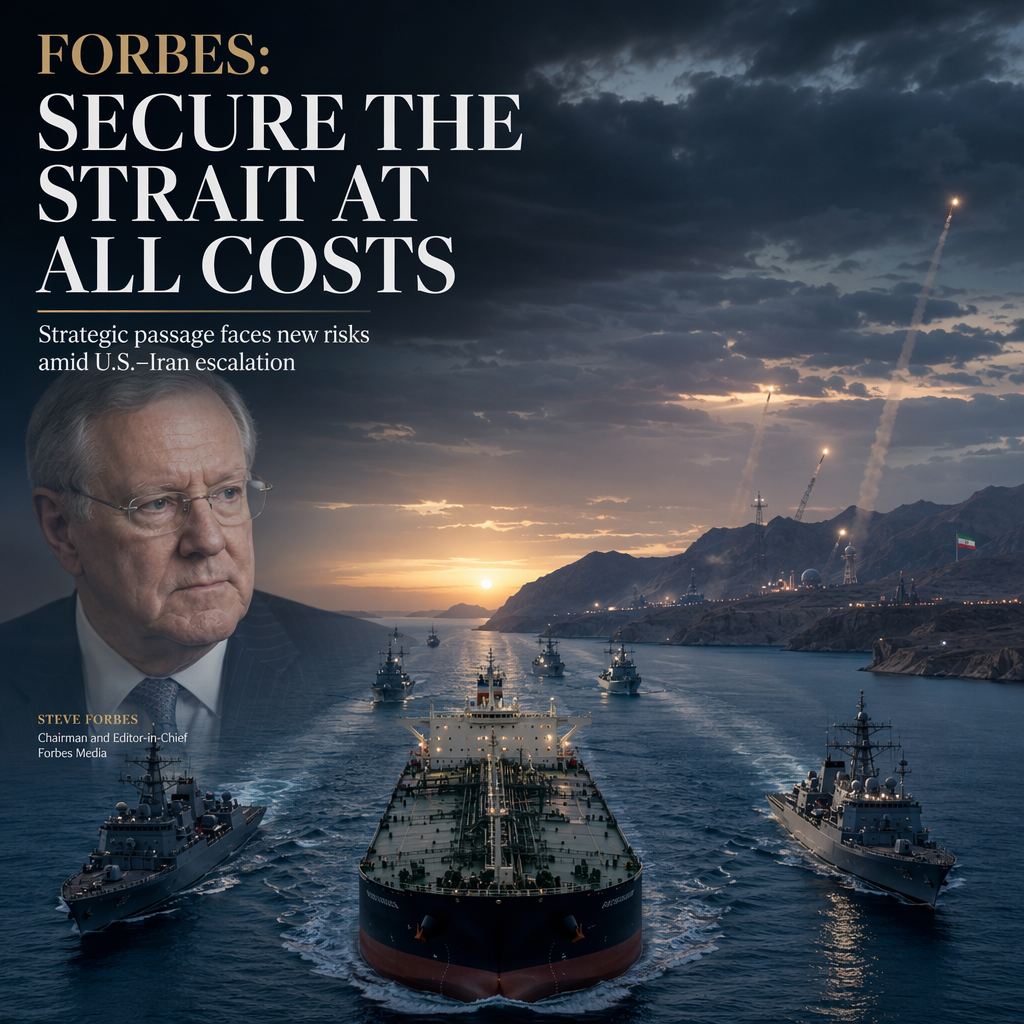
Steve Forbes, chairman and editor-in-chief of Forbes and former presidential candidate, has called on the Trump administration to ensure the Strait of Hormuz remains open to international shipping at all costs, emphasizing that free passage through this critical waterway is a non-negotiable American imperative. Forbes made these remarks during an interview at Freedom Fest in Las Vegas, highlighting the historical importance of freedom of navigation as a core U.S. foreign policy principle dating back to Thomas Jefferson and the War of 1812 [1].
The comments come as the United States continues its military campaign against Iran, with U.S. forces striking targets in Iran for a ninth consecutive day, increasing pressure on the Tehran regime [1]. Forbes argued that with the proper application of air power, deploying ground troops may not be necessary, but he did not rule out the option, referencing historical precedents such as the First Barbary War. He stressed that the U.S. and its allies, including Israel, should continue to pressure the Iranian regime and support elements within the Iranian army seeking change, warning against 'fake ceasefires' and advocating for sustained military pressure [1].
Forbes asserted that maintaining freedom of navigation in the Strait of Hormuz should be treated as an international red line, warning that failure to enforce these principles could result in their loss. He also stated that the time for diplomacy with Tehran has passed and encouraged the Trump administration to intensify its efforts to topple the Iranian regime. Additionally, Forbes praised a recent decision to license Patriot missiles for Ukraine, suggesting it would yield positive results [1].
While the article does not provide specific market reactions or analyst opinions, the emphasis on the strategic importance of the Strait of Hormuz and ongoing military actions suggests potential implications for global energy markets and geopolitical stability [1].
CONCLUSION
Steve Forbes' remarks underscore the strategic significance of the Strait of Hormuz and advocate for a hardline approach toward Iran, urging the Trump administration to maintain military pressure and ensure free passage for international shipping. The ongoing U.S. strikes and calls for increased action highlight the potential for continued geopolitical tensions in the region. Market participants may view these developments as a source of medium-level risk, particularly for energy and shipping sectors.