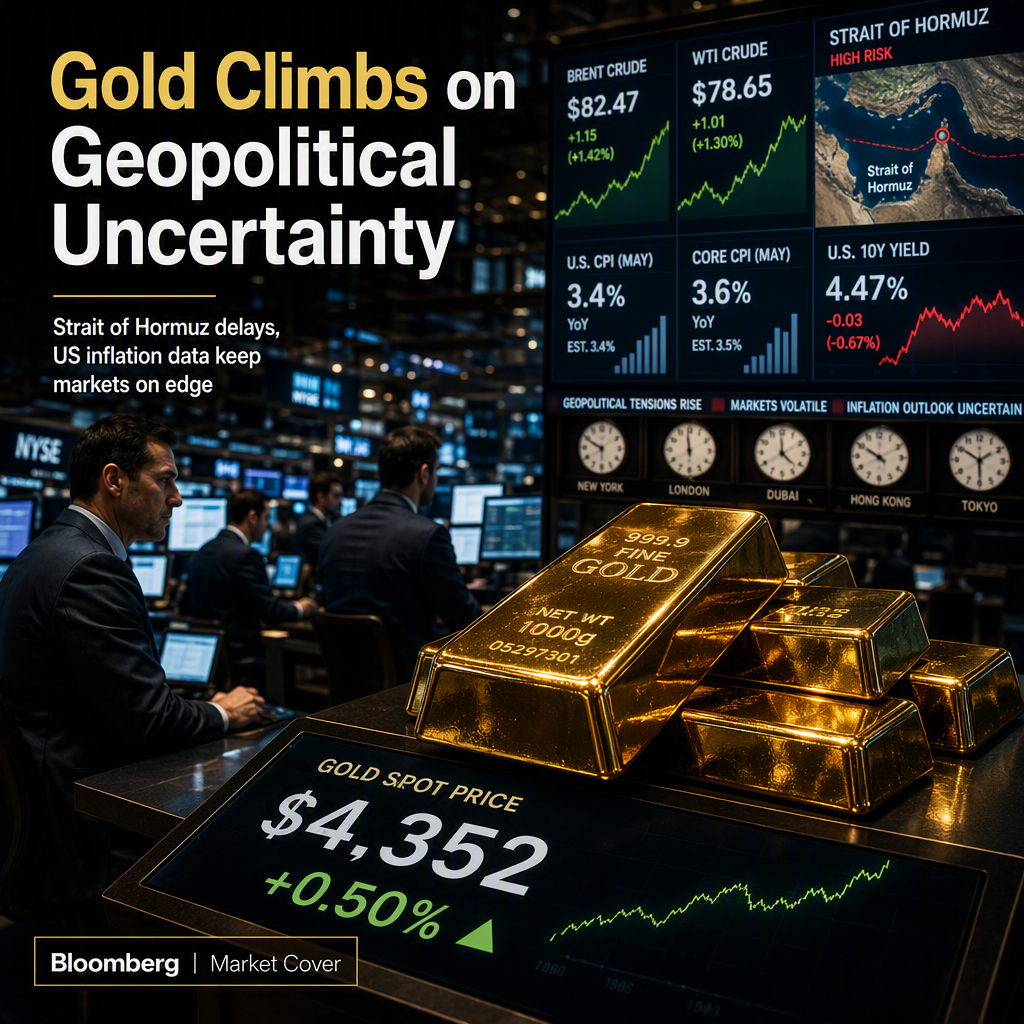
Gold (XAU/USD) edged higher at the start of the week, trading at $4,352, up 0.50% after rebounding from daily lows of $4,316. The price movement was influenced by delays in the reopening of the Strait of Hormuz, as Iran demanded the US meet several conditions, including ending hostilities, withdrawing forces, compensating for war damages, lifting sanctions, and releasing frozen assets. These geopolitical tensions have contributed to a rally in oil prices, with West Texas Intermediate (WTI) up nearly 6% to $81.54 per barrel, which is seen as a headwind for gold prices [1].
The US Dollar Index (DXY) also saw a modest increase of 0.14% to 99.75, as markets digested recent US and Japanese interventions in foreign exchange markets. Last week's US Nonfarm Payrolls report showed a decline of 23,000 jobs, missing expectations for an 80,000 increase, and previous months' figures were revised downward. Richmond Fed President Thomas Barkin described the labor market as being in a 'low-hiring, low-firing mode.' This weaker-than-expected jobs data led to a reduction in market expectations for Federal Reserve hawkishness, but attention has now shifted to upcoming US inflation data [1].
July's Consumer Price Index (CPI) is expected to ease from 3.5% to 3.4% year-over-year, while Core CPI is projected to decrease from 2.6% to 2.5% year-over-year. The Producer Price Index is also forecasted to ease. Initial Jobless Claims for the week ending August 8 are anticipated to rise from 199,000 to 201,000, and investors are closely monitoring these figures for signs of labor market weakness that could influence the Fed's interest rate decisions [1].
Money markets have priced in 22 basis points of Federal Reserve tightening by the end of 2026, up from 17 basis points expected last Friday, according to Prime Terminal data. Technically, gold remains below the 100-day Simple Moving Average at $4,389, a key level for buyers aiming for higher prices, with bullish momentum indicated by the Relative Strength Index [1].
CONCLUSION
Gold prices are being supported by geopolitical tensions in the Middle East and cautious sentiment ahead of key US inflation data. While oil price rallies and a stronger dollar present headwinds, market participants are focused on upcoming economic releases and Federal Reserve policy signals for further direction.