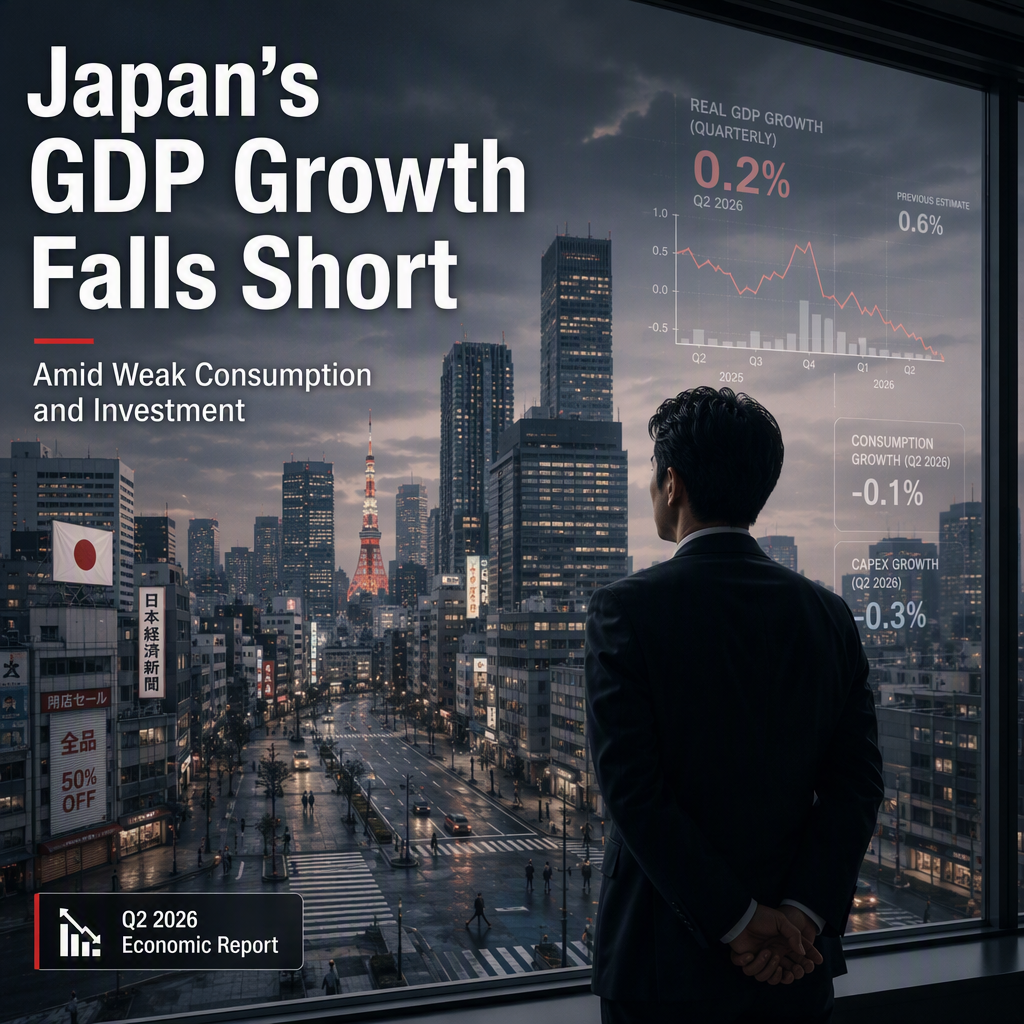
Japan's economy expanded by 0.3% in the April to June period compared to the previous quarter, translating to an annualized growth rate of 1.1% for the second quarter of 2026. This figure fell short of market expectations, with analysts having anticipated a stronger recovery following previous quarters of expansion [1]. The second quarter marks the third consecutive period of GDP growth for Japan, but the pace of expansion has slowed, highlighting persistent challenges in the country's economic recovery [1].
The weaker-than-expected growth was attributed primarily to declines in both household consumption and corporate investment. Analysts cited a fall in consumer spending, likely driven by ongoing concerns about inflation and the impact of higher prices on everyday goods [1]. Business investment also remained subdued, further dampening the overall economic outlook [1].
Market sentiment has turned cautious in response to the disappointing GDP figures. Technical analysis points to resistance to faster growth due to weak domestic demand, while external factors such as global economic uncertainty are also weighing on the outlook [1]. Traders and market observers are closely monitoring developments in consumer sentiment and corporate investment, as these will be critical for Japan's economic trajectory in the coming months [1].
CONCLUSION
Japan's second-quarter GDP growth undershot expectations, reflecting ongoing weakness in consumer and corporate spending. Market sentiment remains cautious, with analysts emphasizing the need for a turnaround in domestic demand to support future growth.