
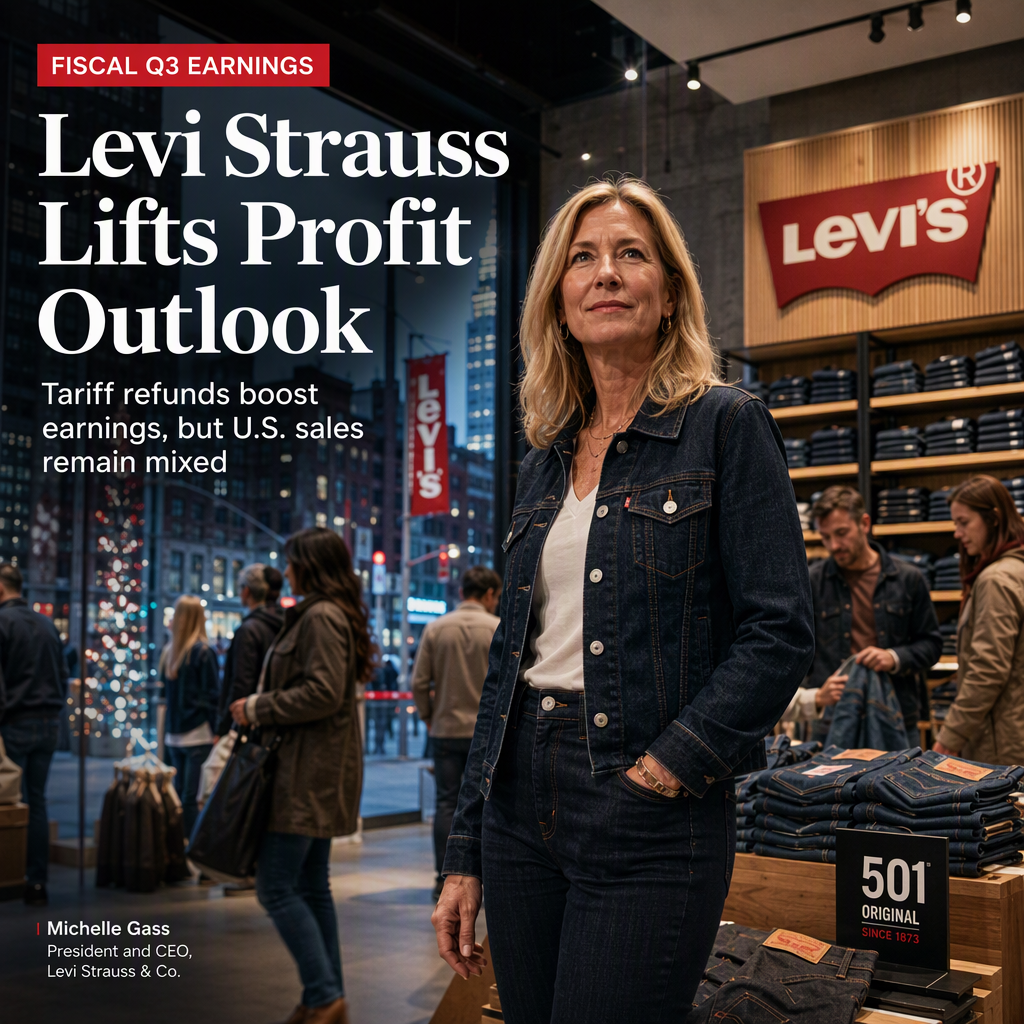
Levi Strauss & Co. reported quarterly earnings that surpassed expectations, largely due to benefits from tariff refunds, and subsequently raised its full-year adjusted earnings per share guidance to a range of $1.54 to $1.56, up from the previous $1.46 to $1.52. This new guidance is slightly below the analyst consensus range of $1.52 to $1.59 as surveyed by LSEG [1]. However, the company lowered its net revenue growth projection for the full year to 7%, which is at the bottom of its previously provided range of 7% to 7.5% [1].
For the fiscal third quarter ending August 30, Levi Strauss reported net income of $168.6 million, or 43 cents per share, compared to $218.1 million, or 55 cents per share, in the prior year. Sales increased approximately 4% to $1.61 billion from $1.54 billion last year, though this fell slightly short of the $1.62 billion expected by analysts [1]. The company saw a 4% increase in net revenues in the Americas, but U.S. revenue declined by 1% during the quarter [1]. Operating margin improved to 13.8% from 10.8% a year earlier, with tariff refunds contributing 4.9% to both operating and gross margins, and providing a 16-cent benefit to earnings per share, of which 5 cents were reinvested in the business [1].
Direct-to-consumer (DTC) net revenues rose 2% in the quarter, with comparable sales remaining roughly flat. DTC accounted for 45% of total net revenue, while wholesale revenues increased by 6% [1]. CEO Michelle Gass acknowledged that the DTC business underperformed internal expectations but expressed optimism about the upcoming holiday season, stating that recent trends indicate the DTC segment is on track for mid-single-digit growth in the fourth quarter [1].
No specific analyst opinions or forward-looking statements beyond management's comments were provided in the article. The company did not detail how the reinvested portion of the tariff refund was allocated [1].
CONCLUSION
Levi Strauss delivered better-than-expected profits due to tariff refunds and raised its full-year earnings guidance, but trimmed its revenue outlook to the lower end of its prior range. While U.S. sales declined, the company remains optimistic about direct-to-consumer growth heading into the holiday season. The market reaction is likely to be mixed, reflecting both the improved profit outlook and the more cautious revenue guidance.