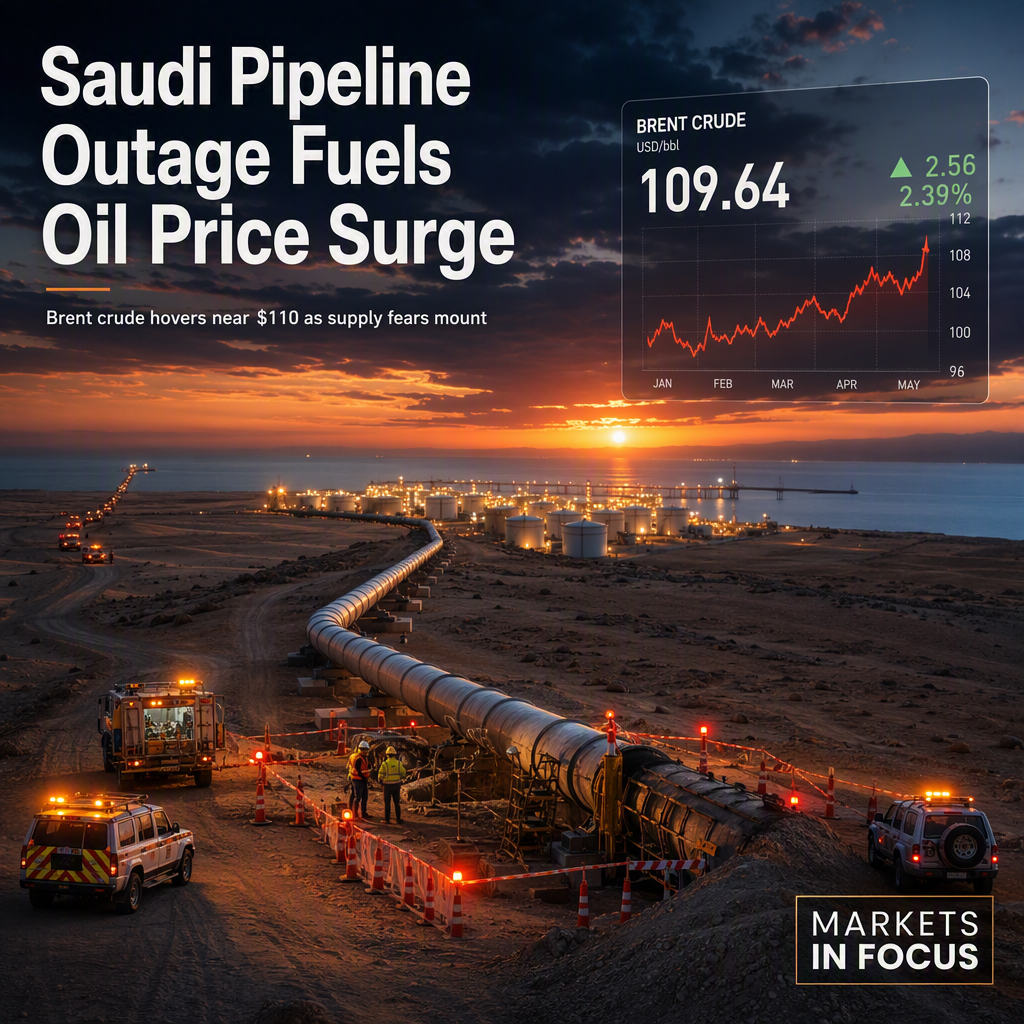
Oil prices have surged following the shutdown of Saudi Arabia’s 7 million barrels per day (b/d) East–West pipeline, which has tightened global supply and pushed ICE Brent crude to an intraday high just below $110 per barrel—a resistance level tested over the past three days [1]. ING analysts Warren Patterson and Ewa Manthey highlight that the outage, combined with broader Middle East tensions, is keeping prices well supported in the near term [1].
There is significant uncertainty regarding the extent of the pipeline damage and how long the outage will last, with some reports suggesting the pipeline could be offline for several weeks [1]. Saudi Arabia has oil stored at Yanbu, which can sustain exports for several days, but there is a risk that these port stocks could be depleted before pipeline flows resume [1].
To mitigate the impact, there are suggestions that Saudi Arabia may attempt to increase exports via the Strait of Hormuz. However, ongoing disruptions in the Strait make this a challenging alternative [1]. Despite statements from President Trump that Russia and Ukraine have agreed to halt attacks on each other’s energy infrastructure, there has been little relief in middle distillate cracks, indicating continued market tightness [1].
Overall, the market remains focused on the duration of the Saudi pipeline outage and the risk of further supply disruptions, which are likely to keep oil prices elevated until more clarity emerges [1].
CONCLUSION
The shutdown of Saudi Arabia’s East–West pipeline has created significant supply uncertainty, driving Brent crude prices near $110 per barrel. Until the extent of the damage and the timeline for repairs become clear, oil prices are expected to remain well supported.