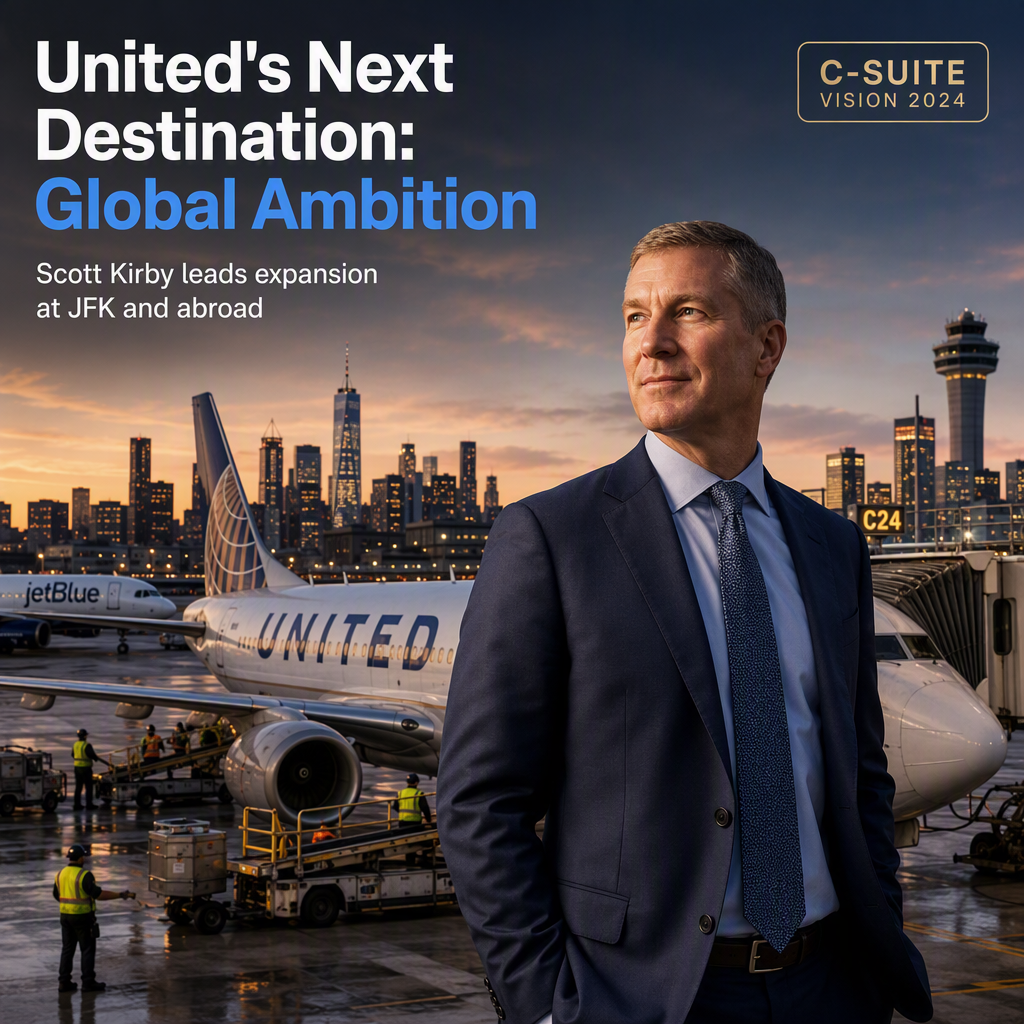
United Airlines CEO Scott Kirby, who was fired from American Airlines ten years ago, now leads United as the second-most profitable carrier in the U.S., trailing only Delta Air Lines [1]. Kirby has expressed ambitions to expand United's presence at New York's John F. Kennedy International Airport (JFK), following United's return to the airport through a partnership with JetBlue Airways, potentially as early as next year [1]. He indicated that United may acquire slots from carriers not operating profitable routes at JFK, signaling aggressive expansion plans [1].
Kirby has previously floated the idea of mega mergers with both Delta and American Airlines, which would create some of the world's largest airlines. However, these proposals have been rebuffed, and antitrust experts remain skeptical about their feasibility [1]. Despite this, Kirby is not interested in acquiring smaller carriers, focusing instead on larger strategic moves [1].
United continues to emphasize its international expansion, with new routes set to be announced this week. The airline's extensive global network is positioned as a key driver for customer loyalty and lucrative travel rewards credit card sign-ups [1]. Past route launches have included destinations such as Ulaanbaatar, Mongolia, and Bilbao, Spain, underscoring United's commitment to broadening its international footprint [1].
Kirby is preparing for the impact of artificial intelligence on the airline industry, as the sector faces rising costs, limited airport infrastructure, and a population willing to pay more for premium travel experiences [1]. He remains competitive but dismisses notions of revenge against his former employer, American Airlines, which is currently working to boost revenue through upgrades like seatback screens [1].
CONCLUSION
United Airlines, under CEO Scott Kirby, is pursuing ambitious expansion at JFK and internationally, while navigating industry challenges and preparing for AI-driven changes. Kirby's focus on strategic growth and customer loyalty positions United as a key player in the evolving airline landscape. Market sentiment is moderately positive, reflecting United's proactive approach and competitive standing.