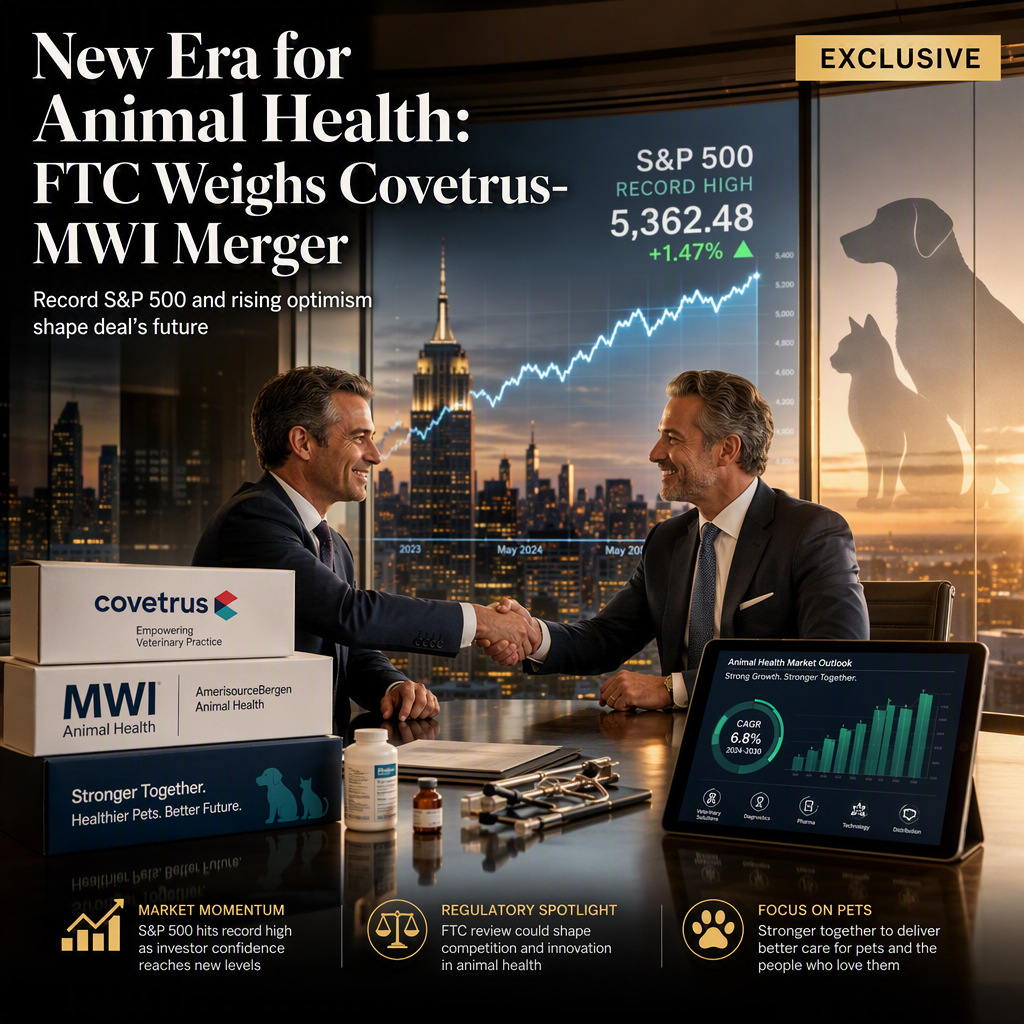
The Federal Trade Commission (FTC) is currently reviewing several mergers, including the proposed combination of Covetrus and MWI Animal Health, which is being highlighted as a potential benefit for consumers, veterinarians, and pet owners. The merger is described as an opportunity to create an integrated animal health company with greater scale, enabling increased investment and the potential to deliver lower prices to veterinary practices and, ultimately, pet owners. This is seen as a pro-competitive and efficiency-creating deal that could help address pressures faced by distributors like Covetrus and MWI, who are being squeezed by large drug companies increasingly selling directly to veterinarians and bypassing traditional distribution channels [1].
This development comes at a time when the S&P 500 has closed at a record high, U.S. GDP is projected to grow by 2.5% this year, and corporate earnings are reported as strong, with booming investment in artificial intelligence. These positive economic indicators are attributed to the current administration's policies aimed at restoring confidence in the American economy and reducing government intervention in the private sector [1].
The FTC, under Chairman Andrew Ferguson, has pledged to move away from the previous administration's approach, which was characterized by blocking numerous mergers—43 deals were abandoned under former Chair Lina Khan, who considered each abandoned deal a victory. Ferguson has committed to restoring 'certainty and clarity' to the merger review process, focusing on the merits of each deal rather than ideology [1].
While the second article does not directly address the Covetrus-MWI merger or the FTC's current actions, it provides broader context on the importance of capitalism in America, referencing the 250th anniversary of Adam Smith's 'The Wealth of Nations' and the ongoing debate about the merits of capitalism versus socialism. It notes that President Donald Trump won support from blue-collar workers, a group historically aligned with Democrats, and emphasizes the need to communicate the benefits of capitalism to younger generations [2].
CONCLUSION
The FTC's review of the Covetrus-MWI Animal Health merger is positioned as a test of the agency's new, pro-competitive approach under Chairman Ferguson, with potential benefits for consumers and the broader animal health industry. This regulatory shift coincides with strong economic performance indicators, reinforcing a narrative of renewed confidence in American capitalism. The outcome of the merger review could signal the FTC's future stance on industry consolidation and its impact on market competition.