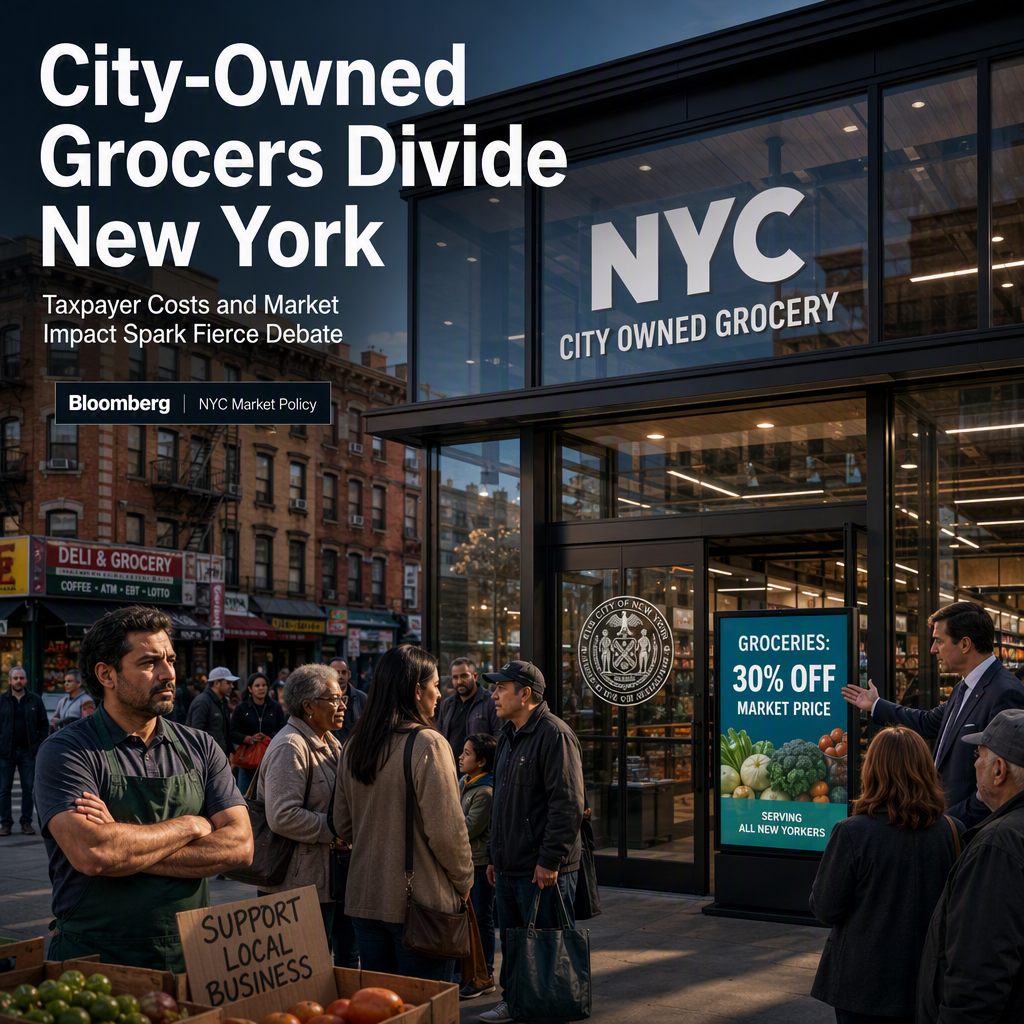
New York City officials are advancing Mayor Zohran Mamdani's plan for city-owned grocery stores, aiming to ease costs for independent grocers while taxpayers fund the initiative [1]. The administration is considering tax breaks, incentives, and zoning benefits to help private grocers manage expenses as the city launches taxpayer-subsidized stores that will receive low- or no-cost real estate, city-funded buildouts, and other subsidies [1]. This arrangement could result in taxpayers paying twice: once for the city-run stores and again for incentives supporting private grocers operating alongside them [1].
According to Mamdani’s administration, the city-run stores are expected to sell groceries at prices 30% below comparable retailers [1]. Adam Lehodey, a policy analyst at the Manhattan Institute, criticized the plan, stating that the 30% savings are an illusion since taxpayers will ultimately cover millions of dollars in subsidies and waived rents [1]. Lehodey warned that pricing goods significantly below market rates could lead to unintended consequences, such as consumers purchasing items to resell elsewhere and potential shortages due to increased demand from artificially low prices [1].
E.J. Antoni, chief economist at the Heritage Foundation, questioned the financial sustainability of the city's pricing model, noting that grocery stores typically operate on razor-thin profit margins. Antoni argued that a 30% discount at stores with a 2% profit margin would result in losses for taxpayers, who would have to make up the difference [1]. He also suggested that these artificially low prices could harm small businesses by diverting sales to taxpayer-subsidized grocery stores [1].
The New York City Economic Development Corporation (EDC), responsible for overseeing the program's rollout, disputed claims that municipal stores would negatively impact neighborhood grocers. The agency stated that the administration expects the stores to generate additional foot traffic and ultimately benefit nearby businesses [1]. EDC also clarified that the administration is not currently considering grant programs for existing grocers, despite earlier public suggestions [1]. Waverly Neer, the lead official for NYC Groceries at EDC, mentioned that the agency is exploring complementary policies and programs, including grants and incentives, to support local independent businesses alongside the city-run stores [1].
CONCLUSION
The NYC city-owned grocery store plan is generating significant debate over its financial sustainability and potential impact on local businesses. While officials claim the initiative will benefit neighborhoods and offer lower prices, critics warn of taxpayer burdens and market distortions. The market takeaway is cautious, with concerns about unintended consequences and the true cost to New Yorkers.