
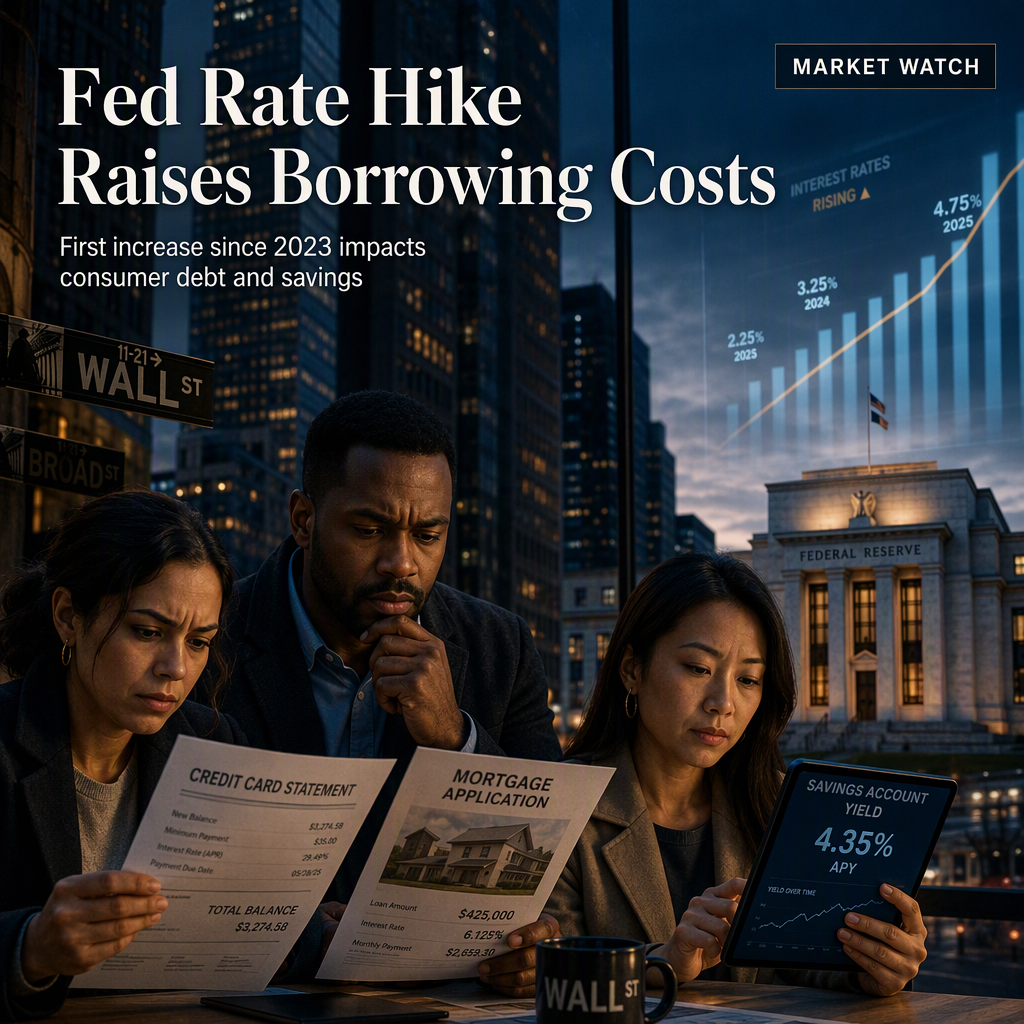
The Federal Reserve has raised its benchmark federal funds rate by 25 basis points, moving the target range from 3.5%-3.75% to 3.75%-4% in its first rate hike since July 2023, after holding rates steady through its first five meetings of the year [1]. This decision was made unanimously by the Fed earlier this month [1]. The rate hike is expected to increase borrowing costs for consumers, particularly those with variable-rate debt such as credit cards and home equity lines of credit (HELOCs) [1]. According to George Kamel, co-host of 'The Ramsey Show,' consumers may see credit card rates rise from 28% to 28.25%, and new fixed-rate mortgages could increase from 6% to 6.25% [1]. However, those with existing fixed-rate mortgages, auto loans, and other fixed-rate debt will not see changes in their monthly payments [1].
Kamel emphasized that credit cards have some of the highest APRs among consumer debt, ranging from 20% to 30%, and advised consumers to prioritize paying down high-interest debt in light of the rate hike [1]. He recommended the 'debt snowball' strategy, which involves paying off debts from the smallest to the largest balance while making minimum payments on other accounts [1].
While mortgage rates are more influenced by Treasury yields and the bond market than by the federal funds rate, prospective homebuyers could still see borrowing costs edge higher, making homeownership slightly more challenging [1]. On the positive side, savers may benefit as banks could gradually raise yields on high-yield savings accounts, allowing consumers to earn more on their savings [1].
Kamel concluded that consumers should focus on reducing variable-rate debt and building savings, rather than worrying about future Fed moves, noting that the rate hike could provide a modest boost to high-yield savings accounts [1].
CONCLUSION
The Federal Reserve's 25 basis point rate hike marks its first increase since July 2023, raising borrowing costs for consumers with variable-rate debt while potentially benefiting savers through higher yields. Consumers are advised to prioritize paying down high-interest debt and building savings in response to the new rate environment.