
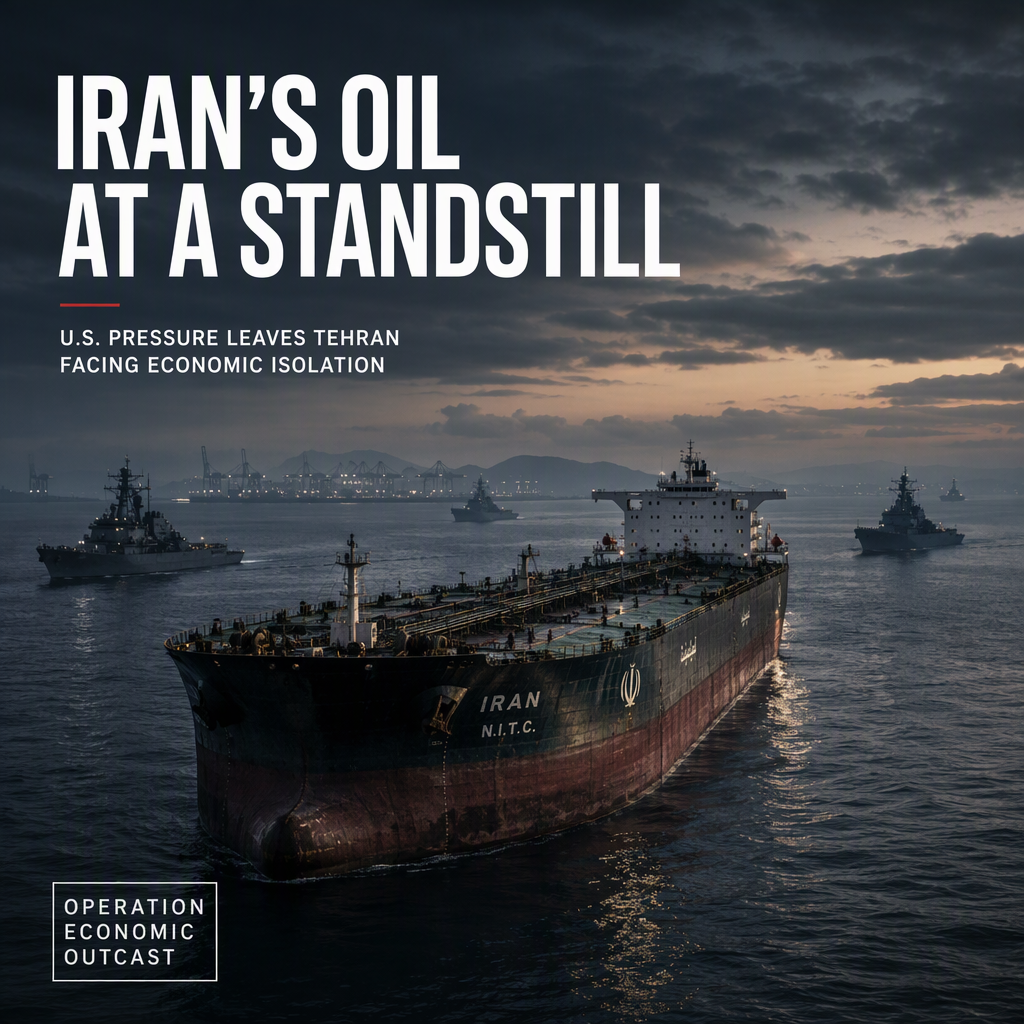
Treasury Secretary Scott Bessent stated on Sunday that Iran is expected to finish its remaining oil shipments to China within two weeks, leaving the country with 'nothing left to trade for anything' as the Trump administration intensifies its economic pressure campaign against Tehran [1]. Bessent highlighted that only about 15 million barrels of Iranian oil remain out for delivery, attributing this decline to the U.S. blockade of Iranian ports and describing it as evidence of Iran's growing economic isolation under Operation Economic Outcast [1].
Bessent emphasized that Iran is 'feeling the pressure,' which has prompted renewed interest from Tehran in striking a deal with the United States [1]. However, President Donald Trump rejected Iran's latest proposal on Saturday, stating in a phone interview with Axios that 'they overplayed their hand' and expressing expectations for more talks with Iran in the coming week [1]. Trump clarified that Iran's offer to reopen the Strait of Hormuz was unnecessary, as the waterway is already open, with current oil shipping volumes averaging 15 to 22 million barrels a day, compared to about 20 million barrels pre-conflict [1].
Bessent further noted that the United States has successfully exported more than one billion barrels of oil, while Iran has exported none, underscoring the effectiveness of the U.S. campaign to economically isolate Iran [1]. The Treasury Secretary asserted that the objective of Operation Economic Outcast is to ensure Iran adheres to the terms of any potential future deal, referencing Iran's failure to stick to a previous Memorandum of Understanding (MOU) and stressing that any new agreement would be at President Trump's discretion [1].
No specific market reactions or analyst opinions were mentioned in the article, but the described developments suggest significant implications for global oil markets and geopolitical stability, given Iran's role as a major oil exporter and the critical importance of the Strait of Hormuz for global oil shipping [1].
CONCLUSION
Iran's dwindling oil exports and increasing economic isolation, driven by intensified U.S. sanctions and port blockades, signal a high-impact event for global energy markets. With Iran poised to complete its final oil shipments to China and renewed talks anticipated, the situation remains fluid and could influence future geopolitical and market dynamics.