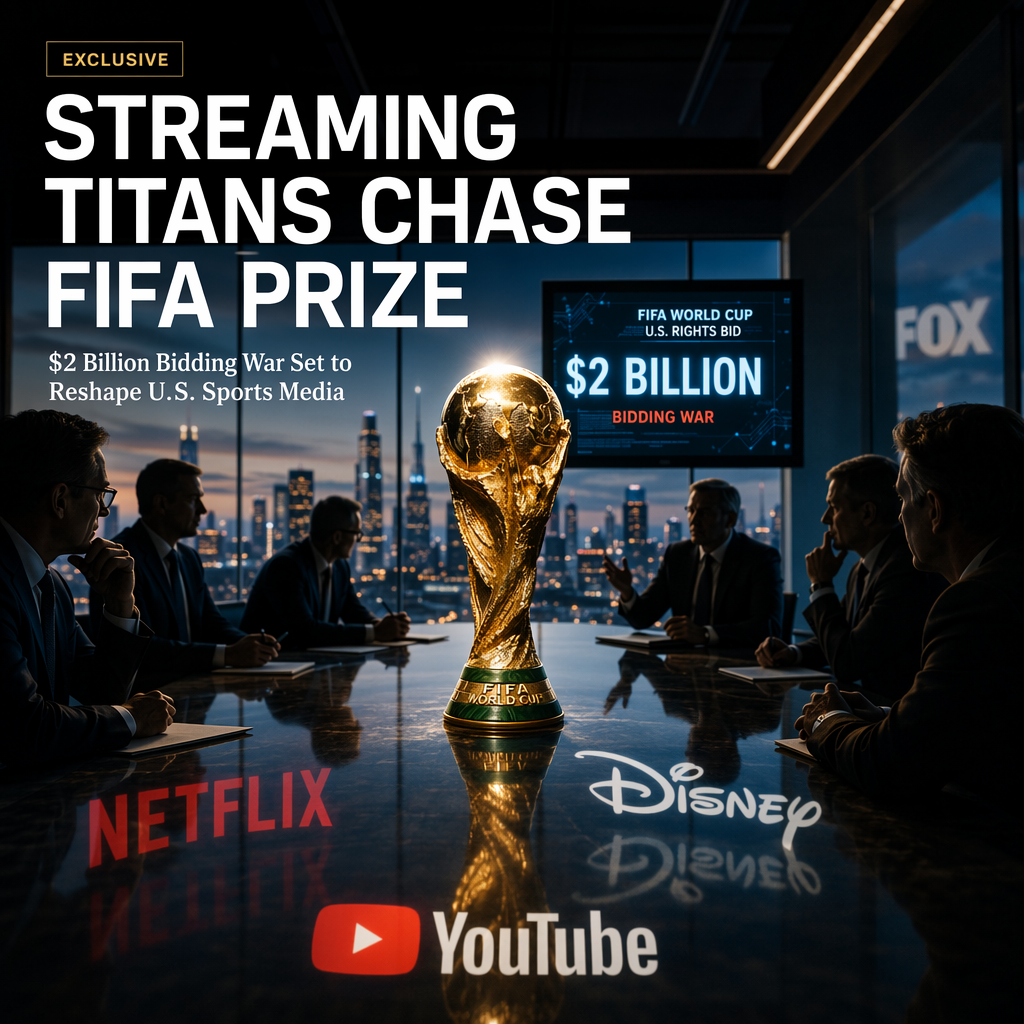
Netflix, Disney, and Alphabet's YouTube are all expressing interest in acquiring the U.S. broadcast rights for the 2030 and 2034 FIFA World Cup tournaments, potentially challenging Fox, the current rights holder, according to people familiar with the matter [1]. Media executives are reportedly budgeting between $1.5 billion and $2 billion for each tournament's U.S. rights, a significant increase from previous deals [1].
FIFA has indicated in preliminary talks that, unlike previous tournaments, the English- and Spanish-language U.S. rights are likely to be sold together as a single package, which could further drive up the price [1]. For the 2026 tournament, Fox paid $485 million for English-language rights, while NBCUniversal's Telemundo paid $600 million for Spanish-language rights [1]. The last negotiation for these rights occurred in 2011, with an extension in 2015, but the upcoming bidding process is expected to be highly competitive, with Amazon and Apple also mentioned as potential entrants [1].
The U.S. rights are particularly coveted due to the massive viewership and advertising opportunities associated with the FIFA World Cup [1]. Netflix, Disney, and YouTube see the event as a potential major boost for their streaming platforms, while Disney could also leverage ESPN and ABC for broader coverage, which may appeal to FIFA given the strong ratings on Fox this year [1]. FIFA has already shown interest in Netflix by awarding it the Women's World Cup rights for 2027 and 2031 [1].
Discussions between FIFA and potential media partners are expected to begin within the next three months, and the outcome could reshape the U.S. sports media landscape [1]. Spokespeople for FIFA, Netflix, YouTube, and Disney declined to comment on the ongoing talks [1].
CONCLUSION
The upcoming bidding war for U.S. FIFA World Cup rights signals a major shift in the sports media market, with streaming giants and traditional broadcasters preparing to invest heavily. The combined English- and Spanish-language package could fetch up to $2 billion per tournament, reflecting the event's immense value and competitive landscape.