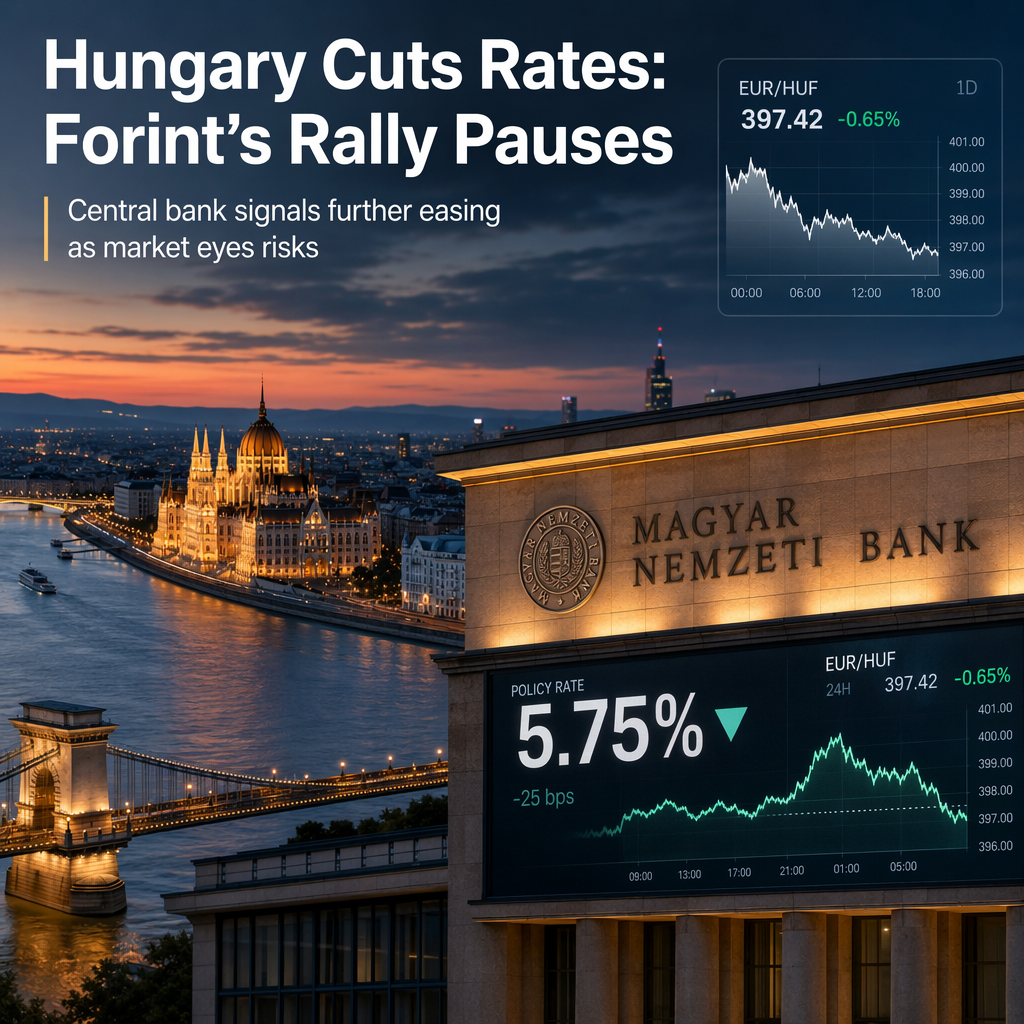
The Hungarian central bank, Magyar Nemzeti Bank (MNB), has reduced its policy rate by 25 basis points to 5.75%, in line with market expectations, and indicated the possibility of further monetary easing in the near future. Societe Generale strategists anticipate that the terminal rate could decline to 5.0% by the end of the year, with a reassessment of the policy level and macroeconomic outlook scheduled for September [1].
The Hungarian Forint (HUF) has shown resilience, with inflation currently running comfortably below the central bank's target. The EUR/HUF currency pair reached a low of 348.59 in mid-June, suggesting that the strongest phase of the Forint's rally may have already occurred in the first half of the year [1]. Societe Generale projects that the EUR/HUF could end 2026 around 355, indicating a potential stabilization or modest depreciation from current levels [1].
Strategists note that much of the optimism regarding Hungary's Euro-friendly government and the recent rate cuts are already reflected in Forint assets. However, they highlight risks that could impact the currency, including elevated oil prices and the upcoming 2027 budget announcement by Peter Magyar’s government, scheduled for October [1].
Overall, while the Forint remains resilient and inflation is subdued, the outlook is tempered by external risks and the expectation that further monetary easing is likely to be gradual and data-dependent [1].
CONCLUSION
The Hungarian central bank's rate cut and signals of further easing have been largely anticipated by the market, with the Forint maintaining resilience and inflation below target. However, future risks such as oil prices and fiscal policy developments could influence the currency's trajectory. Market participants are likely to monitor upcoming policy reassessments and the 2027 budget announcement for further direction.